About this artwork
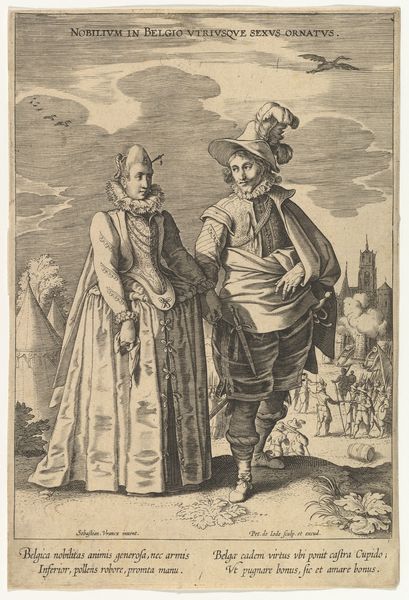
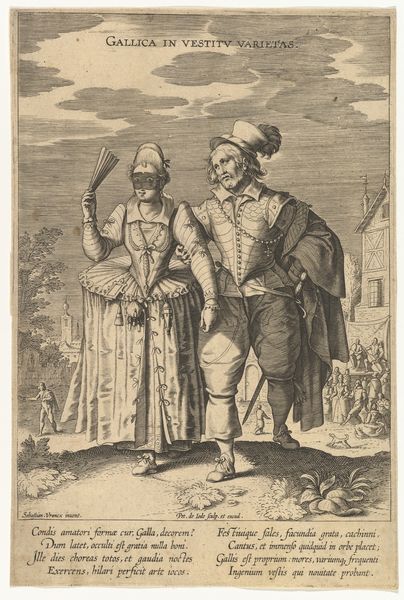
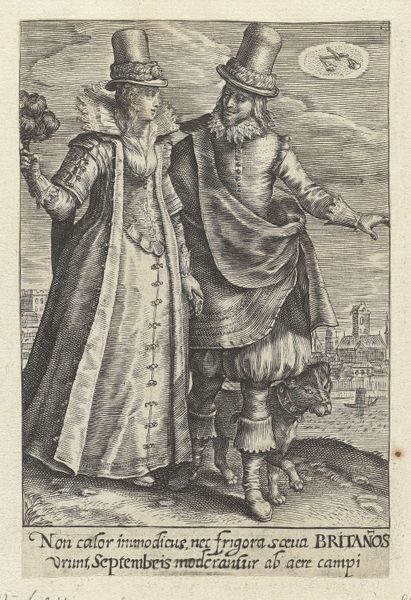
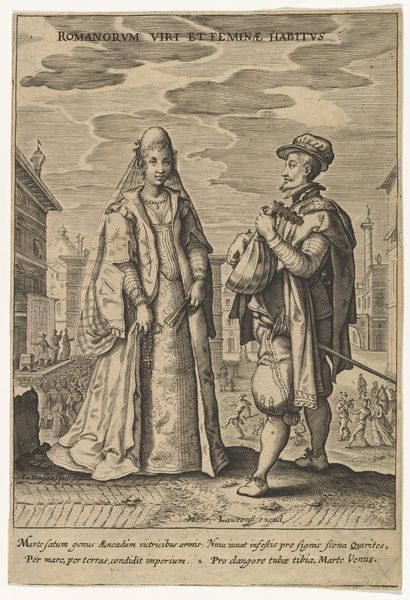
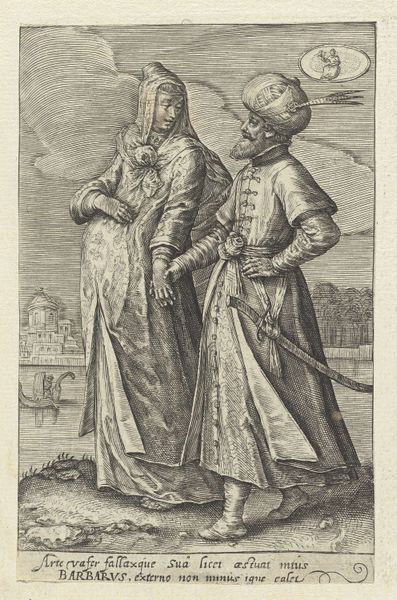
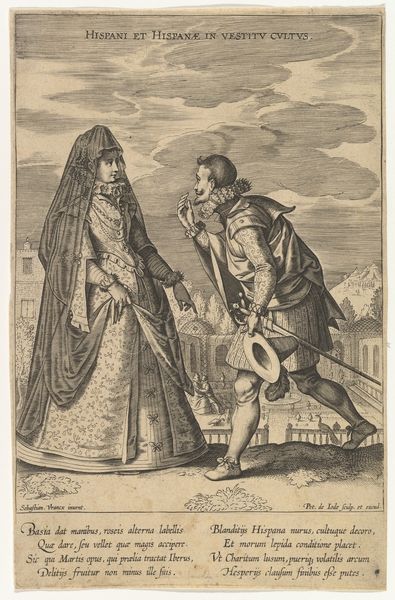
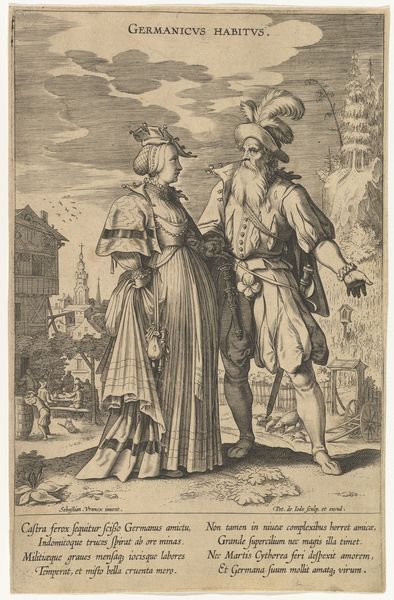
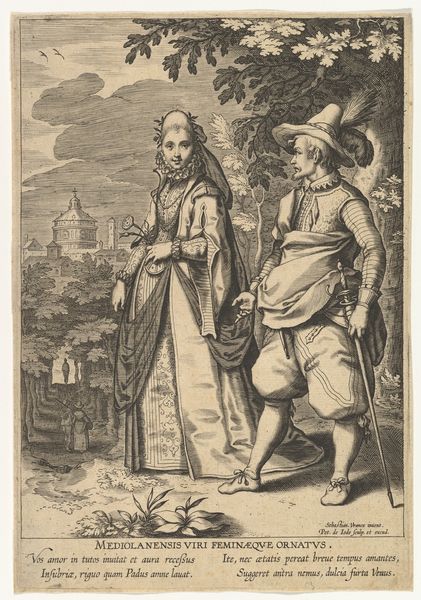
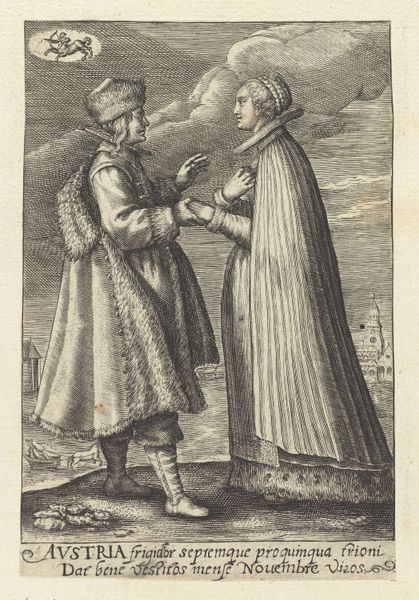
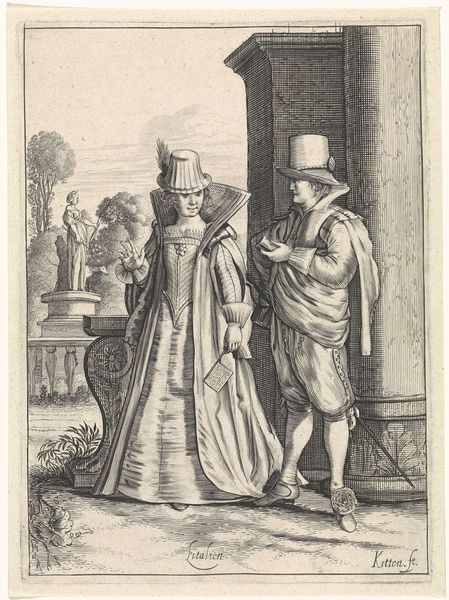
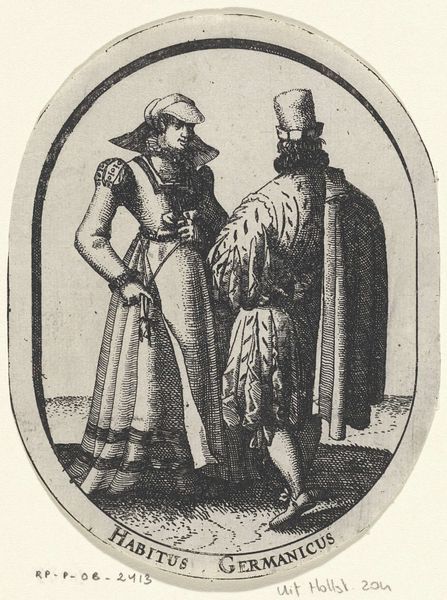
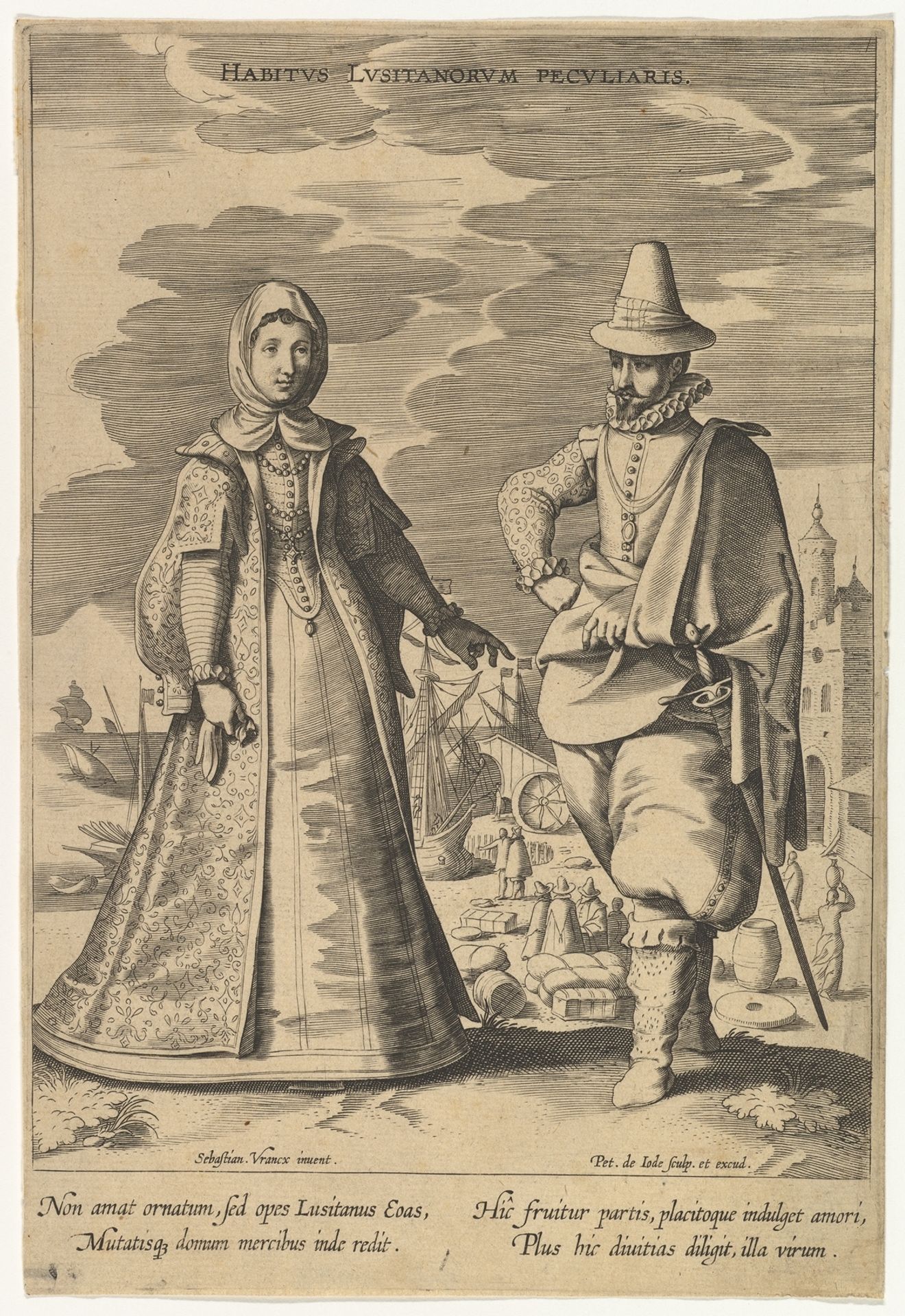
Pieter de Jode I created this print titled "Habitus Lusitanorum Peculiaris" or "Peculiar Habits of the Portuguese" sometime between 1572 and 1634. It's part of a series called Fashions of Different Nations. At its core, the image speaks to the burgeoning age of exploration and global trade. The setting is a bustling port, complete with ships and goods, highlighting Portugal's maritime power. But the focus is on the elegantly dressed couple. Their attire is clearly meant to signal wealth and status. Portugal at this time was a major player in the spice trade, the slave trade, and the trade of precious goods like gold and ivory. The image invites us to consider how identity is performed through clothing, and how fashion is deeply connected to larger economic and political systems. To fully understand this print, a deep dive into the history of Portuguese trade is essential. Scholarly articles and primary source documents such as merchant's ledgers are invaluable. Only through such research can we fully grasp the image's complex commentary on the social structures of the time.
Habitus Lusitanorum Peculiaris, from Fashions of Different Nations
1580 - 1634


Artwork details
- Medium
- drawing, print, etching, engraving
- Dimensions
- sheet: 8 7/8 x 6 in. (22.6 x 15.2 cm)
- Location
- Metropolitan Museum of Art, New York, NY
- Copyright
- Public Domain
Tags
Comments
Share your thoughts
About this artwork
Pieter de Jode I created this print titled "Habitus Lusitanorum Peculiaris" or "Peculiar Habits of the Portuguese" sometime between 1572 and 1634. It's part of a series called Fashions of Different Nations. At its core, the image speaks to the burgeoning age of exploration and global trade. The setting is a bustling port, complete with ships and goods, highlighting Portugal's maritime power. But the focus is on the elegantly dressed couple. Their attire is clearly meant to signal wealth and status. Portugal at this time was a major player in the spice trade, the slave trade, and the trade of precious goods like gold and ivory. The image invites us to consider how identity is performed through clothing, and how fashion is deeply connected to larger economic and political systems. To fully understand this print, a deep dive into the history of Portuguese trade is essential. Scholarly articles and primary source documents such as merchant's ledgers are invaluable. Only through such research can we fully grasp the image's complex commentary on the social structures of the time.
Comments
Share your thoughts