About this artwork
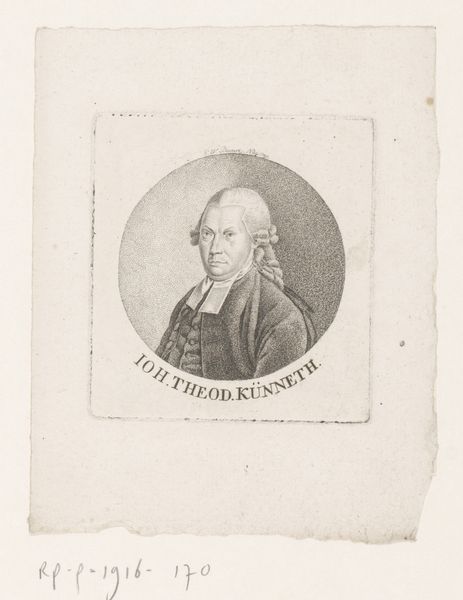
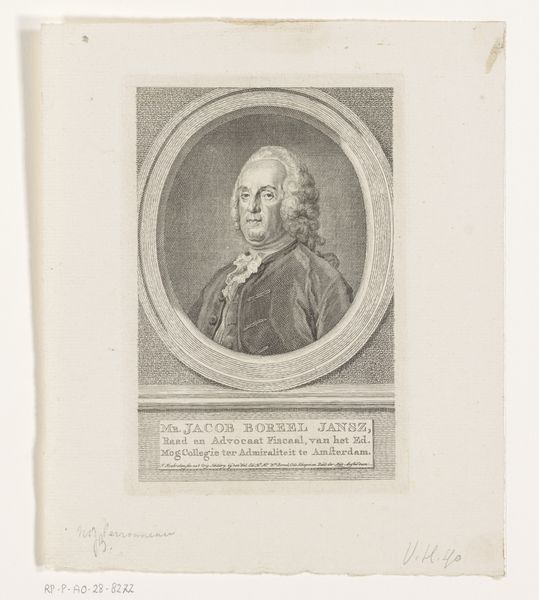
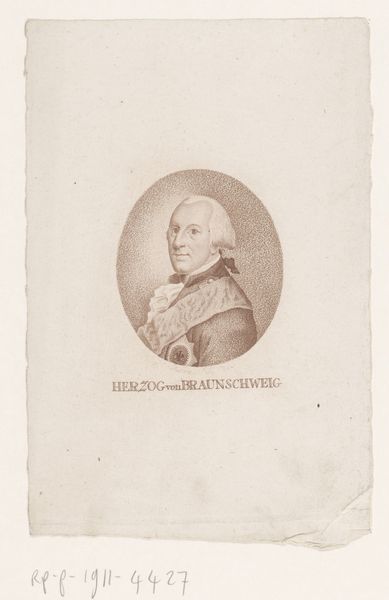
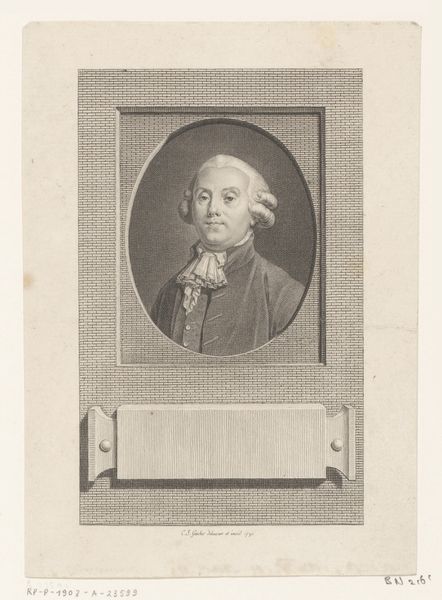
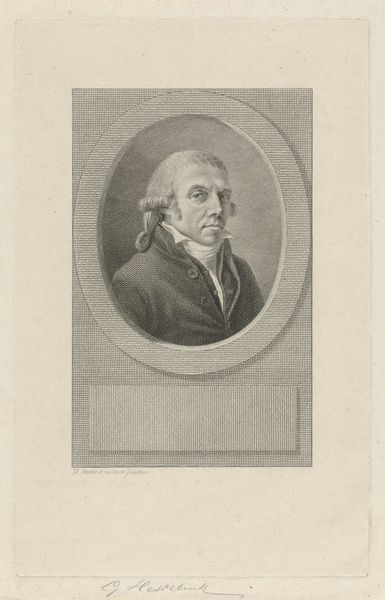
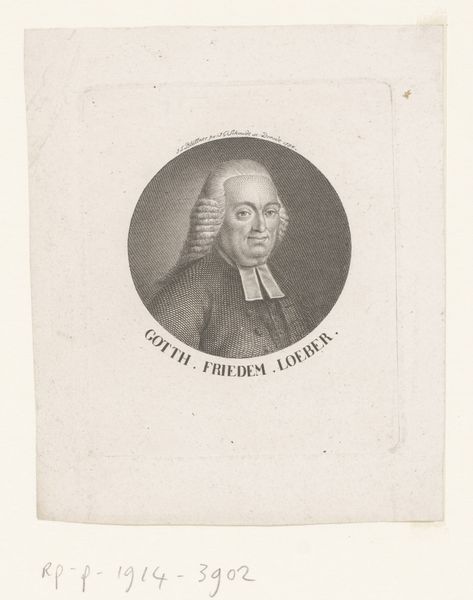
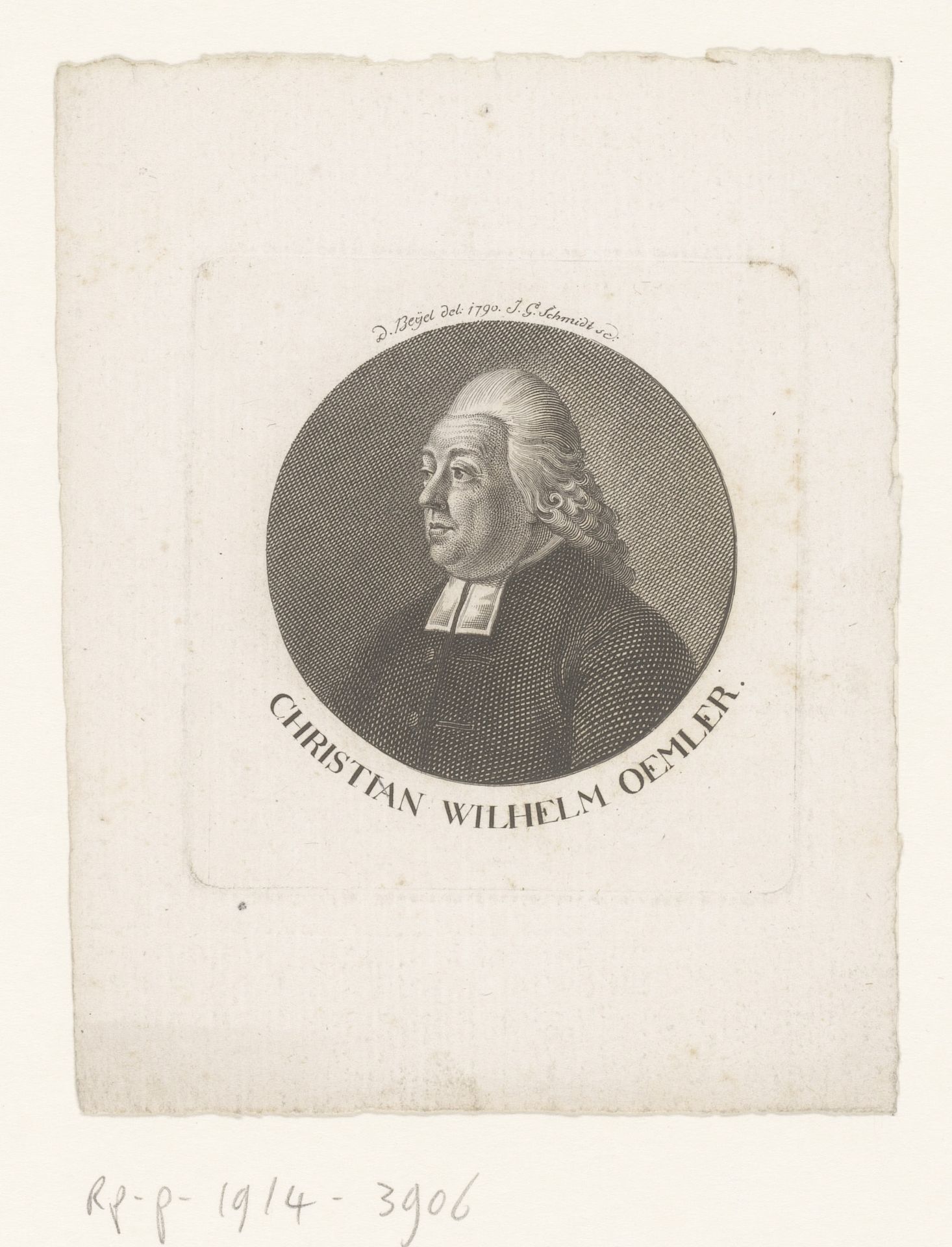
Curator: This is Johann Gottfried Schmidt’s engraving "Portret van Christian Wilhelm Oemler," dating from somewhere between 1790 and 1803. What strikes you first? Editor: The solemnity. The high contrast etching against the pristine paper isolates Oemler in a visual echo chamber. His expression… serious, almost mournful. Curator: An insightful reading! Note how the circular format imposes a formal constraint, channeling the gaze inwards towards the subject's profile. This technique serves to concentrate our attention and encourage detailed examination of his countenance. Editor: Indeed, and that wig! A cascade of perfectly formed curls. It signifies status, learning, power, and all these are reinforced by his severe clerical garb, almost theatrical. Oemler becomes less a person and more a symbol of the established order. Curator: You intuit well the semiotic interplay. Consider the texture— achieved through meticulous stippling and cross-hatching — creating a tangible sense of depth. The light plays subtly across the surface, giving volume to Oemler's features and adding complexity to our apprehension of his psychological state. Editor: I’m intrigued by the barest hint of a double chin, hardly flattering, included and amplified, it humanizes him just a little. Makes him…vulnerable. Curator: An astute observation that underscores how artistic intent can create nuanced and often contradictory readings. Schmidt's adherence to neoclassical principles manifests here in both the idealized form and stark realism. Editor: These symbols offer a gateway into understanding late 18th century aspirations and societal frameworks through a single image. Curator: Indeed, and viewed purely through form, the controlled, measured lines create a profound sense of order that’s typical of neoclassical aesthetics. Editor: I leave this portrait feeling informed of that time, and pondering how our own era will be captured. Curator: And I’m left with a renewed appreciation for how careful observation can unveil layers of meaning in the most restrained of artworks.
Portret van Christian Wilhelm Oemler 1790 - 1803

Johann Gottfried Schmidt
1764 - 1803Location
RijksmuseumArtwork details
- Medium
- engraving
- Dimensions
- height 80 mm, width 77 mm
- Location
- Rijksmuseum
- Copyright
- Rijks Museum: Open Domain
Tags
portrait
neoclacissism
academic-art
engraving
Comments
No comments
About this artwork
Curator: This is Johann Gottfried Schmidt’s engraving "Portret van Christian Wilhelm Oemler," dating from somewhere between 1790 and 1803. What strikes you first? Editor: The solemnity. The high contrast etching against the pristine paper isolates Oemler in a visual echo chamber. His expression… serious, almost mournful. Curator: An insightful reading! Note how the circular format imposes a formal constraint, channeling the gaze inwards towards the subject's profile. This technique serves to concentrate our attention and encourage detailed examination of his countenance. Editor: Indeed, and that wig! A cascade of perfectly formed curls. It signifies status, learning, power, and all these are reinforced by his severe clerical garb, almost theatrical. Oemler becomes less a person and more a symbol of the established order. Curator: You intuit well the semiotic interplay. Consider the texture— achieved through meticulous stippling and cross-hatching — creating a tangible sense of depth. The light plays subtly across the surface, giving volume to Oemler's features and adding complexity to our apprehension of his psychological state. Editor: I’m intrigued by the barest hint of a double chin, hardly flattering, included and amplified, it humanizes him just a little. Makes him…vulnerable. Curator: An astute observation that underscores how artistic intent can create nuanced and often contradictory readings. Schmidt's adherence to neoclassical principles manifests here in both the idealized form and stark realism. Editor: These symbols offer a gateway into understanding late 18th century aspirations and societal frameworks through a single image. Curator: Indeed, and viewed purely through form, the controlled, measured lines create a profound sense of order that’s typical of neoclassical aesthetics. Editor: I leave this portrait feeling informed of that time, and pondering how our own era will be captured. Curator: And I’m left with a renewed appreciation for how careful observation can unveil layers of meaning in the most restrained of artworks.
Comments
No comments