About this artwork
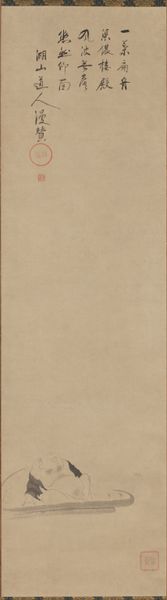
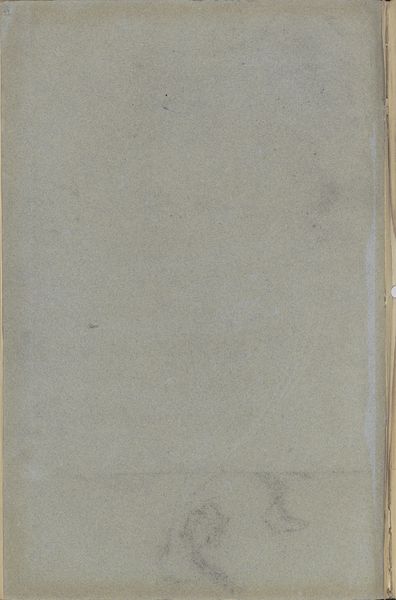
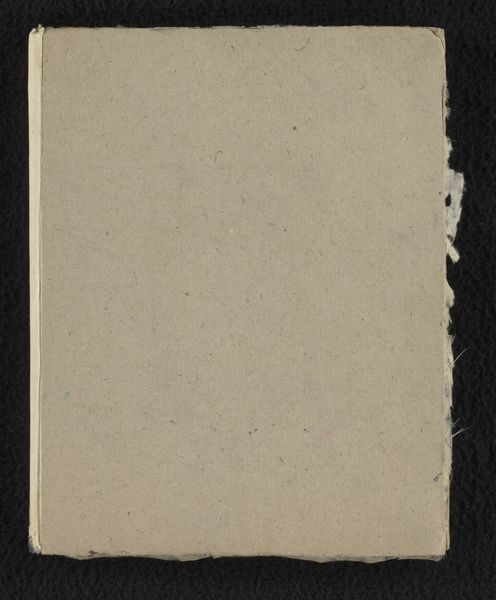
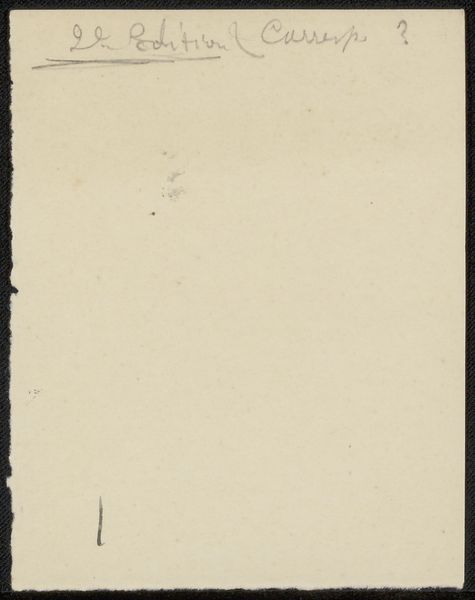
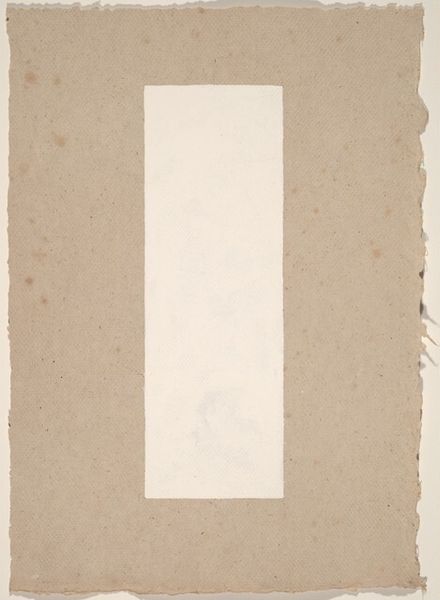
This is a sketchbook with nine sheets by Carel Adolph Lion Cachet. In its emptiness, this artwork echoes the tabula rasa, the blank slate, a concept stretching back to antiquity. Consider Aristotle’s notion of the mind as void at birth, filled later by experience. This void is not merely absence but potential, a space awaiting inscription. It is found in the monochrome paintings of Malevich, or the silent theater of Beckett. These are spaces demanding a viewer's projection, a fertile ground for subconscious processes to play out. The empty page invites us to confront our own expectations. Are we disappointed by the lack of explicit content, or intrigued by the possibilities? The psychoanalyst might see a mirror reflecting our inner states, where the unformed takes shape through personal memory and desire. And so, the sketchbook becomes a site of infinite reflection, where the absence of image speaks volumes about the self.

Artwork details
- Medium
- drawing, paper
- Dimensions
- height 333 mm, width 219 mm, thickness 1 mm, width 437 mm
- Location
- Rijksmuseum
- Copyright
- Rijks Museum: Open Domain
Tags
drawing
desaturated colours
paper
tonal
desaturated colour
abstraction
monochrome
Comments
Be the first to share your thoughts about this work.
About this artwork
This is a sketchbook with nine sheets by Carel Adolph Lion Cachet. In its emptiness, this artwork echoes the tabula rasa, the blank slate, a concept stretching back to antiquity. Consider Aristotle’s notion of the mind as void at birth, filled later by experience. This void is not merely absence but potential, a space awaiting inscription. It is found in the monochrome paintings of Malevich, or the silent theater of Beckett. These are spaces demanding a viewer's projection, a fertile ground for subconscious processes to play out. The empty page invites us to confront our own expectations. Are we disappointed by the lack of explicit content, or intrigued by the possibilities? The psychoanalyst might see a mirror reflecting our inner states, where the unformed takes shape through personal memory and desire. And so, the sketchbook becomes a site of infinite reflection, where the absence of image speaks volumes about the self.
Comments
Be the first to share your thoughts about this work.