About this artwork
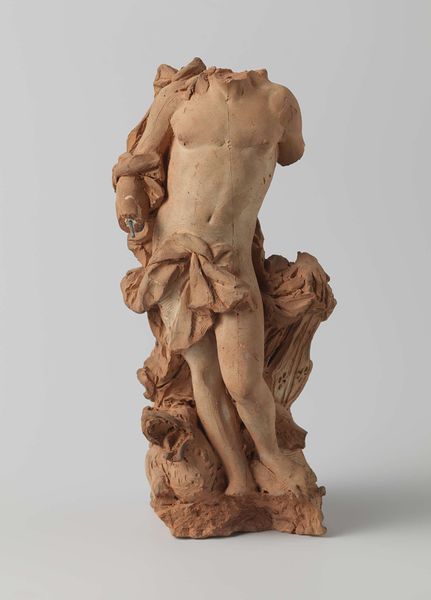
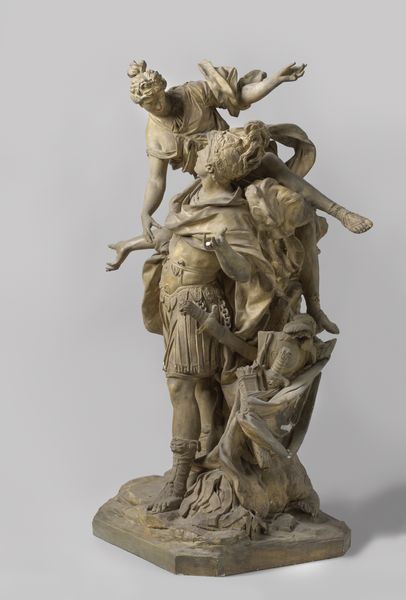
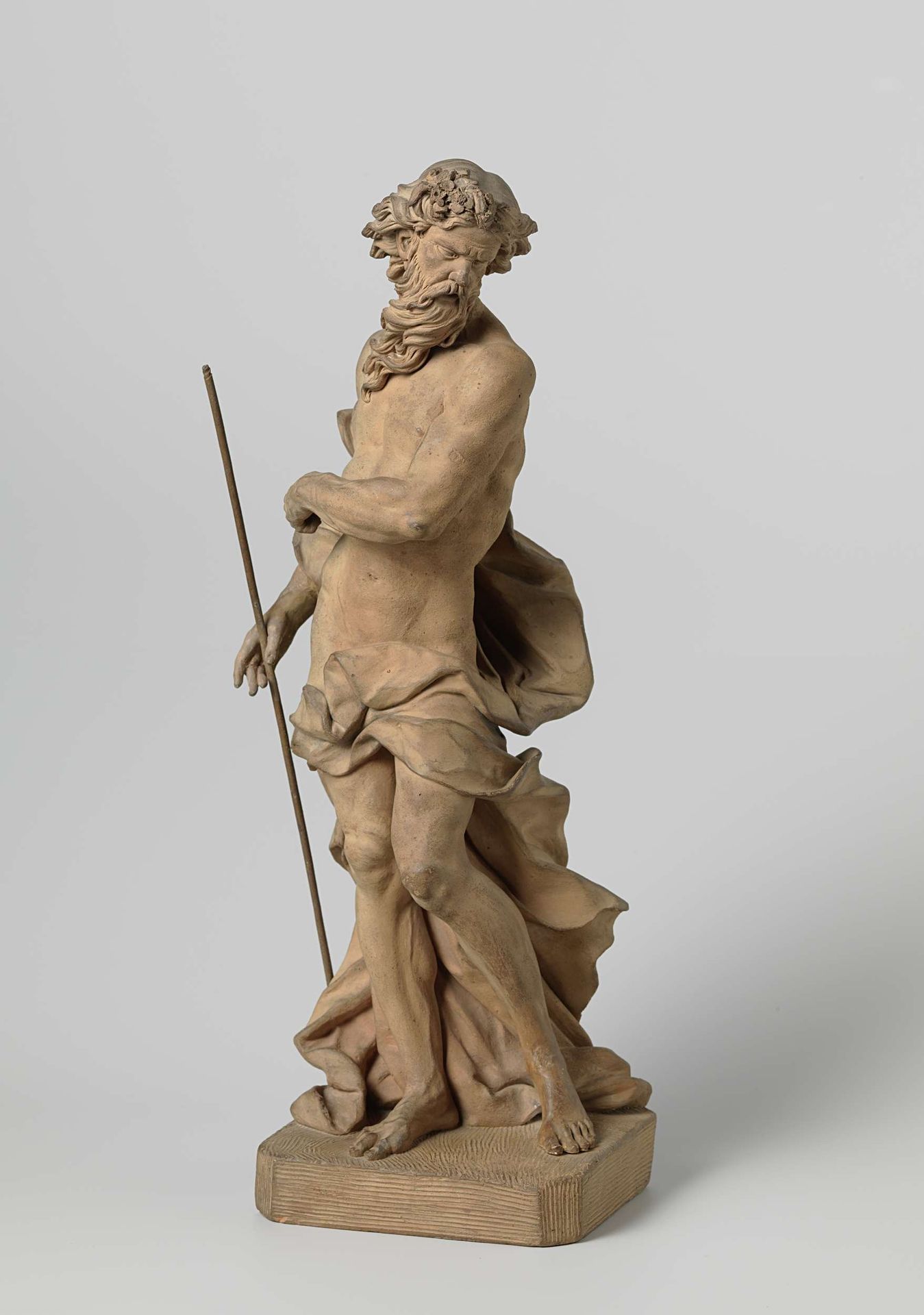
Willem Hendrik van der Wall sculpted this Neptunus in the 18th century. Note how the figure of Neptune, god of the sea, brandishes his trident. This is a powerful symbol, not merely of authority over the seas, but a gesture that ties back to ancient conceptions of power. The trident, often associated with lightning bolts in earlier mythologies, underscores Neptune’s potent, sometimes volatile, dominion. The depiction of Neptune, a virile, bearded man, partially draped, echoes the classical ideals of beauty and strength. We see similar figures across Renaissance art, each drawing from a deep well of shared cultural memory, subtly altered through time. Consider the emotional resonance these images carry; they tap into primal fears and desires, stirring feelings of awe and respect. The recurring motif serves as a constant reminder of our connection to the past, informing our present, in a non-linear progression.

Artwork details
- Medium
- bronze, sculpture
- Dimensions
- height 48.5 cm, width 18 cm, depth 14 cm
- Copyright
- Rijks Museum: Open Domain
Tags
Comments
Share your thoughts
About this artwork
Willem Hendrik van der Wall sculpted this Neptunus in the 18th century. Note how the figure of Neptune, god of the sea, brandishes his trident. This is a powerful symbol, not merely of authority over the seas, but a gesture that ties back to ancient conceptions of power. The trident, often associated with lightning bolts in earlier mythologies, underscores Neptune’s potent, sometimes volatile, dominion. The depiction of Neptune, a virile, bearded man, partially draped, echoes the classical ideals of beauty and strength. We see similar figures across Renaissance art, each drawing from a deep well of shared cultural memory, subtly altered through time. Consider the emotional resonance these images carry; they tap into primal fears and desires, stirring feelings of awe and respect. The recurring motif serves as a constant reminder of our connection to the past, informing our present, in a non-linear progression.
Comments
Share your thoughts