About this artwork
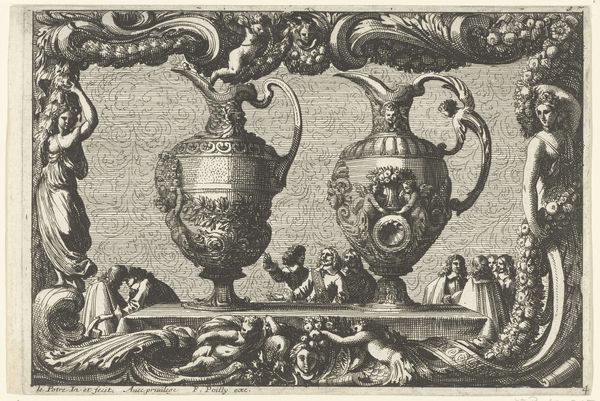
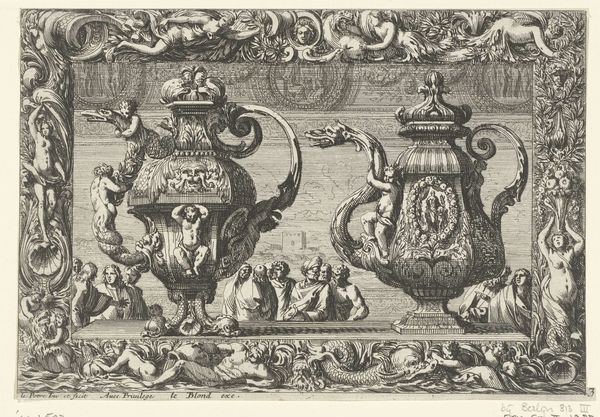
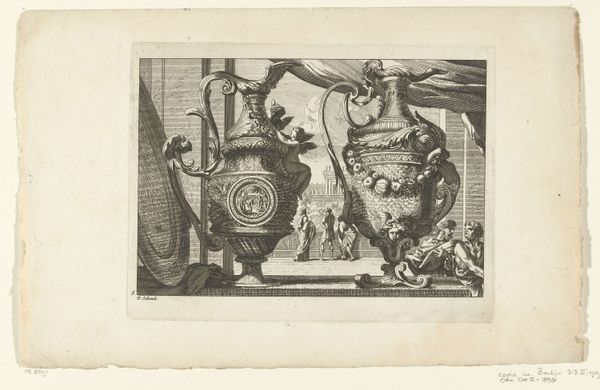
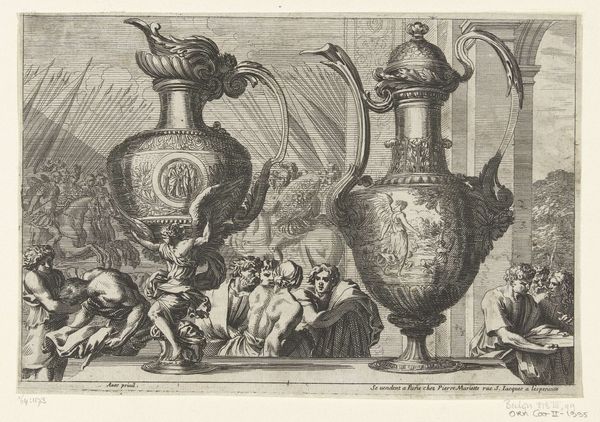
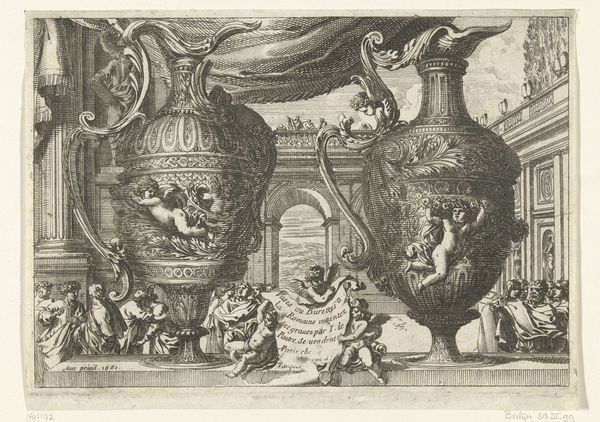
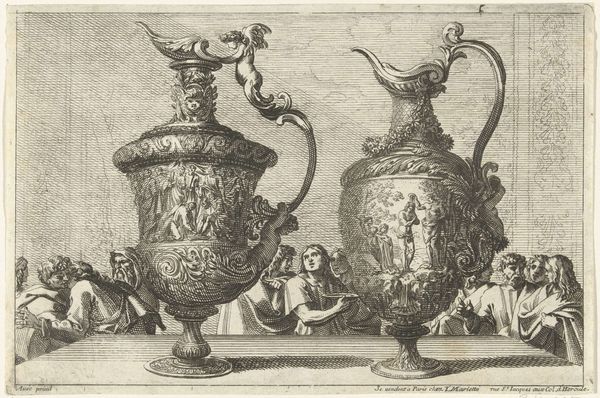
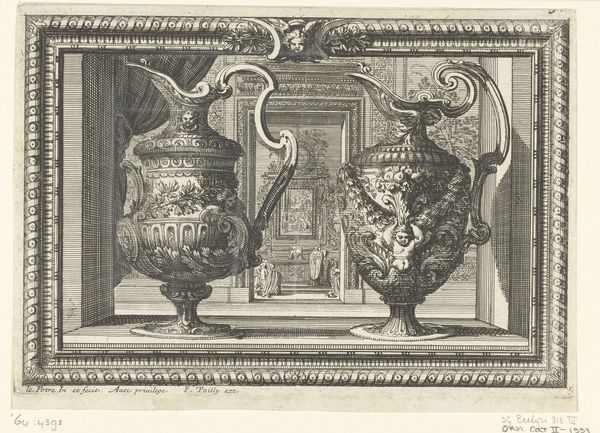
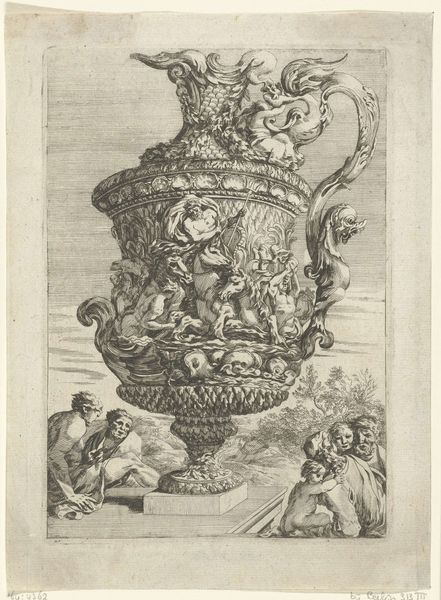
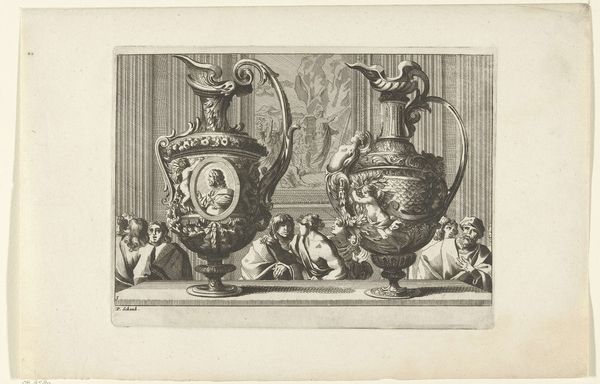
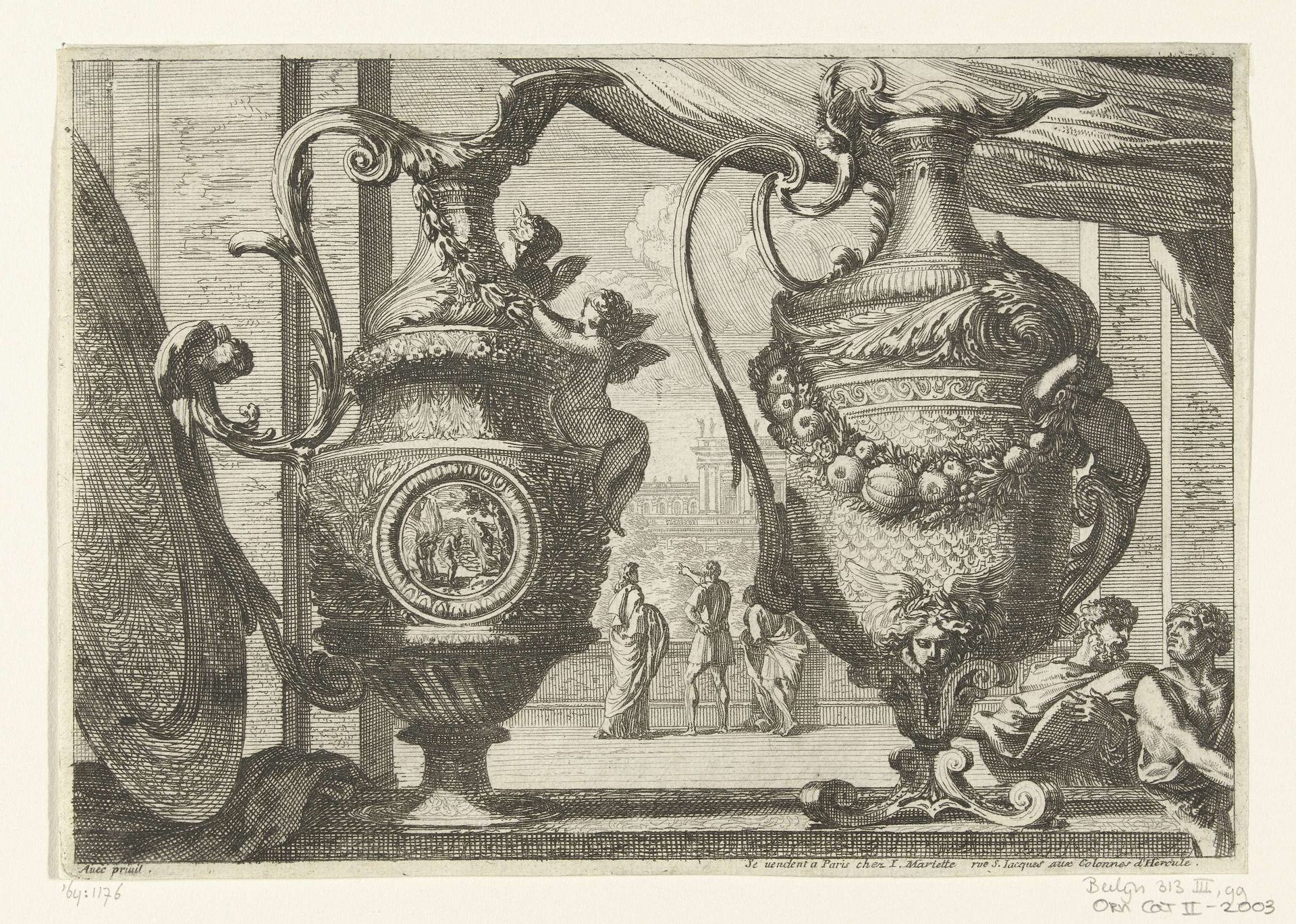
Curator: Here we have "Twee schenkkannen", or "Two Pitchers," an engraving dating from before 1742, attributed to an anonymous artist, at the Rijksmuseum. Editor: These are clearly more than functional objects – they’re incredibly ornate! The detail achieved through engraving is stunning, almost sculptural. What strikes you most about the visual construction of this work? Curator: The symmetry of the composition is undeniable. The two pitchers serve as focal points, their placement creating a balanced, almost theatrical presentation. Consider the intricate ornamentation, each element meticulously rendered to catch light and shadow. Notice how the engraver employs hatching and cross-hatching to delineate form and texture, transforming a flat surface into a captivating display of depth. Editor: I'm particularly drawn to the smaller scene depicted in the medallion on the left pitcher. It adds a layer of narrative to the already complex decorative elements. How does this contrast work? Curator: Precisely. The juxtaposition of the smaller, almost classical scene, against the larger, flamboyant Baroque ornamentation, invites a close consideration of visual hierarchies and formal contrast. This kind of dialogue, between form and represented scene, reveals a fascinating tension that the artist leverages for artistic effect. Editor: I see now how analyzing the pure form and the relationship between its elements allows us to appreciate the skill of the artist and the purpose of their work. Curator: Indeed. Focusing on these aspects helps to unveil the layered visual experience, providing a deeper insight into the intentions that guided its creation.

Artwork details
- Medium
- print, engraving
- Dimensions
- height 149 mm, width 213 mm
- Location
- Rijksmuseum
- Copyright
- Rijks Museum: Open Domain
Tags
baroque
old engraving style
history-painting
decorative-art
engraving
Comments
No comments
About this artwork
Curator: Here we have "Twee schenkkannen", or "Two Pitchers," an engraving dating from before 1742, attributed to an anonymous artist, at the Rijksmuseum. Editor: These are clearly more than functional objects – they’re incredibly ornate! The detail achieved through engraving is stunning, almost sculptural. What strikes you most about the visual construction of this work? Curator: The symmetry of the composition is undeniable. The two pitchers serve as focal points, their placement creating a balanced, almost theatrical presentation. Consider the intricate ornamentation, each element meticulously rendered to catch light and shadow. Notice how the engraver employs hatching and cross-hatching to delineate form and texture, transforming a flat surface into a captivating display of depth. Editor: I'm particularly drawn to the smaller scene depicted in the medallion on the left pitcher. It adds a layer of narrative to the already complex decorative elements. How does this contrast work? Curator: Precisely. The juxtaposition of the smaller, almost classical scene, against the larger, flamboyant Baroque ornamentation, invites a close consideration of visual hierarchies and formal contrast. This kind of dialogue, between form and represented scene, reveals a fascinating tension that the artist leverages for artistic effect. Editor: I see now how analyzing the pure form and the relationship between its elements allows us to appreciate the skill of the artist and the purpose of their work. Curator: Indeed. Focusing on these aspects helps to unveil the layered visual experience, providing a deeper insight into the intentions that guided its creation.
Comments
No comments