1670 - 1724
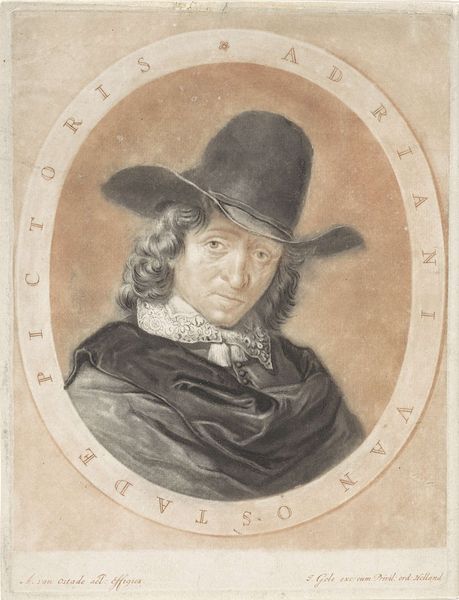
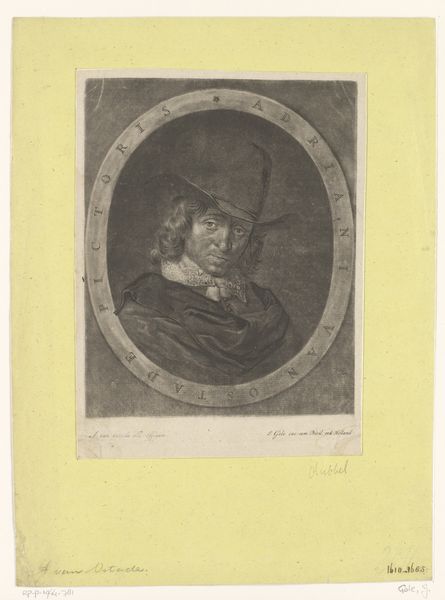
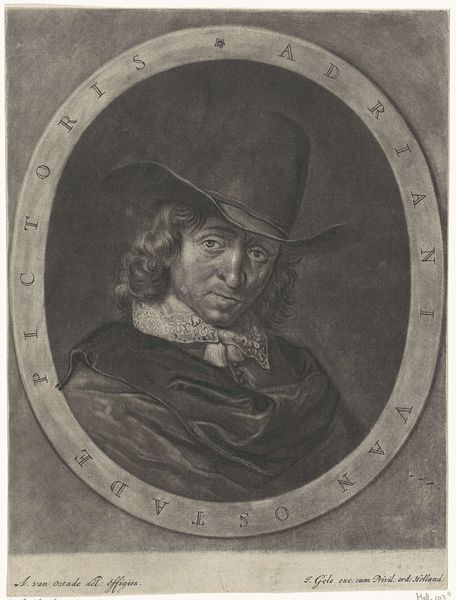
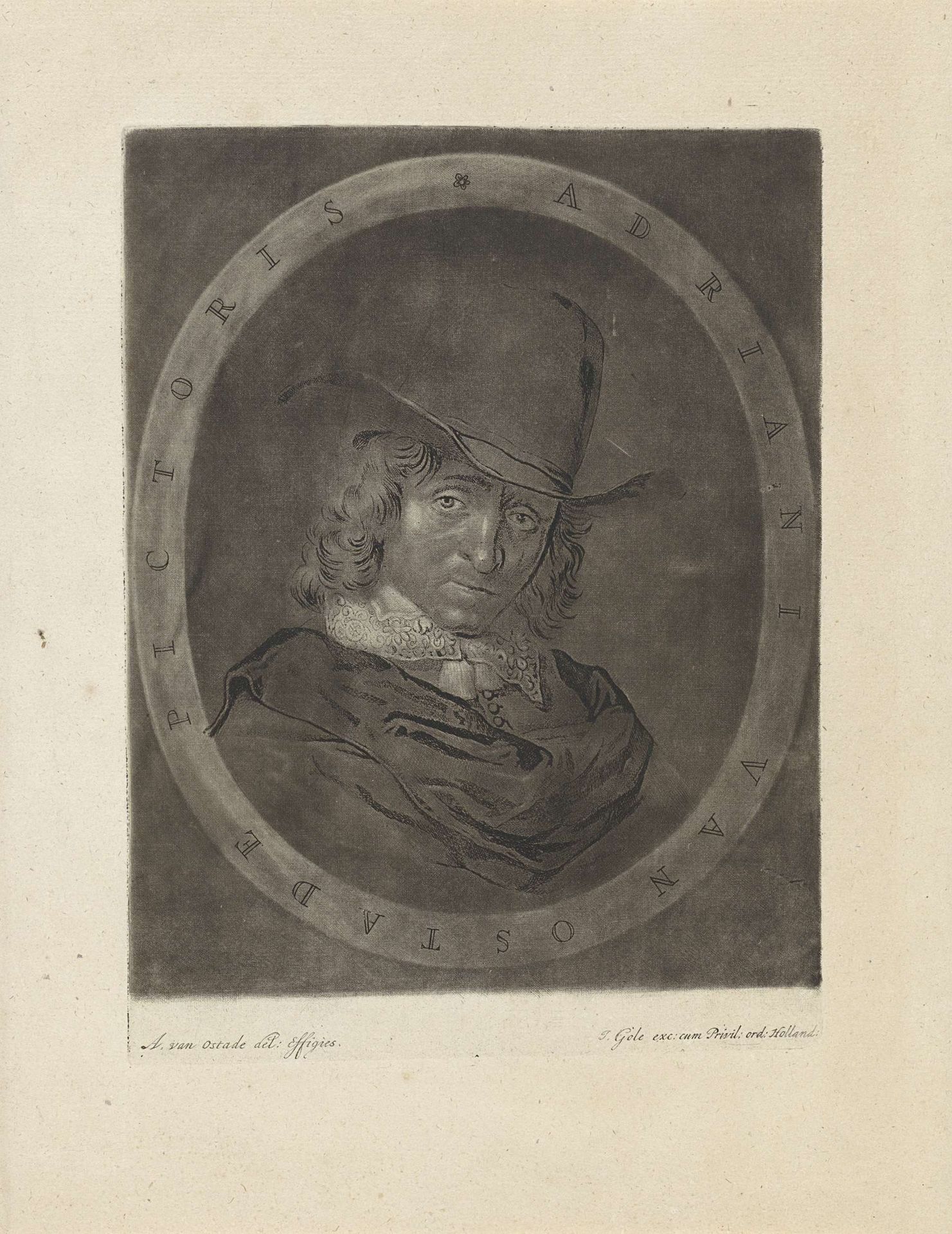
Portret van Adriaen van Ostade

Jacob Gole
1660 - 1737Location
RijksmuseumListen to curator's interpretation
Curatorial notes
Jacob Gole created this portrait of Adriaen van Ostade in the late 17th or early 18th century, using etching and engraving techniques. During this period in the Dutch Republic, portraiture served as a powerful marker of status and identity. While commissioned portraits were typically reserved for the elite, images of artists circulated within a burgeoning art market, reflecting a growing appreciation for individual creativity. Gole’s print flattens van Ostade’s likeness into an idealized, almost archetypal image of the artist: a figure cloaked in respectable garb, framed by the tools of his trade. Van Ostade is encircled by an oval frame filled with text. This draws a direct line between the sitter’s identity and his profession. Consider how Gole’s print participates in constructing and circulating the image of the artist, contributing to the narratives and mythologies that shape our understanding of creative identity even today. What does it mean to perform the role of an artist, and how are those performances shaped by historical and cultural forces?