
Curatorial notes
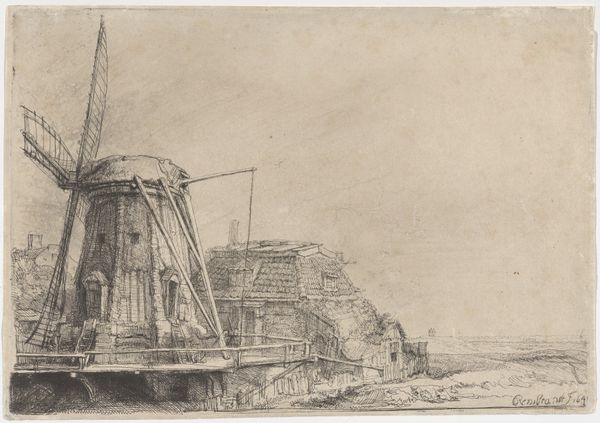
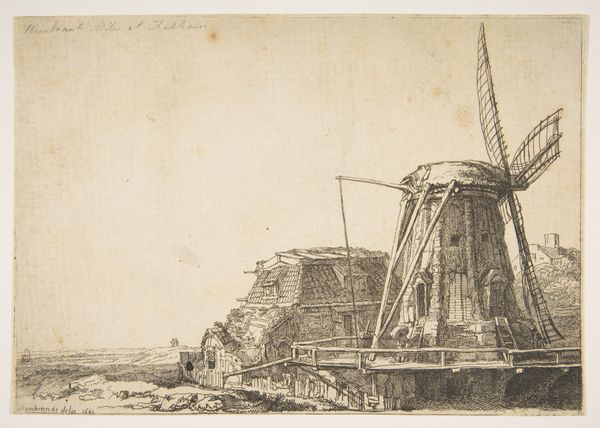
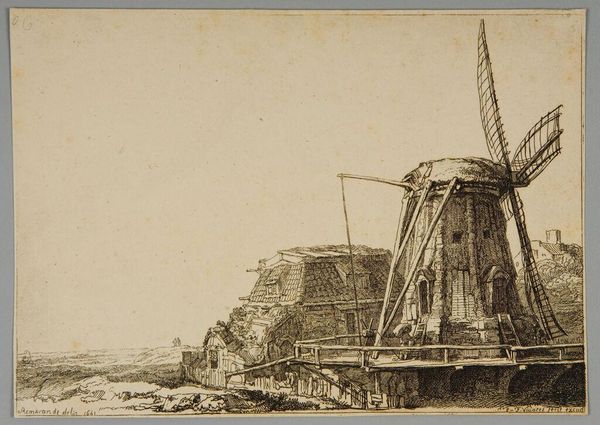
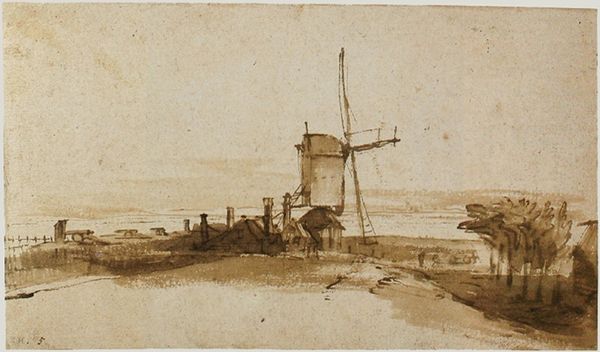
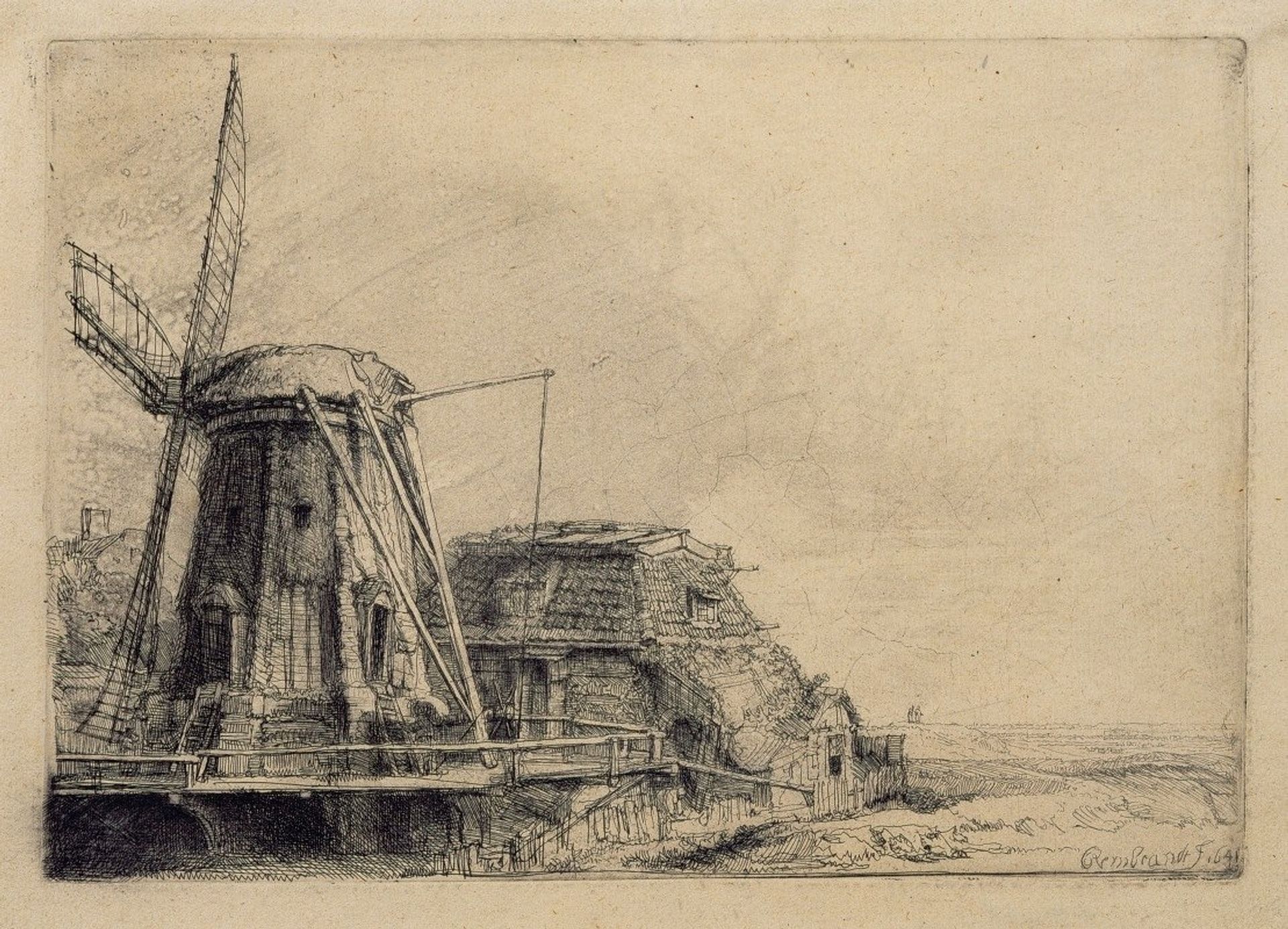
Rembrandt van Rijn made this etching, titled The Windmill, sometime during his career in the Dutch Golden Age. Rembrandt’s etchings offer a window into 17th-century Dutch life, reflecting the era’s economic prosperity, religious tensions, and social hierarchies. His choice of a windmill is particularly significant. Windmills were not just functional structures integral to the Dutch landscape, they symbolized human ingenuity and the constant struggle against the elements. But in a broader sense, they stood for ideas of labor and industry. Here, the windmill seems to blend seamlessly into the natural landscape. Rembrandt’s masterful use of light and shadow adds depth and texture to the scene, evoking a sense of both tranquility and the ever-present dynamism of the natural world. Ultimately, this piece invites us to consider our relationship with the land and the ways in which human activity shapes and is shaped by the environment. There's something about the delicate lines and tones of the piece which capture the quiet beauty of the Dutch countryside.