About this artwork
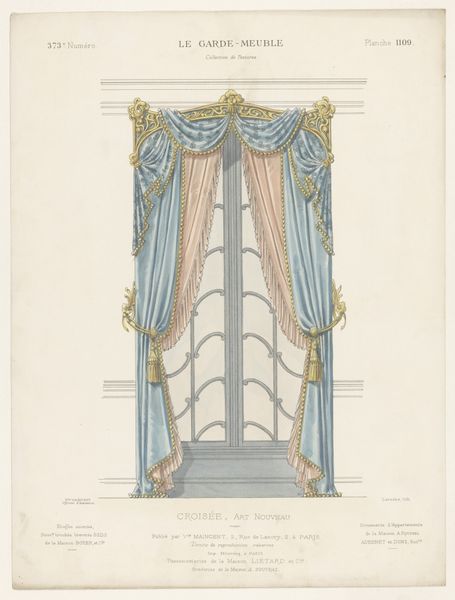
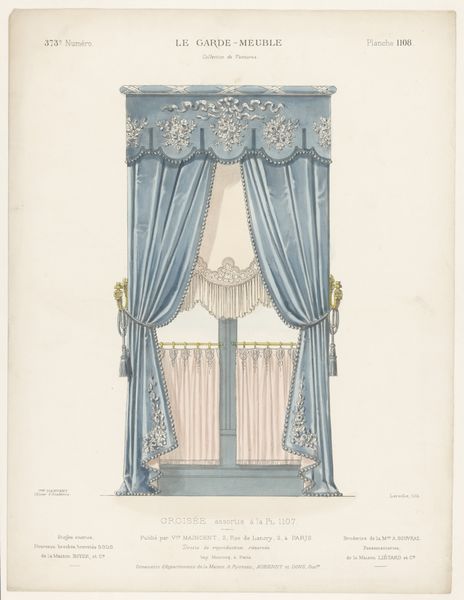
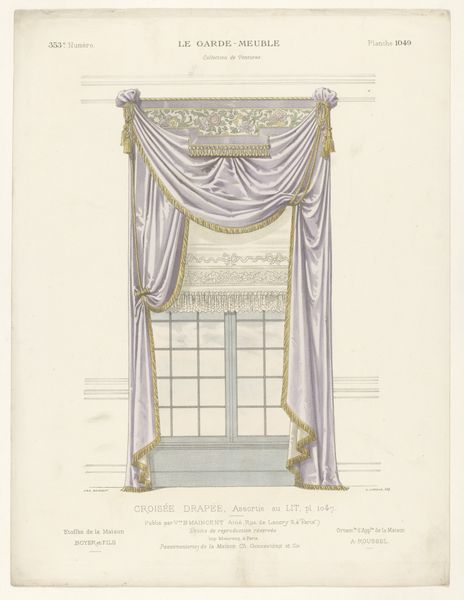
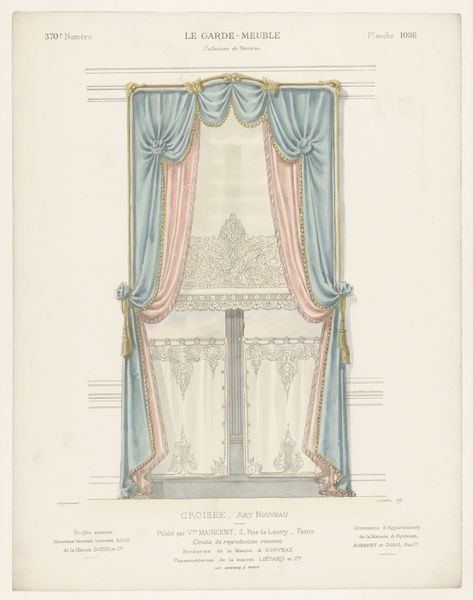
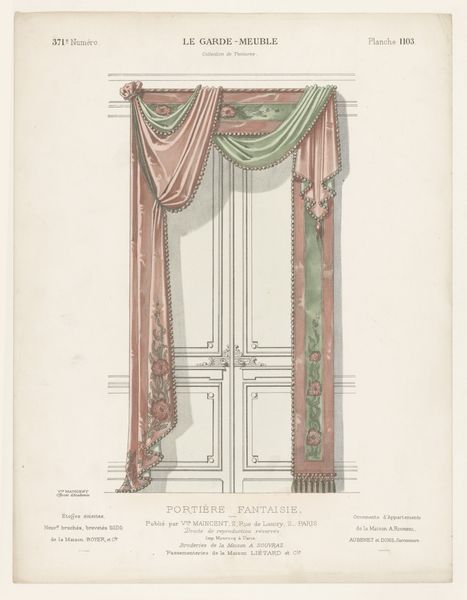
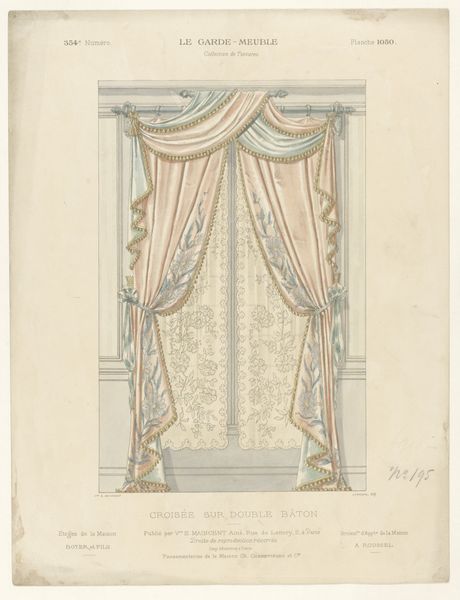
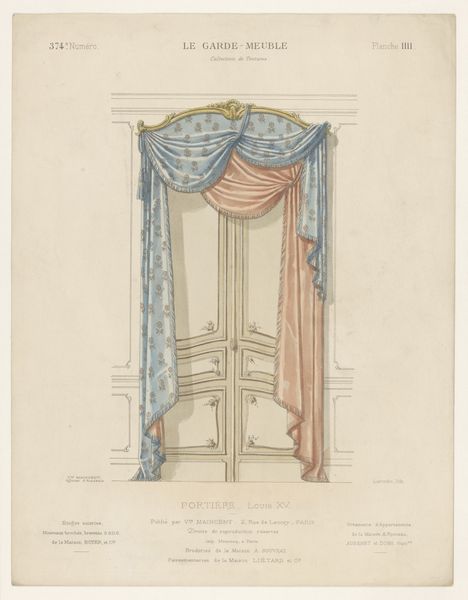
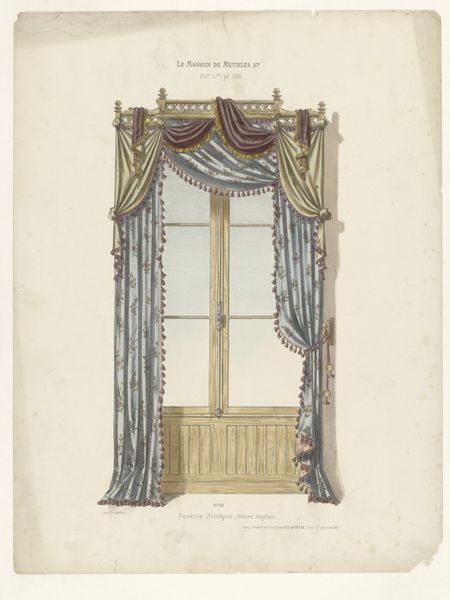
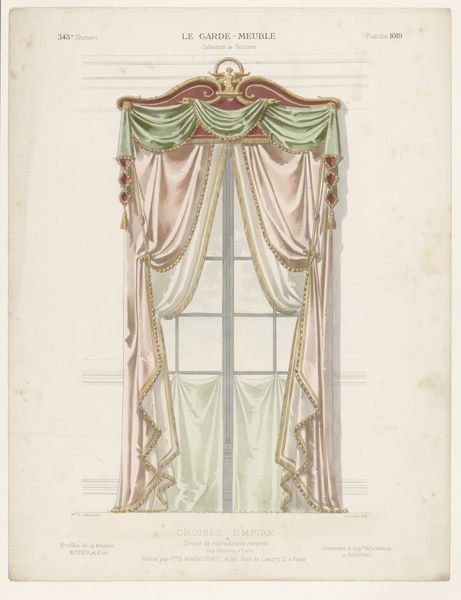
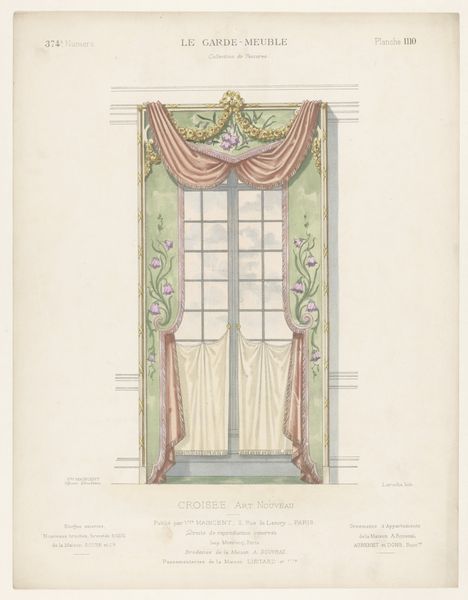
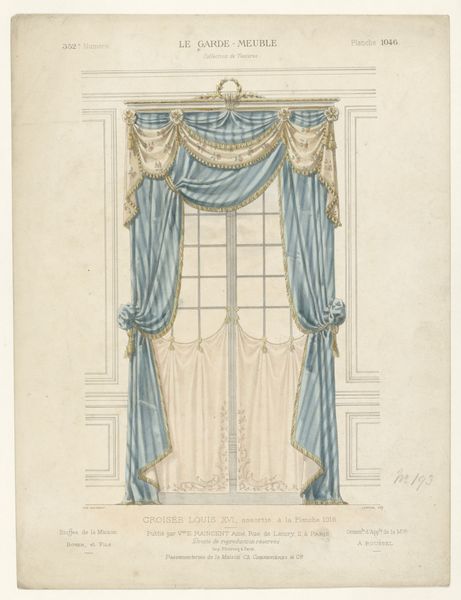
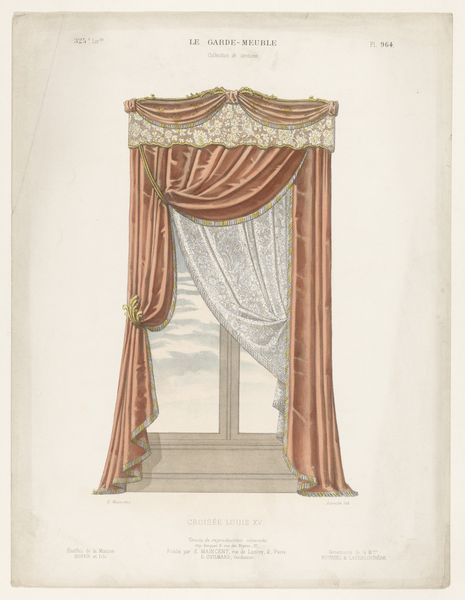
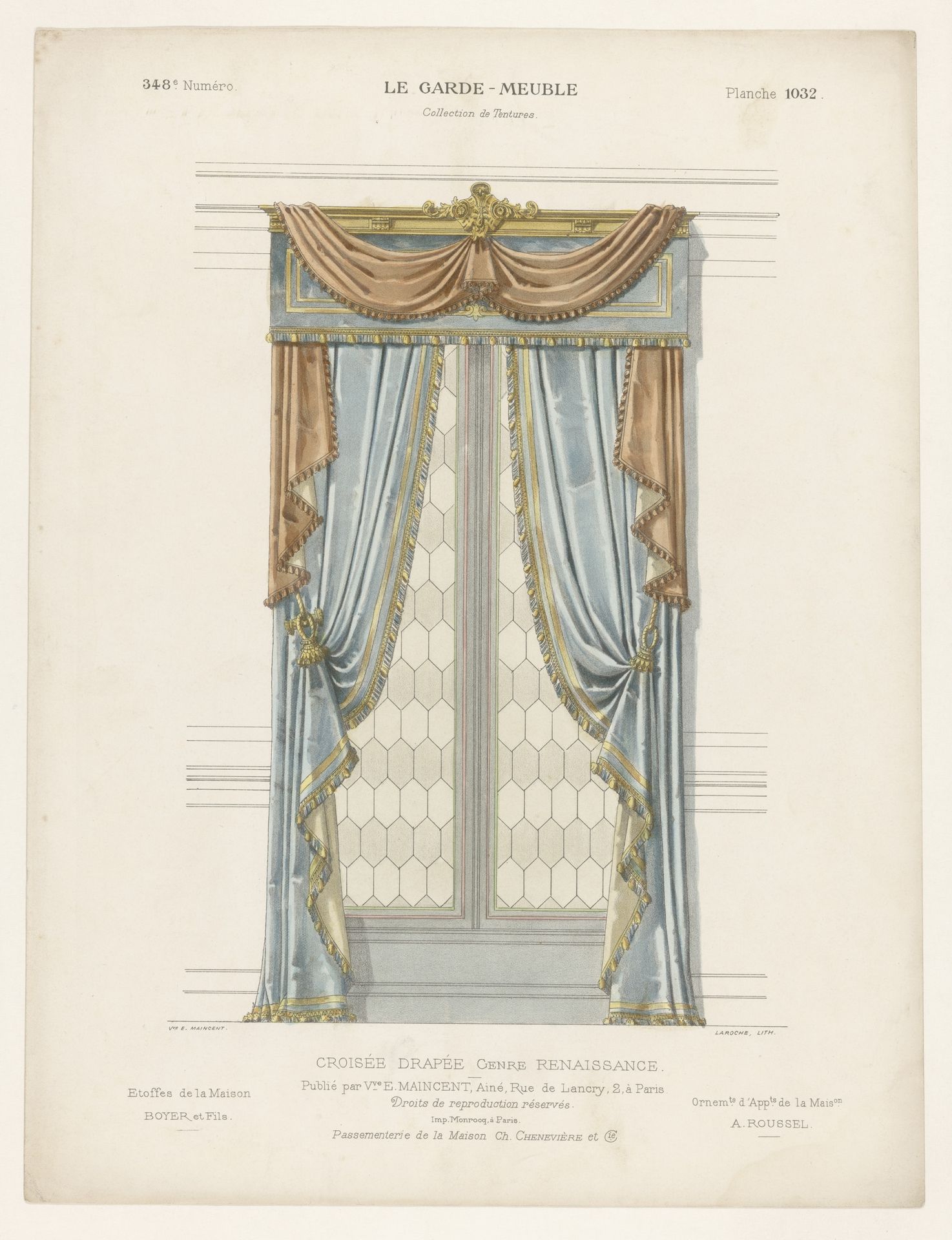
This print by Léon Laroche depicts a window with elaborate curtains. Without firm dates for Laroche, we can still speculate about its cultural context. The print’s title, "Le Garde-Meuble," suggests it originates from a publication showcasing furniture and interior design. In France, such publications served a crucial role in shaping bourgeois taste and promoting the decorative arts. The phrase “genre renaissance” suggests the style is evocative of historical designs, but filtered through a 19th-century lens. The image creates meaning through its visual codes of luxury, and its historical associations, and the print's precise linework suggests a focus on technical accuracy for craftsmen replicating these designs. By examining periodicals, trade publications, and design manuals from this period, we can understand the institutional forces that shaped both the production and reception of such images. The study of design history allows us to understand how taste is not merely personal but is shaped by social and economic forces.

Artwork details
- Medium
- drawing, print, architecture
- Dimensions
- height 360 mm, width 274 mm
- Copyright
- Rijks Museum: Open Domain
Tags
Comments
Share your thoughts
About this artwork
This print by Léon Laroche depicts a window with elaborate curtains. Without firm dates for Laroche, we can still speculate about its cultural context. The print’s title, "Le Garde-Meuble," suggests it originates from a publication showcasing furniture and interior design. In France, such publications served a crucial role in shaping bourgeois taste and promoting the decorative arts. The phrase “genre renaissance” suggests the style is evocative of historical designs, but filtered through a 19th-century lens. The image creates meaning through its visual codes of luxury, and its historical associations, and the print's precise linework suggests a focus on technical accuracy for craftsmen replicating these designs. By examining periodicals, trade publications, and design manuals from this period, we can understand the institutional forces that shaped both the production and reception of such images. The study of design history allows us to understand how taste is not merely personal but is shaped by social and economic forces.
Comments
Share your thoughts