About this artwork
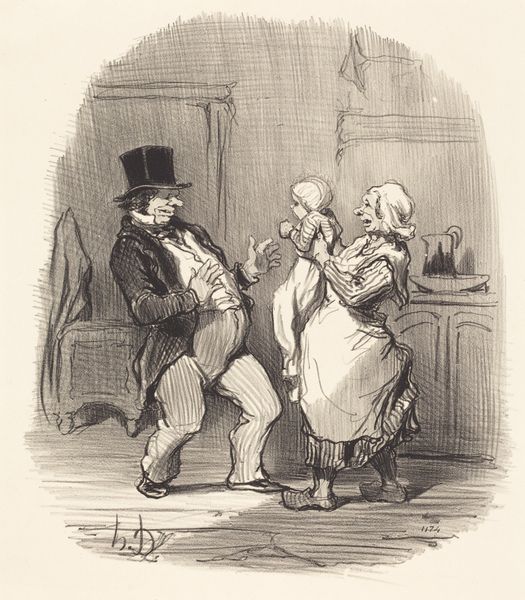
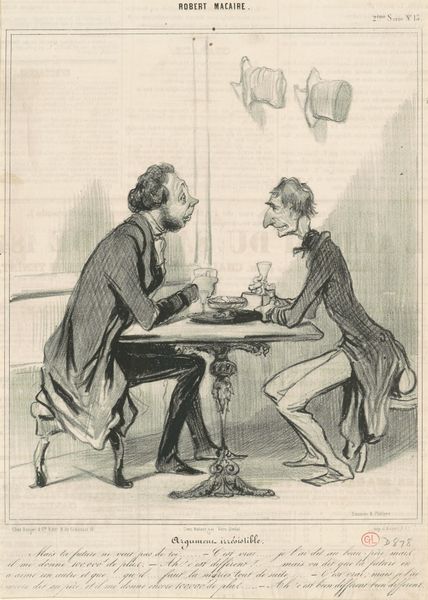
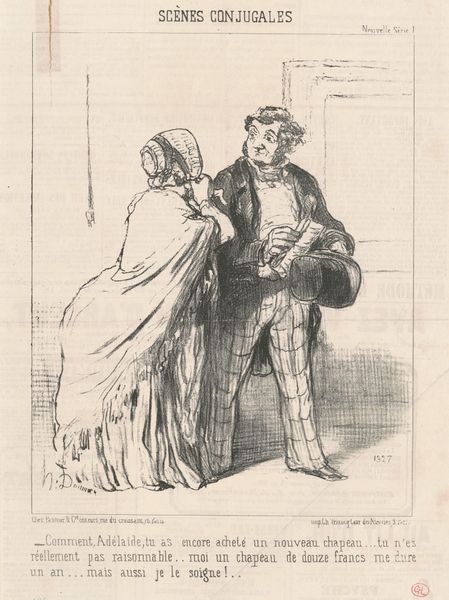
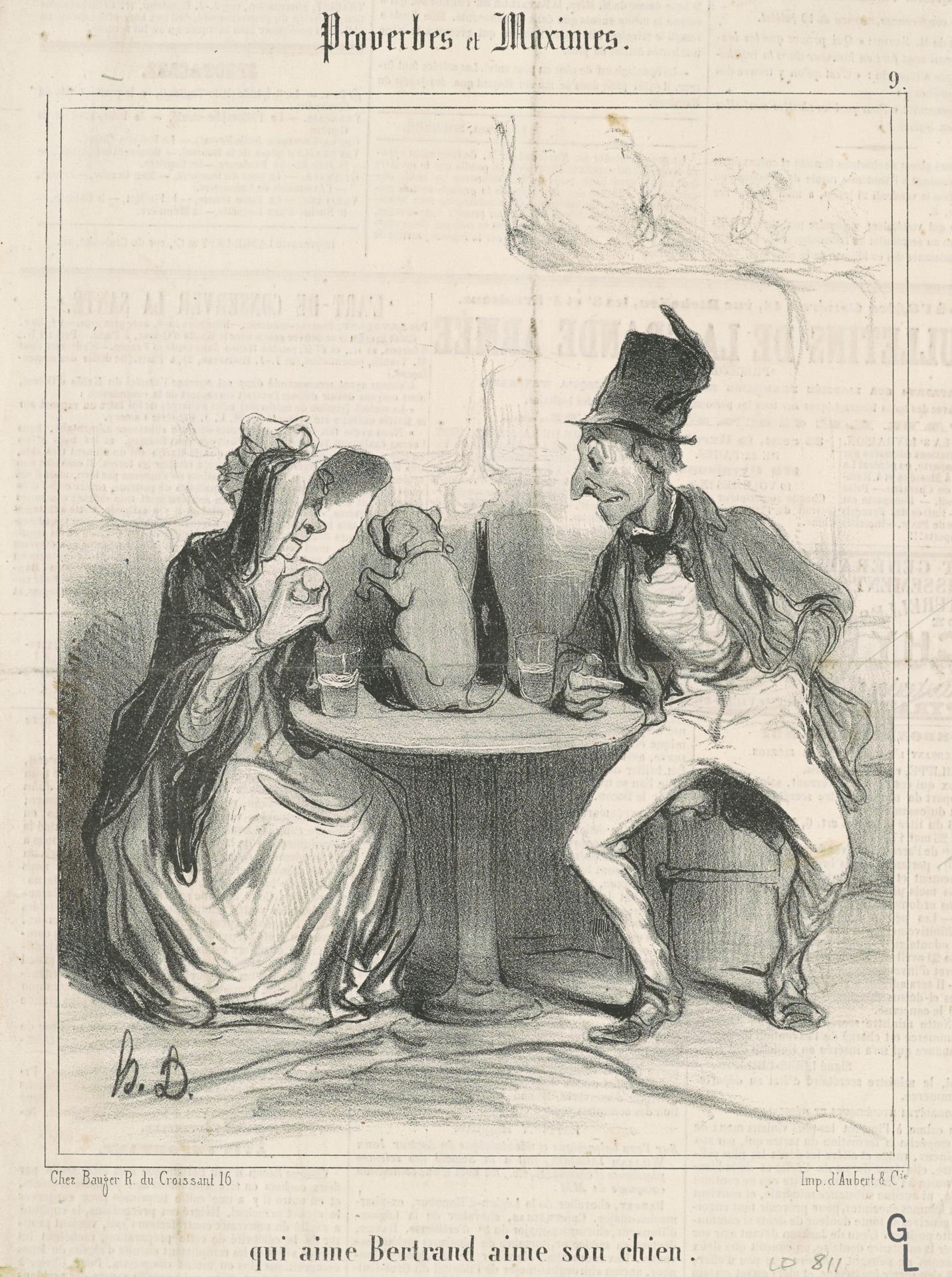
Here, we see "Qui aime Bertrand aime son chien" (Who loves Bertrand, loves his dog) by Honoré Daumier, a lithograph cartoon rendering of two figures at a table with a dog. Dominating the scene are the coarse, scratchy lines which create a sense of volume and texture. Light and shadow play across the forms, casting the figures into high relief against the aged, newspaper-like texture of the background. Daumier uses the structure of the composition, dividing it into clear foreground and background elements to make a statement. The foreground figures are presented in sharp detail, whereas the background is hinted at through rough markings. The cartoon satirizes social hypocrisy through its formal approach. It sets up a visual structure in which the apparent meaning is in tension with its formal presentation. The drawing doesn't just depict a proverb; it embodies a critique, using its form to destabilize conventional understandings of love and loyalty.
Qui aime Bertrand aime son chien
c. 19th century


Artwork details
- Medium
- lithograph, print
- Copyright
- National Gallery of Art: CC0 1.0
Tags
lithograph
caricature
old engraving style
genre-painting
Comments
Be the first to share your thoughts about this work.
About this artwork
Here, we see "Qui aime Bertrand aime son chien" (Who loves Bertrand, loves his dog) by Honoré Daumier, a lithograph cartoon rendering of two figures at a table with a dog. Dominating the scene are the coarse, scratchy lines which create a sense of volume and texture. Light and shadow play across the forms, casting the figures into high relief against the aged, newspaper-like texture of the background. Daumier uses the structure of the composition, dividing it into clear foreground and background elements to make a statement. The foreground figures are presented in sharp detail, whereas the background is hinted at through rough markings. The cartoon satirizes social hypocrisy through its formal approach. It sets up a visual structure in which the apparent meaning is in tension with its formal presentation. The drawing doesn't just depict a proverb; it embodies a critique, using its form to destabilize conventional understandings of love and loyalty.
Comments
Be the first to share your thoughts about this work.