About this artwork
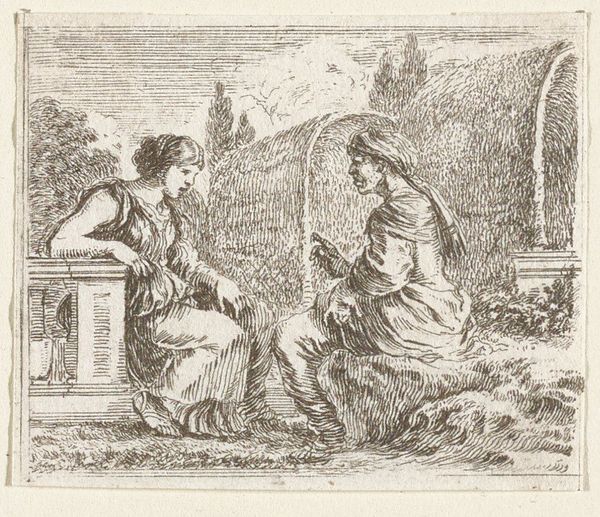
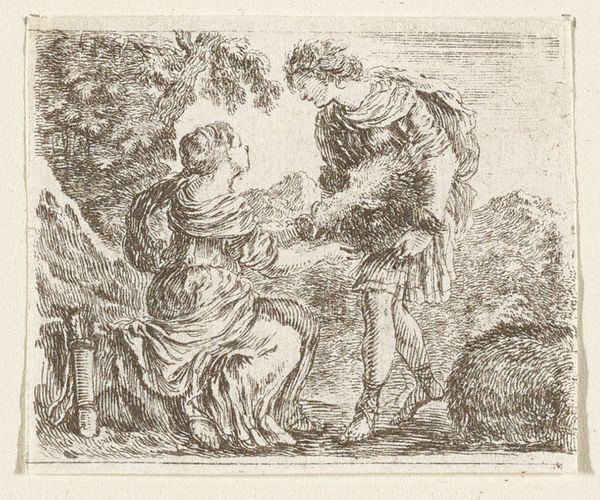
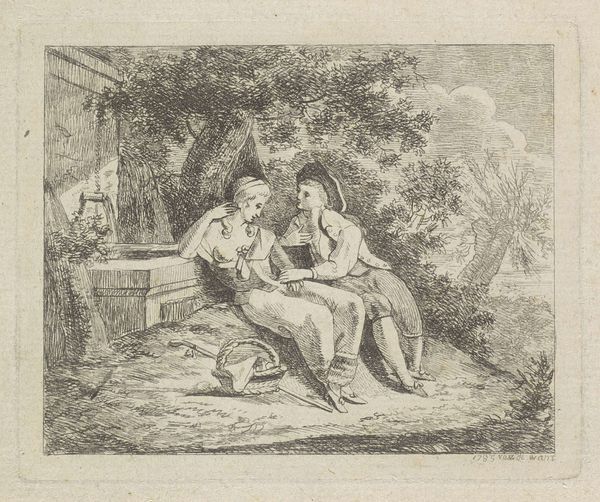
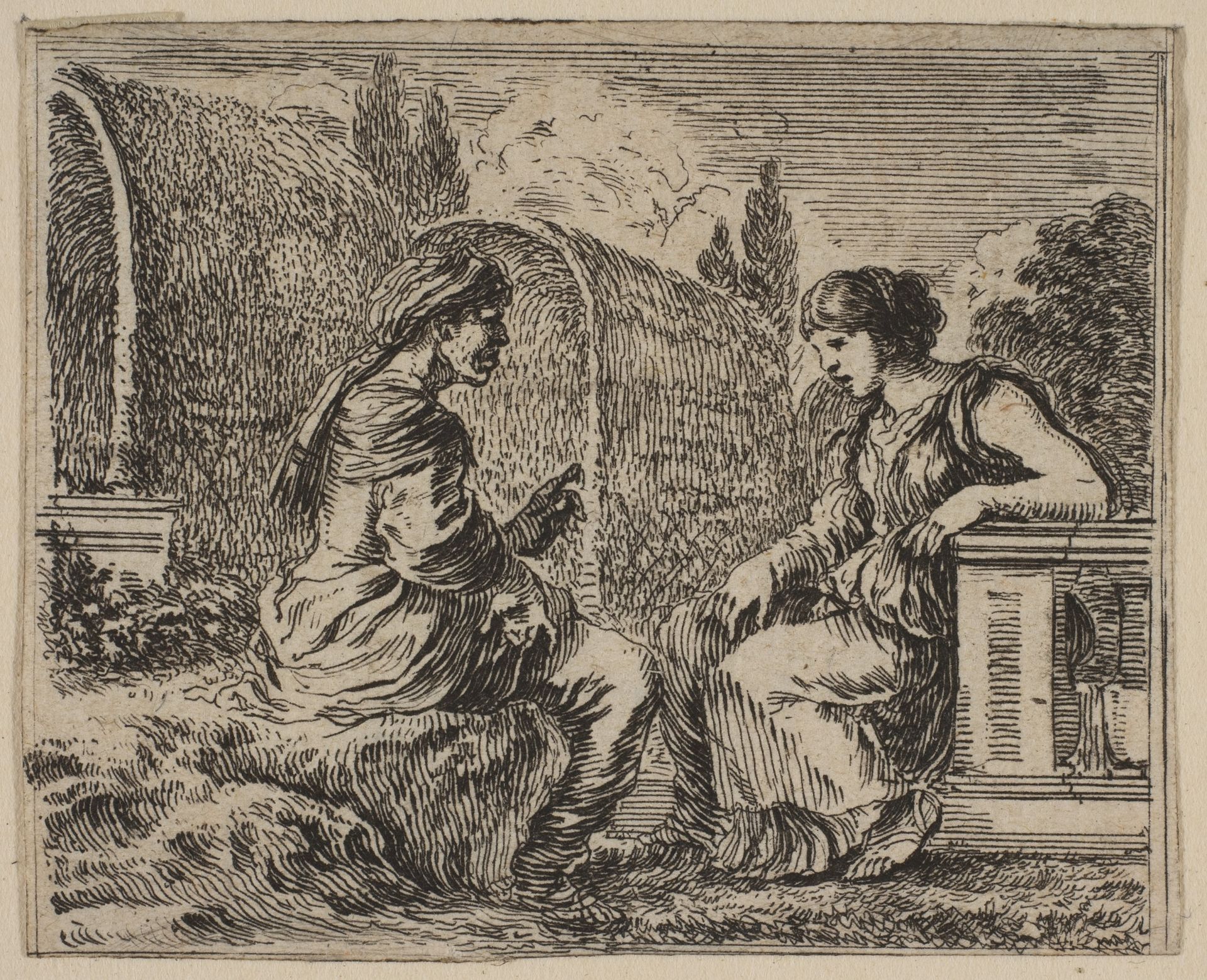
Stefano della Bella created this small print, Vertumnus and Pomona, as part of a series called 'Game of Mythology' in the 17th century. During this period, European society was structured by rigid social hierarchies, which also defined gender roles and expectations. Here, we see the Roman god Vertumnus, disguised as an old woman, attempting to woo Pomona, the goddess of orchards and gardens. Della Bella's delicate etching captures a moment of negotiation between desire and consent. Pomona appears reserved, seemingly pondering Vertumnus's words, a dynamic that reflects the era’s complex negotiations of power. Consider how this scene might symbolize the social constraints placed on women, where even a goddess must navigate the desires of a suitor, regardless of her own inclinations. This print invites us to reflect on the subtle yet persistent ways in which societal expectations shape individual interactions.
Vertumnus and Pomona, from 'Game of Mythology' (Jeu de la Mythologie) 1644

Stefano della Bella
1610 - 1664
The Metropolitan Museum of Art
Metropolitan Museum of Art, New York, NYArtwork details
- Medium
- drawing, print, etching
- Dimensions
- Sheet: 1 13/16 × 2 3/16 in. (4.6 × 5.6 cm)
- Location
- Metropolitan Museum of Art, New York, NY
- Copyright
- Public Domain
Tags
drawing
allegory
narrative-art
etching
landscape
figuration
genre-painting
italian-renaissance
Comments
No comments
About this artwork
Stefano della Bella created this small print, Vertumnus and Pomona, as part of a series called 'Game of Mythology' in the 17th century. During this period, European society was structured by rigid social hierarchies, which also defined gender roles and expectations. Here, we see the Roman god Vertumnus, disguised as an old woman, attempting to woo Pomona, the goddess of orchards and gardens. Della Bella's delicate etching captures a moment of negotiation between desire and consent. Pomona appears reserved, seemingly pondering Vertumnus's words, a dynamic that reflects the era’s complex negotiations of power. Consider how this scene might symbolize the social constraints placed on women, where even a goddess must navigate the desires of a suitor, regardless of her own inclinations. This print invites us to reflect on the subtle yet persistent ways in which societal expectations shape individual interactions.
Comments
No comments