About this artwork
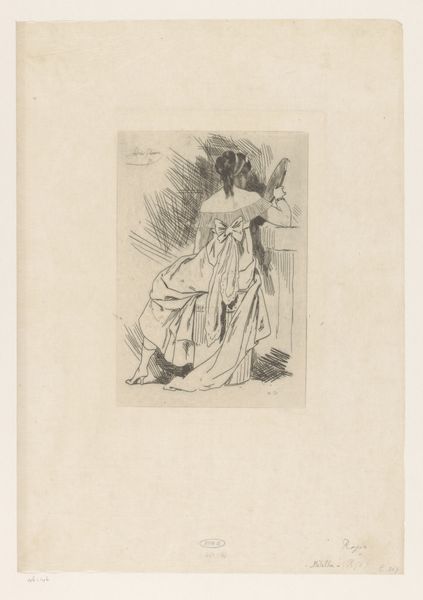
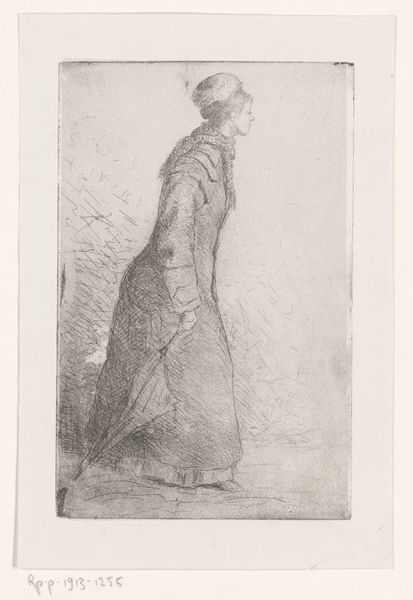
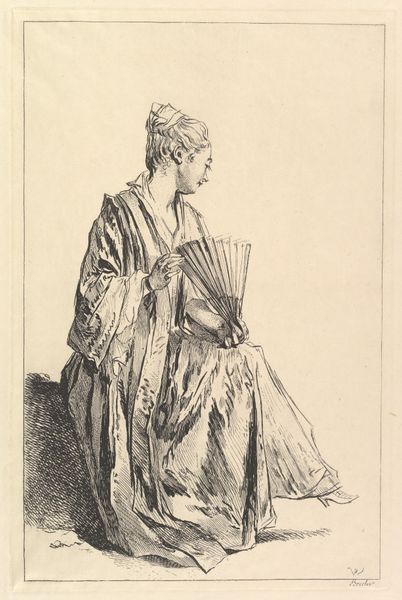
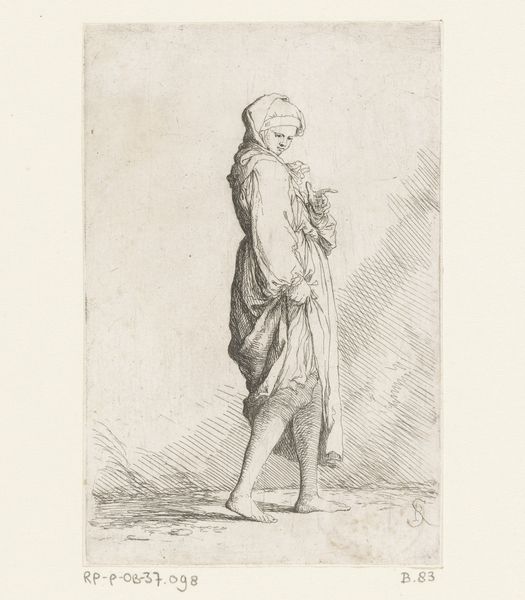
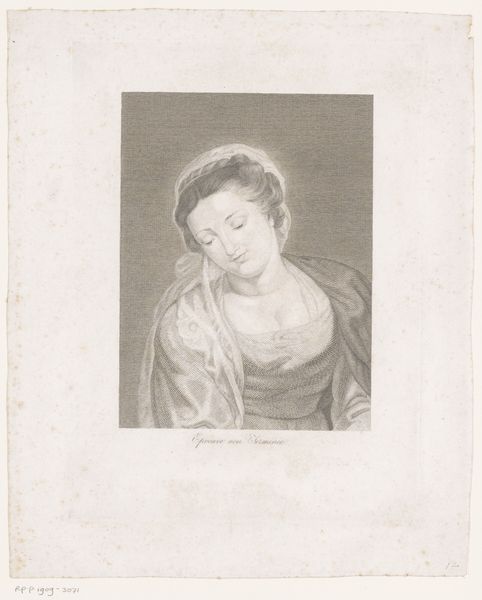
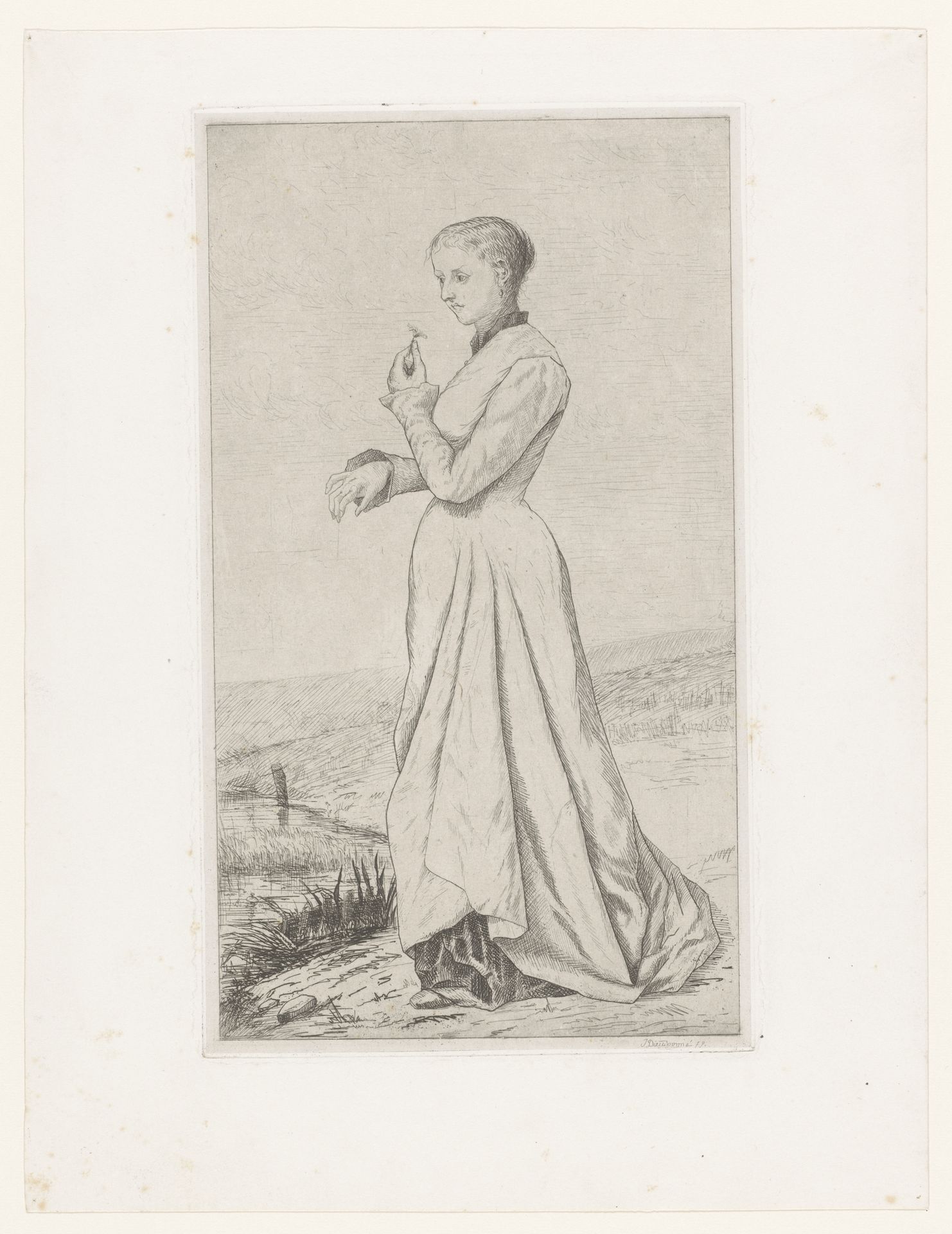
This print, titled "Jonge vrouw raadpleegt een margriet" or "Young woman consulting a daisy," was made by Jules Dieudonné using a technique called etching. In etching, a metal plate is coated with a waxy substance, and the artist draws through this layer, exposing the metal. Acid is then applied, biting into the exposed lines. The plate is inked, wiped clean, and then printed, leaving behind the image. Notice the delicate, linear quality of the marks. These are traces of a skilled hand and a corrosive chemistry, combined to create this image. It's fascinating how Dieudonné uses this industrial process to depict a scene of such quiet contemplation. The woman's simple act of divination with a daisy connects to larger themes of labor, value, and the meeting of nature and industry. By understanding the material and process behind the print, we can appreciate the full depth of its meaning. It encourages us to think beyond conventional divisions of craft and art.

Artwork details
- Medium
- print, etching
- Dimensions
- height 256 mm, width 150 mm
- Copyright
- Rijks Museum: Open Domain
Tags
Comments
Share your thoughts
About this artwork
This print, titled "Jonge vrouw raadpleegt een margriet" or "Young woman consulting a daisy," was made by Jules Dieudonné using a technique called etching. In etching, a metal plate is coated with a waxy substance, and the artist draws through this layer, exposing the metal. Acid is then applied, biting into the exposed lines. The plate is inked, wiped clean, and then printed, leaving behind the image. Notice the delicate, linear quality of the marks. These are traces of a skilled hand and a corrosive chemistry, combined to create this image. It's fascinating how Dieudonné uses this industrial process to depict a scene of such quiet contemplation. The woman's simple act of divination with a daisy connects to larger themes of labor, value, and the meeting of nature and industry. By understanding the material and process behind the print, we can appreciate the full depth of its meaning. It encourages us to think beyond conventional divisions of craft and art.
Comments
Share your thoughts