About this artwork
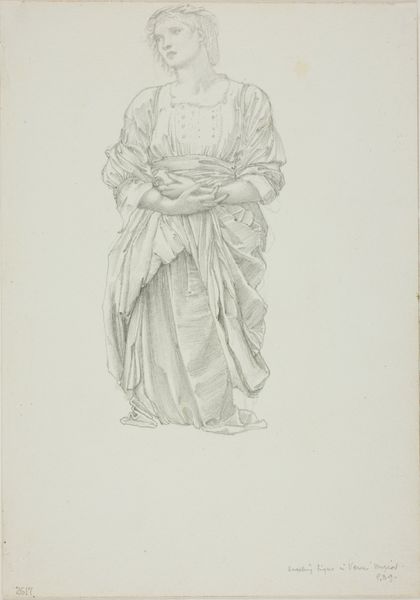
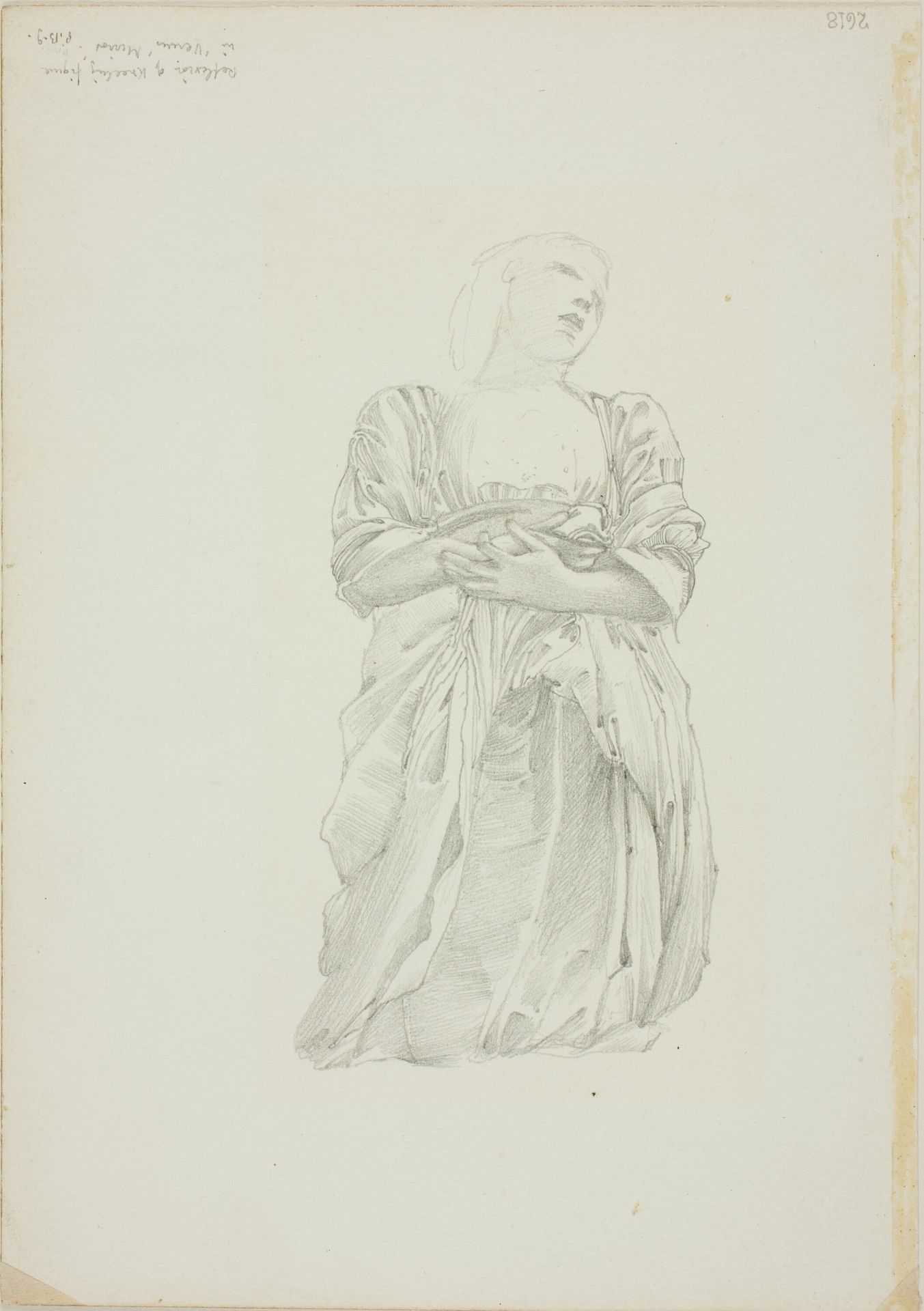
Edward Burne-Jones made this graphite study of a kneeling female figure as preparation for his painting, *The Mirror of Venus*. It’s a window into the artist’s creative process, but also into the artistic culture of late 19th century England. Burne-Jones was a leading figure in the Aesthetic movement, which sought to revive medieval artistic styles and values. But while its proponents were inspired by the past, this wasn't a simple nostalgia. They engaged with art history and the present, taking inspiration from Greek myth and Renaissance painting. The kneeling figure calls on Botticelli’s Venus, for example, but its purpose was to redefine beauty for a society undergoing rapid industrialization and social change. We can better understand Burne-Jones’ influences by exploring the institutions that shaped his work. What were the aesthetic debates playing out in art schools and galleries at the time? To what extent were artists engaged with the political and social issues of the day? Art history gives us a better understanding of art's meaning.
Reflection of Kneeling Female Figure, study for The Mirror of Venus
c. 1873 - 1877


Artwork details
- Medium
- drawing, print, paper, pencil, graphite
- Dimensions
- 253 × 178 mm
- Location
- The Art Institute of Chicago
- Copyright
- Public Domain
Tags
Comments
Share your thoughts
About this artwork
Edward Burne-Jones made this graphite study of a kneeling female figure as preparation for his painting, *The Mirror of Venus*. It’s a window into the artist’s creative process, but also into the artistic culture of late 19th century England. Burne-Jones was a leading figure in the Aesthetic movement, which sought to revive medieval artistic styles and values. But while its proponents were inspired by the past, this wasn't a simple nostalgia. They engaged with art history and the present, taking inspiration from Greek myth and Renaissance painting. The kneeling figure calls on Botticelli’s Venus, for example, but its purpose was to redefine beauty for a society undergoing rapid industrialization and social change. We can better understand Burne-Jones’ influences by exploring the institutions that shaped his work. What were the aesthetic debates playing out in art schools and galleries at the time? To what extent were artists engaged with the political and social issues of the day? Art history gives us a better understanding of art's meaning.
Comments
Share your thoughts