About this artwork
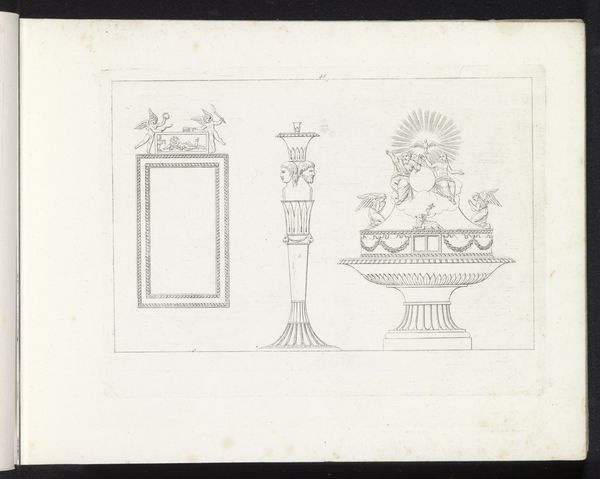
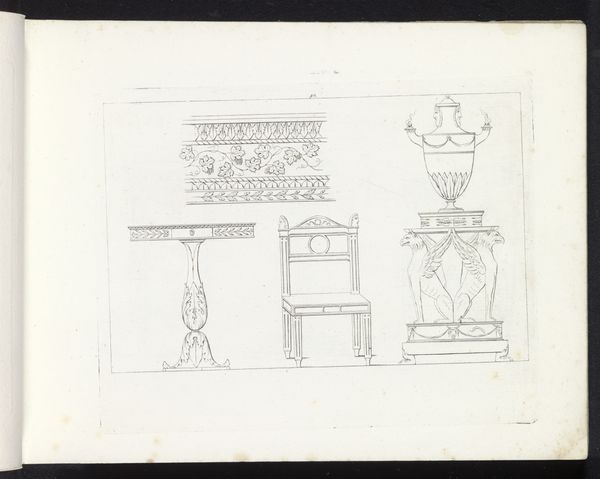
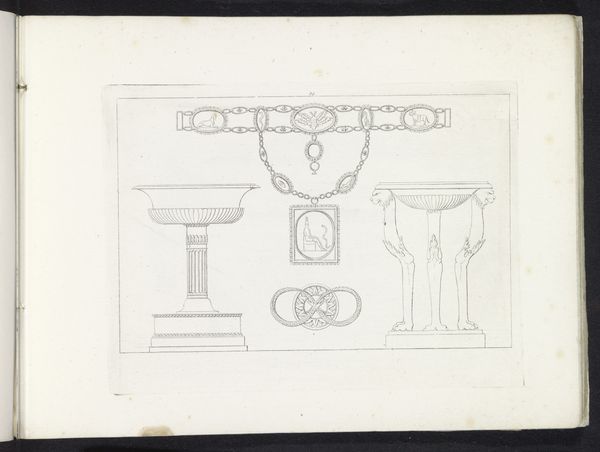
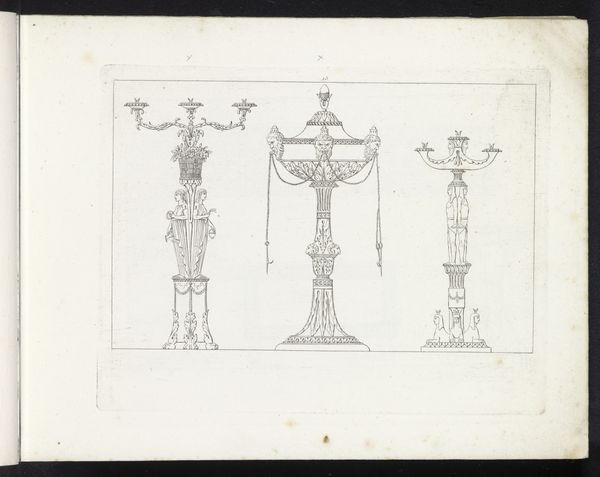
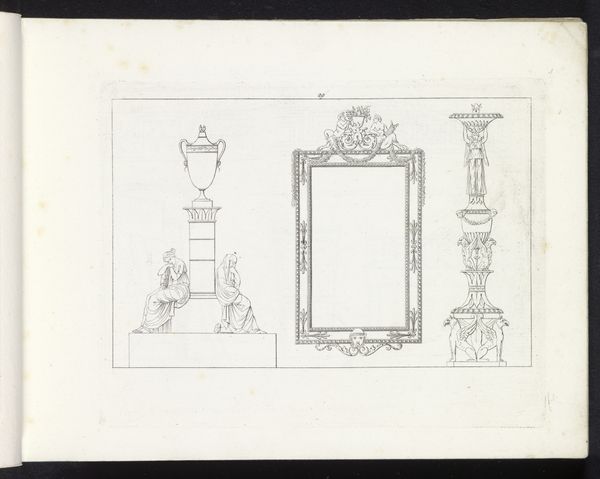
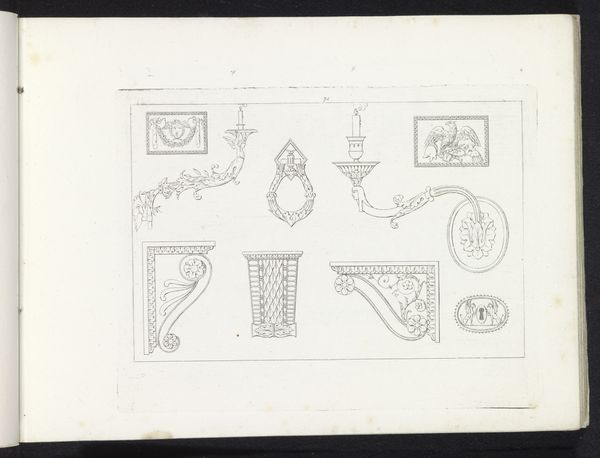
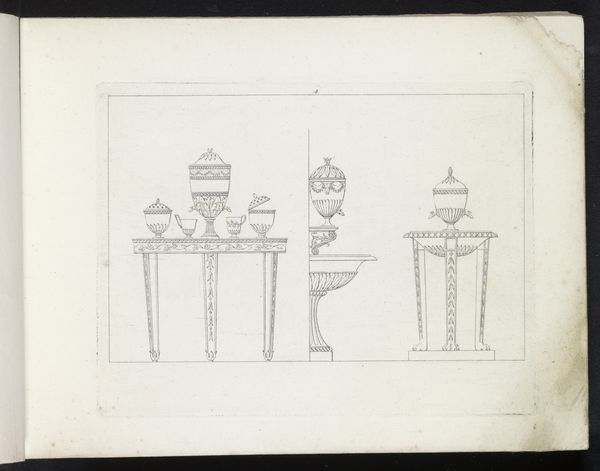
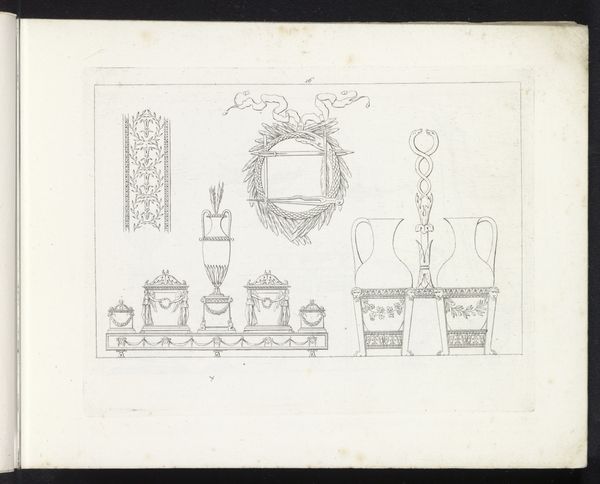
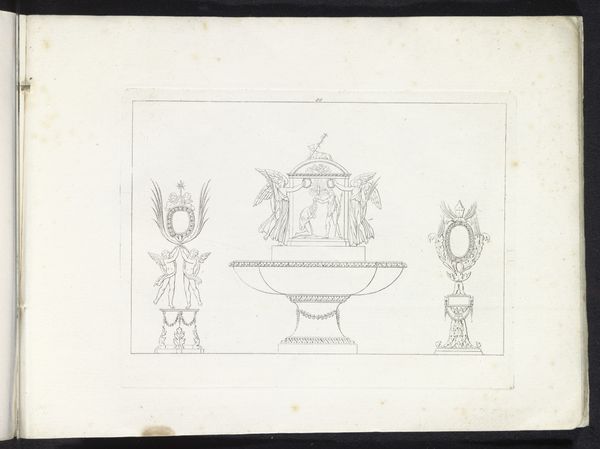
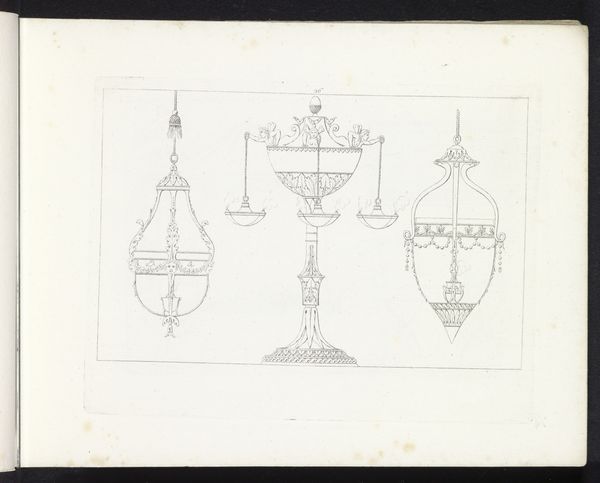
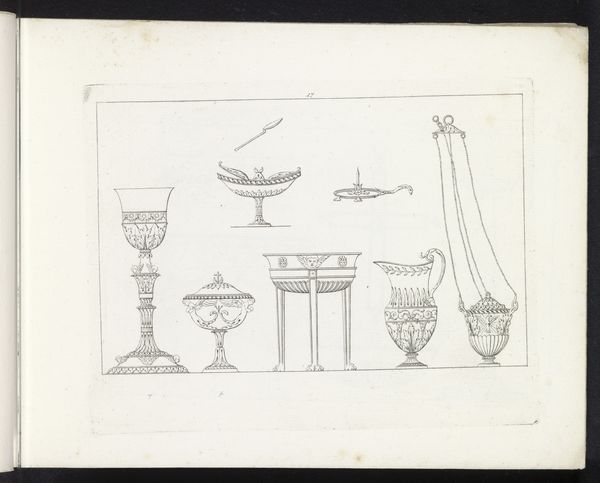
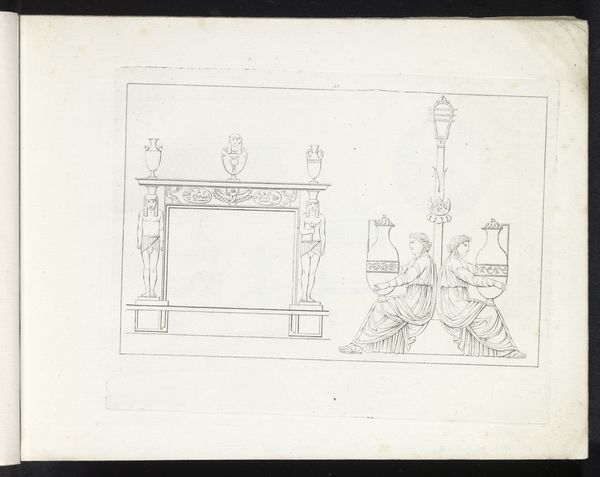
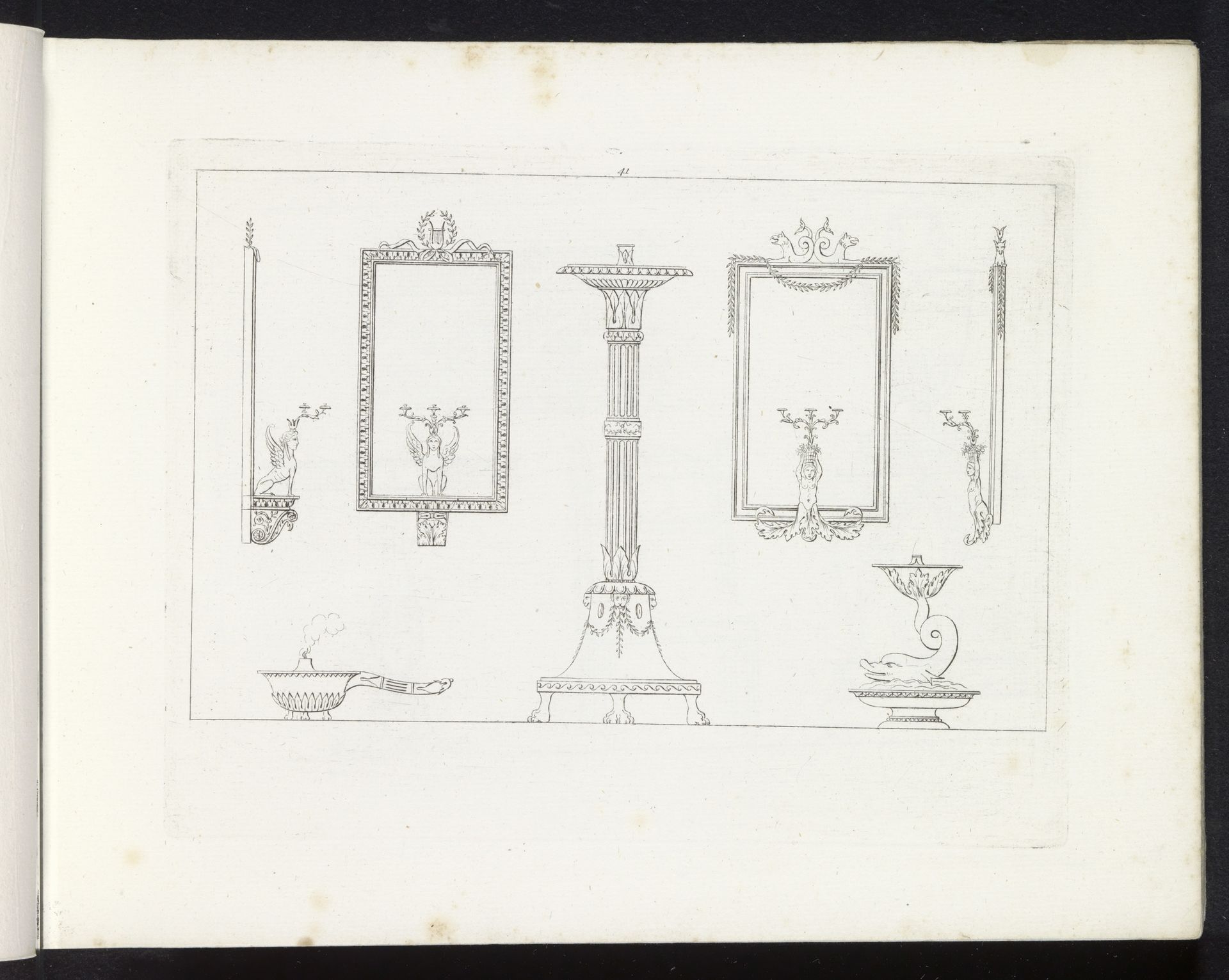
Pietro Ruga rendered this undated drawing with pen on paper. We see a carefully arranged composition of interior design elements, reflecting the period's fascination with light and reflection. The mirrors and candelabras weren’t mere objects; they symbolized status and taste within the rigid social structures of the time. Light, in its dance with these objects, illuminates not just a room, but also something about the power dynamics inherent in the domestic sphere. The symmetrical arrangements and classical motifs speak to an aspiration of order, which masks the complexities of gender, class, and access that dictated who could possess and enjoy these beautiful, yet functional objects. They invite us to consider the unseen hands that polished the silver, filled the oil burners, and ultimately, lived in the shadows of such manufactured light. Through Ruga’s composition we are asked to consider not just the objects themselves, but the unseen stories and societal structures they supported.
Vier spiegels met kandelaars, twee staande kandelaars en een oliebrander
1817

Artwork details
- Medium
- drawing, paper, ink
- Dimensions
- height 165 mm, width 215 mm
- Copyright
- Rijks Museum: Open Domain
Tags
Comments
Share your thoughts
About this artwork
Pietro Ruga rendered this undated drawing with pen on paper. We see a carefully arranged composition of interior design elements, reflecting the period's fascination with light and reflection. The mirrors and candelabras weren’t mere objects; they symbolized status and taste within the rigid social structures of the time. Light, in its dance with these objects, illuminates not just a room, but also something about the power dynamics inherent in the domestic sphere. The symmetrical arrangements and classical motifs speak to an aspiration of order, which masks the complexities of gender, class, and access that dictated who could possess and enjoy these beautiful, yet functional objects. They invite us to consider the unseen hands that polished the silver, filled the oil burners, and ultimately, lived in the shadows of such manufactured light. Through Ruga’s composition we are asked to consider not just the objects themselves, but the unseen stories and societal structures they supported.
Comments
Share your thoughts