About this artwork
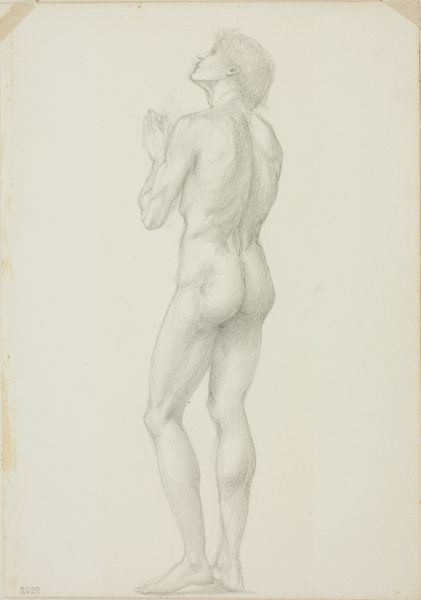
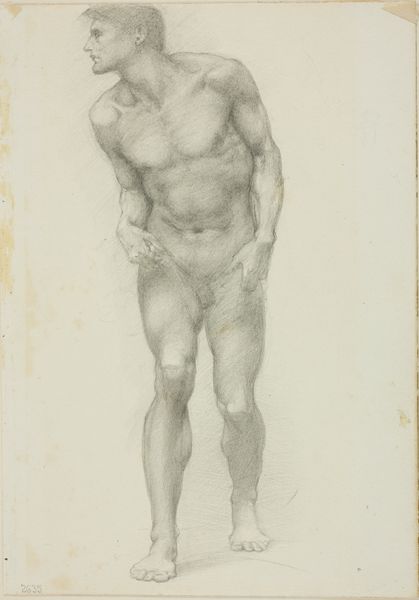
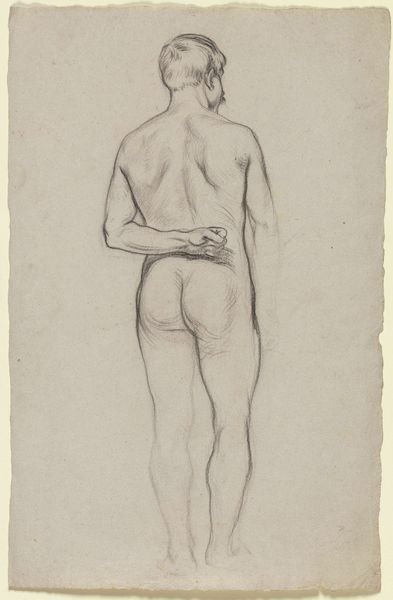
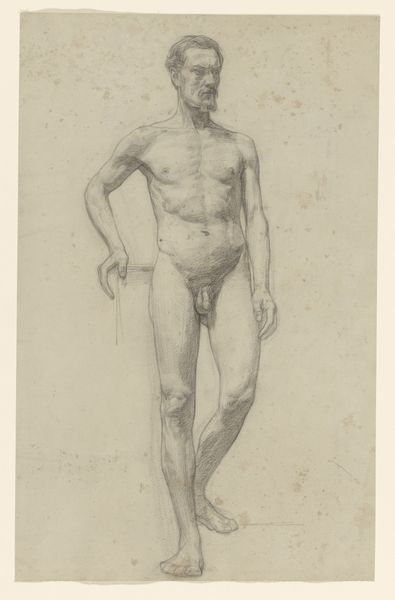
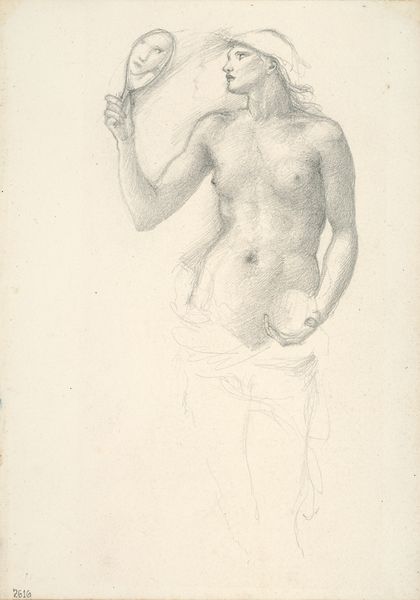
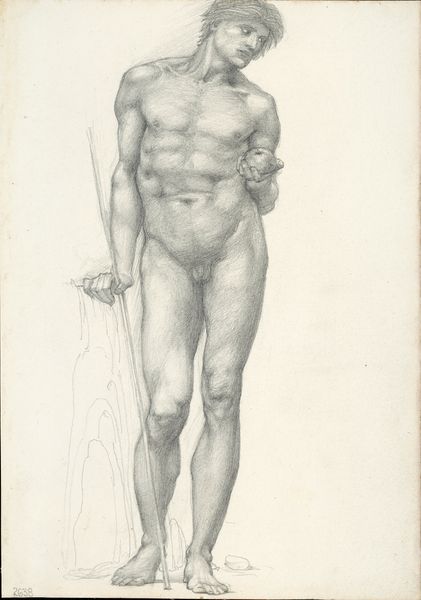
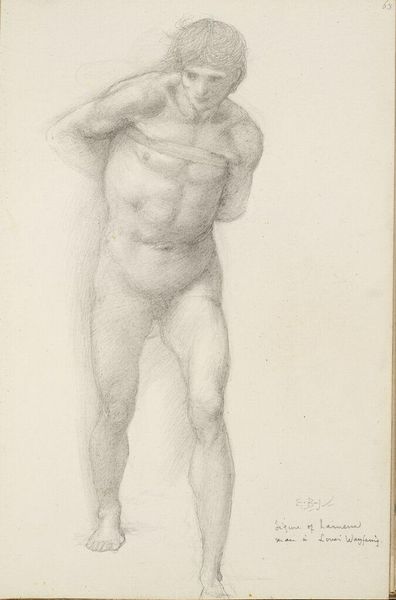
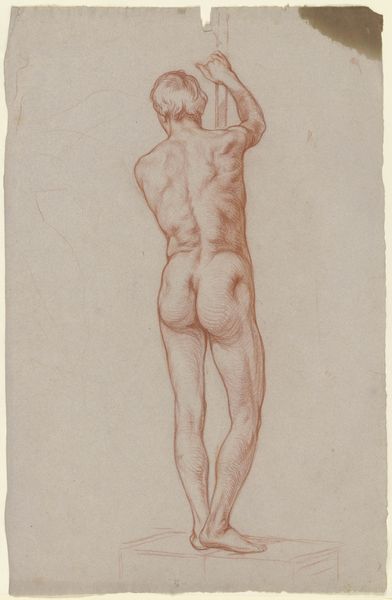
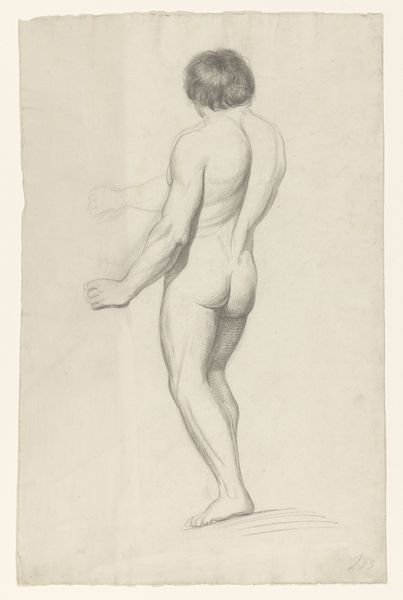
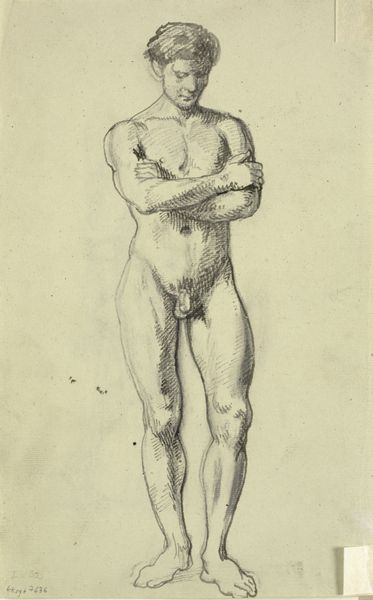
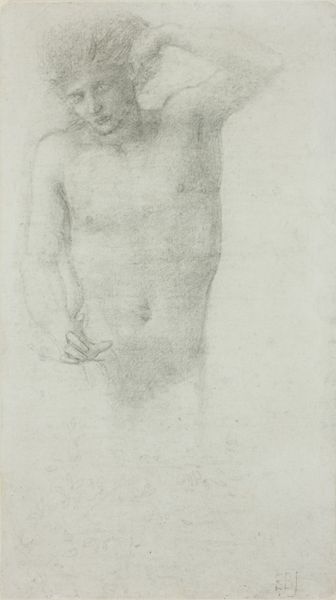
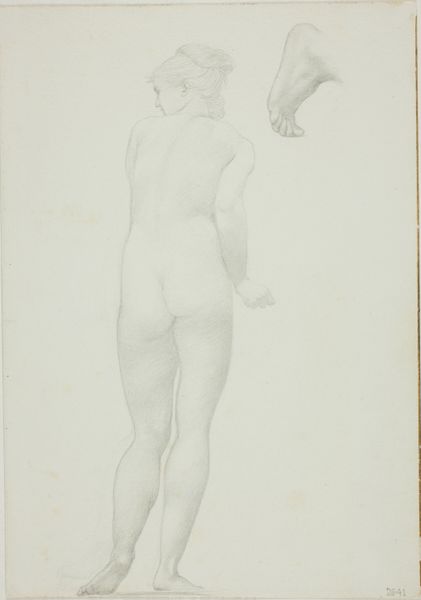
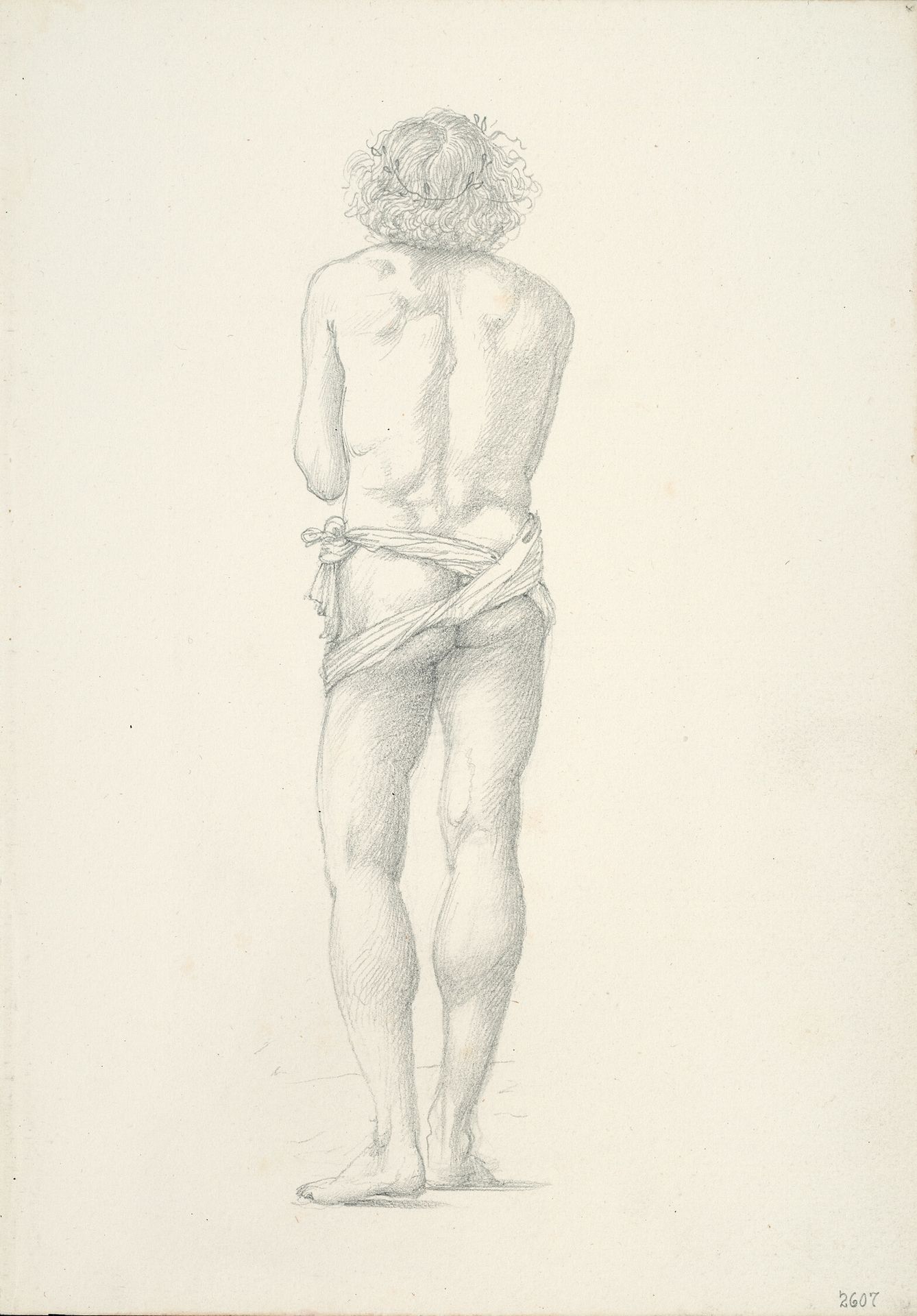
Edward Burne-Jones made this pencil drawing, titled "Back View of Standing Male Nude," during his career as one of Britain’s leading Pre-Raphaelite artists. The male nude in art carries a heavy weight of cultural meaning. Throughout the nineteenth century, the display of male bodies was controversial, with some critics deeming them immoral. In a culture that prized male power, the male nude was seen as a celebration of physical perfection and the ideal form, inherited from the classical world. Burne-Jones was fascinated by classical antiquity, and he often looked to the art of ancient Greece and Rome for inspiration. He was also influenced by the Italian Renaissance, and this drawing recalls the figures of Michelangelo. As a historian, I can explore this further by looking at the artist’s letters and sketchbooks, exhibition reviews, and the writings of his contemporaries. Through attention to the social and institutional context, we see how even a seemingly simple sketch touches on complex issues.
Back View of Standing Male Nude c. 1873 - 1877


Artwork details
- Dimensions
- 253 × 178 mm
- Location
- The Art Institute of Chicago
- Copyright
- Public Domain
Comments
No comments
About this artwork
Edward Burne-Jones made this pencil drawing, titled "Back View of Standing Male Nude," during his career as one of Britain’s leading Pre-Raphaelite artists. The male nude in art carries a heavy weight of cultural meaning. Throughout the nineteenth century, the display of male bodies was controversial, with some critics deeming them immoral. In a culture that prized male power, the male nude was seen as a celebration of physical perfection and the ideal form, inherited from the classical world. Burne-Jones was fascinated by classical antiquity, and he often looked to the art of ancient Greece and Rome for inspiration. He was also influenced by the Italian Renaissance, and this drawing recalls the figures of Michelangelo. As a historian, I can explore this further by looking at the artist’s letters and sketchbooks, exhibition reviews, and the writings of his contemporaries. Through attention to the social and institutional context, we see how even a seemingly simple sketch touches on complex issues.
Comments
No comments