About this artwork
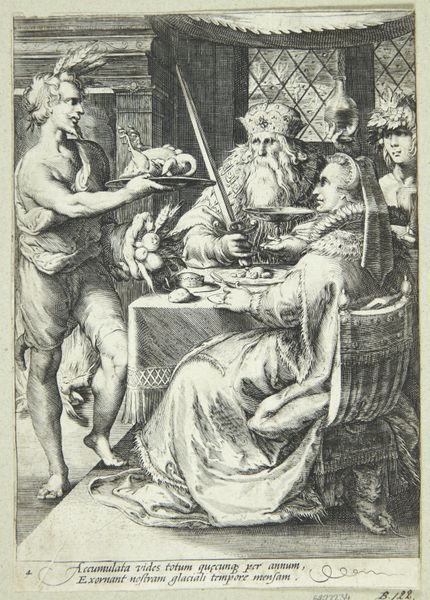
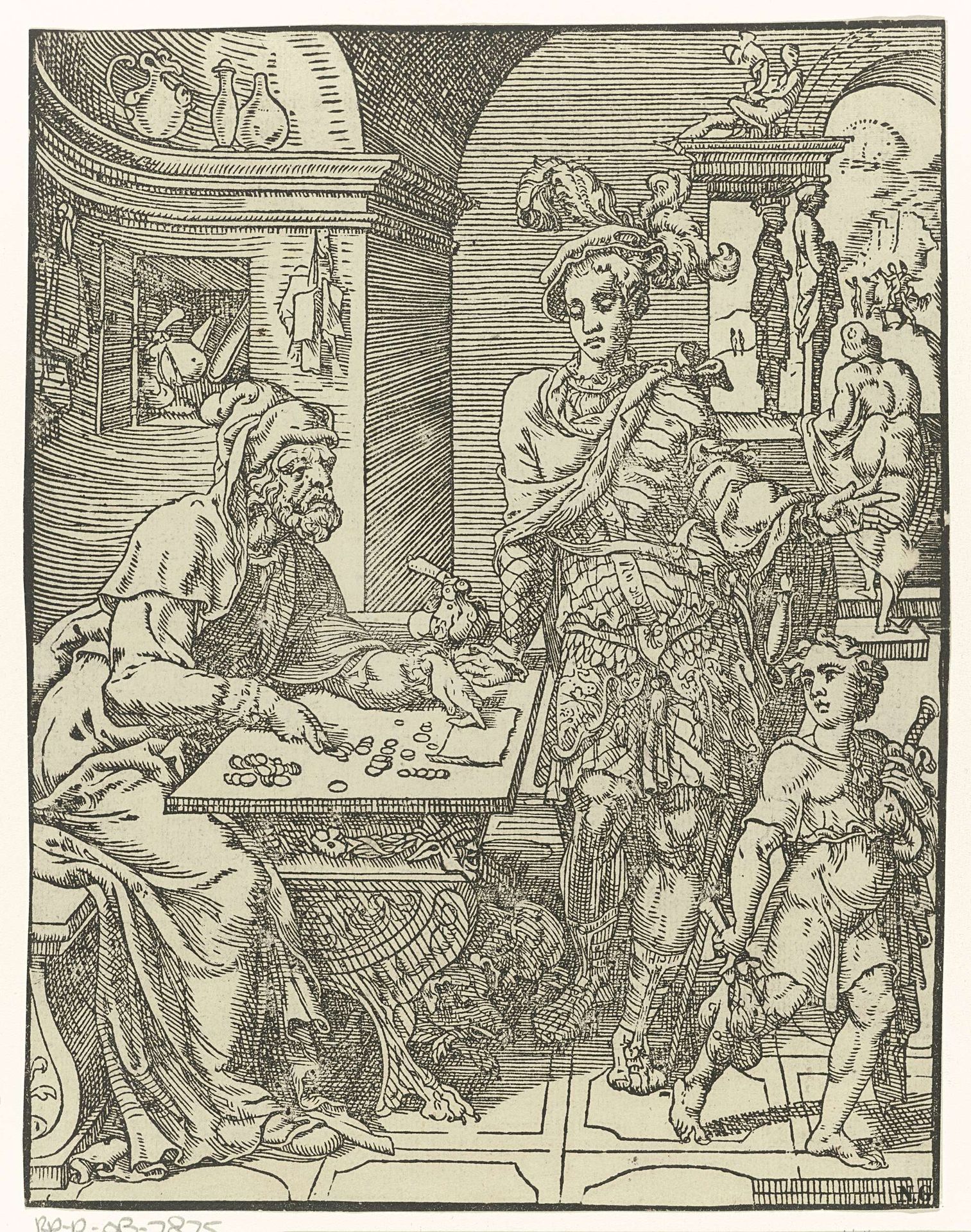
Dirck Volckertsz Coornhert made this engraving, "The Prodigal Son Receiving His Inheritance," sometime in the 16th century. The process of engraving involves using a tool called a burin to incise an image into a metal plate, which is then inked and printed. The stark contrast between black and white is inherent to the medium. The controlled lines create depth and texture, evident in the father’s robes and the son's elaborate attire. Engraving was a key technology for disseminating images widely in the early modern period, playing a crucial role in spreading ideas during the Reformation. Coornhert’s choice of this medium underscores his reformist leanings, offering moral lessons to a broad audience. The meticulous process, requiring skilled labor, contrasts sharply with the son's squandering of his wealth, serving as a commentary on labor, value, and moral responsibility. Ultimately, the choice of engraving emphasizes the importance of diligence and prudence. It suggests that true value lies not in fleeting wealth but in the careful application of skill and labor.
De verloren zoon ontvangt zijn erfdeel
c. 1548

Dirck Volckertsz Coornhert
1519 - 1590Location
RijksmuseumArtwork details
- Medium
- print, engraving
- Dimensions
- height 245 mm, width 190 mm
- Location
- Rijksmuseum
- Copyright
- Rijks Museum: Open Domain
Tags
Comments
Share your thoughts
About this artwork
Dirck Volckertsz Coornhert made this engraving, "The Prodigal Son Receiving His Inheritance," sometime in the 16th century. The process of engraving involves using a tool called a burin to incise an image into a metal plate, which is then inked and printed. The stark contrast between black and white is inherent to the medium. The controlled lines create depth and texture, evident in the father’s robes and the son's elaborate attire. Engraving was a key technology for disseminating images widely in the early modern period, playing a crucial role in spreading ideas during the Reformation. Coornhert’s choice of this medium underscores his reformist leanings, offering moral lessons to a broad audience. The meticulous process, requiring skilled labor, contrasts sharply with the son's squandering of his wealth, serving as a commentary on labor, value, and moral responsibility. Ultimately, the choice of engraving emphasizes the importance of diligence and prudence. It suggests that true value lies not in fleeting wealth but in the careful application of skill and labor.
Comments
Share your thoughts