About this artwork
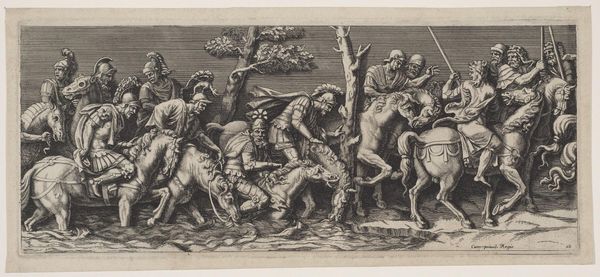
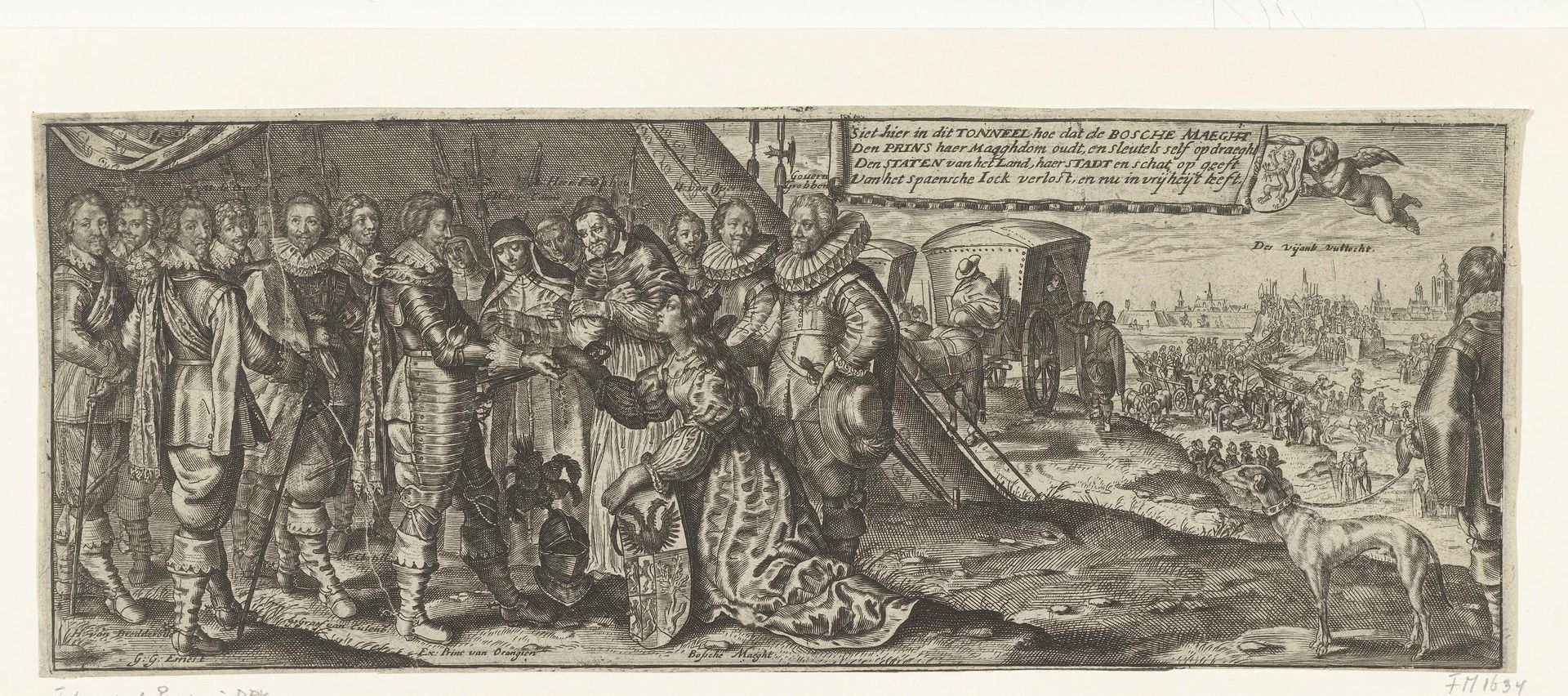
Crispijn van de Passe II created this print in 1629, depicting the city maiden of 's-Hertogenbosch handing over the keys to Frederik Hendrik. The act of surrendering keys is a powerful symbol, deeply rooted in ancient traditions. Consider how this motif echoes through time. In ancient Rome, the handing over of keys symbolized dominion and control. We see variations of this gesture in countless images across different cultures: a potent sign of transfer of power. The keys represent not just physical access but also a psychological submission, a yielding of autonomy. The kneeling figure adds another layer of emotional complexity. This posture, historically associated with supplication and reverence, intensifies the drama of the moment. It speaks to the deep, often subconscious, human need for order and authority. The image thus encapsulates the transfer of power. This symbol constantly reappears, transformed, yet forever tied to its origin.
De stadsmaagd van 's-Hertogenbosch overhandigt de sleutels van de stad aan Frederik Hendrik, 1629 1629

Crispijn van de (II) Passe
1597 - 1670Location
RijksmuseumArtwork details
- Medium
- print, engraving
- Dimensions
- height 141 mm, width 370 mm
- Location
- Rijksmuseum
- Copyright
- Rijks Museum: Open Domain
Tags
narrative-art
baroque
old engraving style
figuration
line
cityscape
history-painting
engraving
Comments
No comments
About this artwork
Crispijn van de Passe II created this print in 1629, depicting the city maiden of 's-Hertogenbosch handing over the keys to Frederik Hendrik. The act of surrendering keys is a powerful symbol, deeply rooted in ancient traditions. Consider how this motif echoes through time. In ancient Rome, the handing over of keys symbolized dominion and control. We see variations of this gesture in countless images across different cultures: a potent sign of transfer of power. The keys represent not just physical access but also a psychological submission, a yielding of autonomy. The kneeling figure adds another layer of emotional complexity. This posture, historically associated with supplication and reverence, intensifies the drama of the moment. It speaks to the deep, often subconscious, human need for order and authority. The image thus encapsulates the transfer of power. This symbol constantly reappears, transformed, yet forever tied to its origin.
Comments
No comments