About this artwork
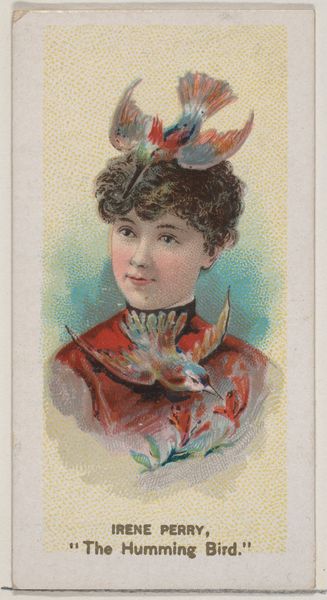
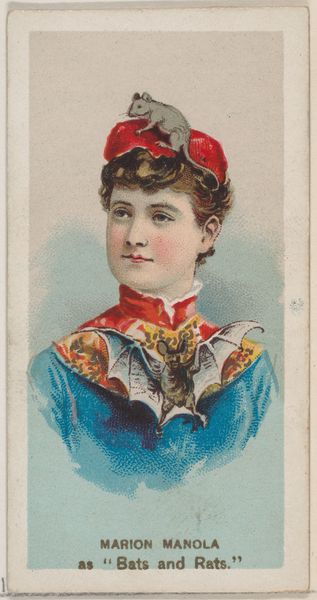
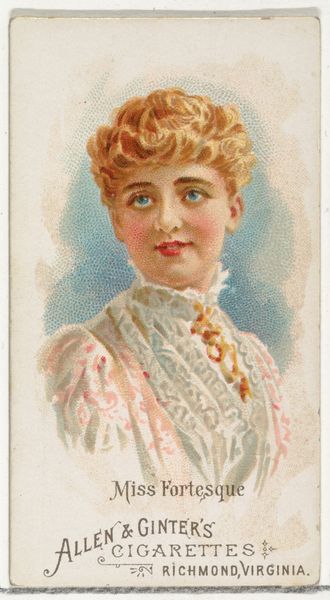
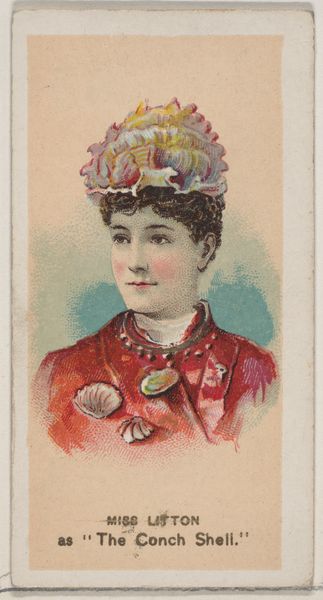
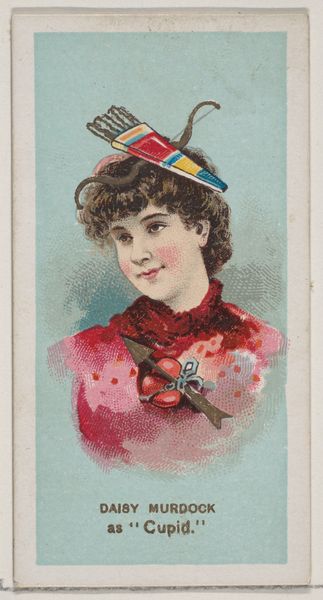
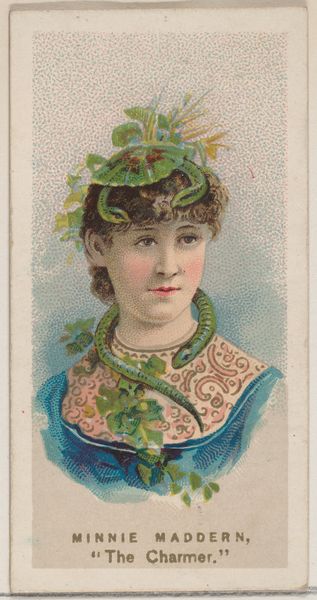
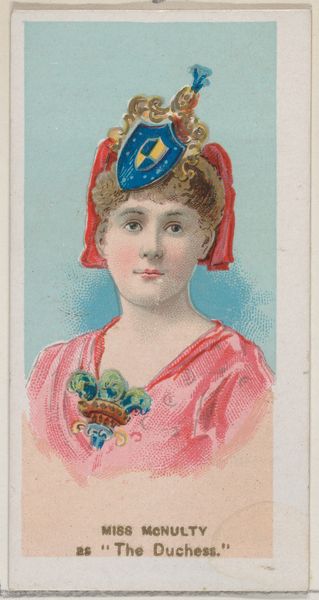
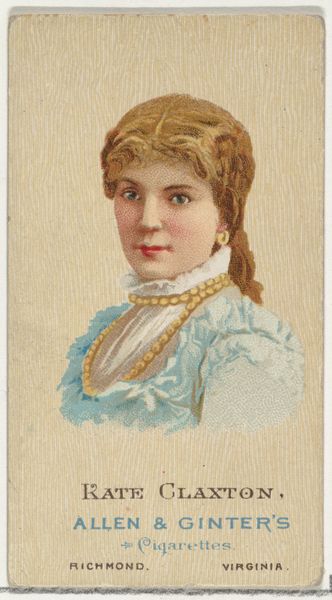
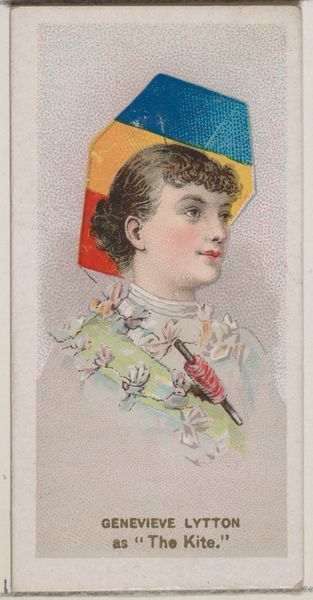
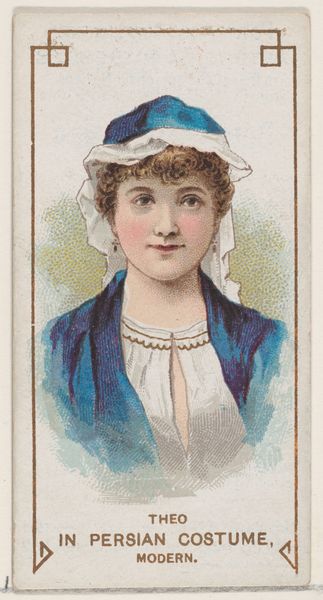
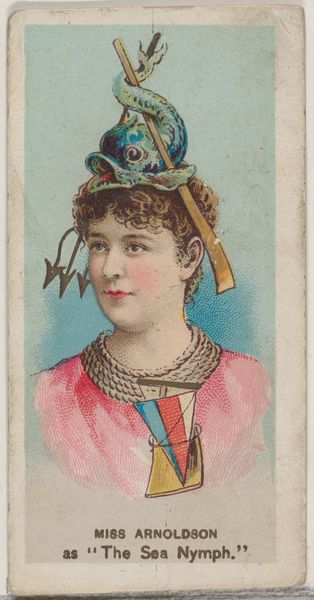
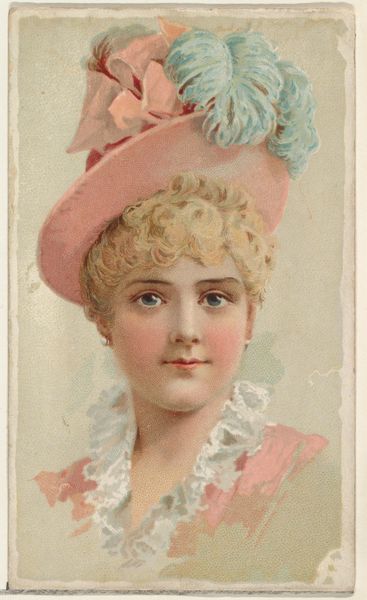
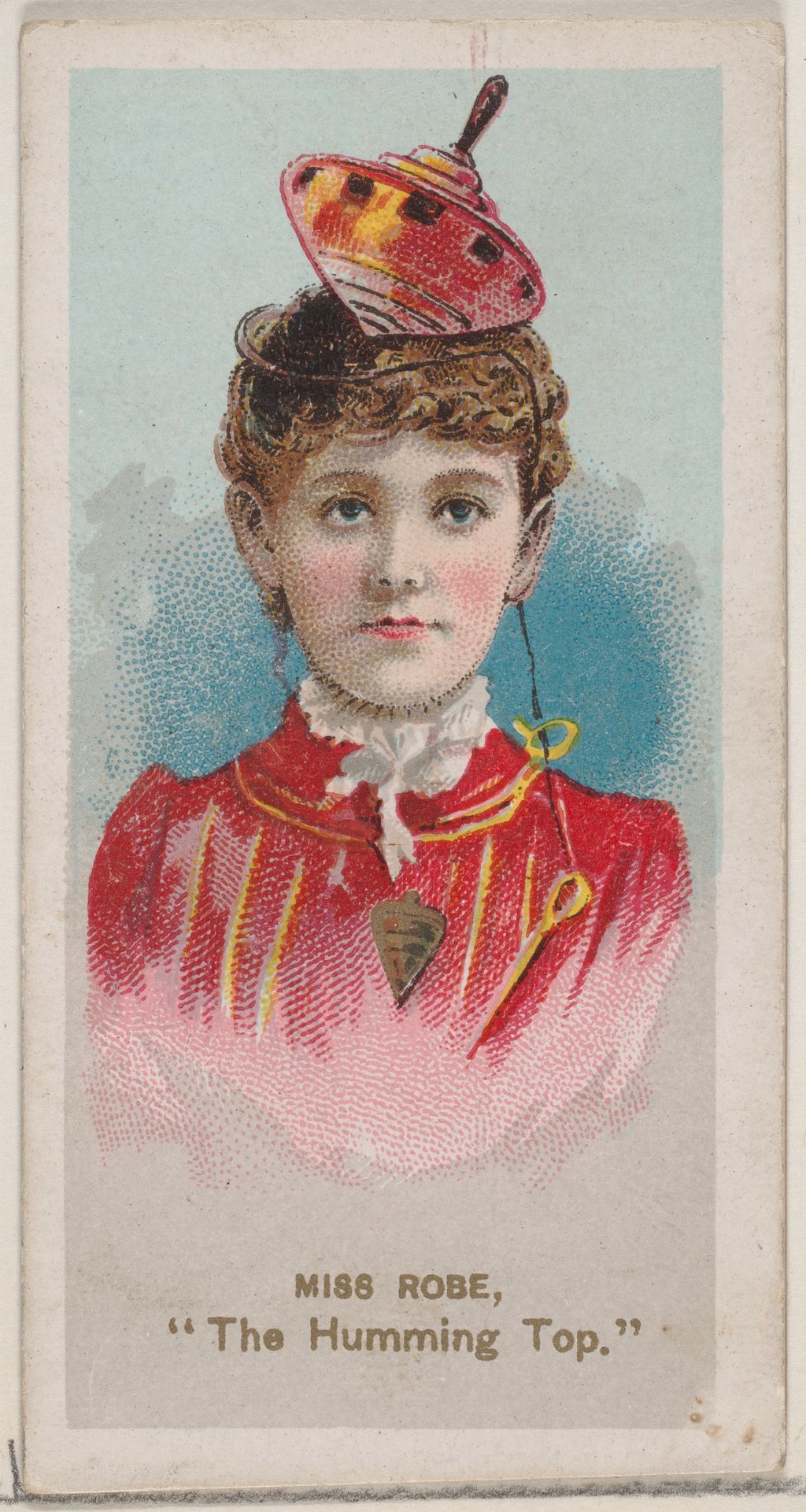
This chromolithograph trading card was created around 1888 by W. Duke, Sons & Co., as part of a series of “Fancy Dress Ball Costumes” to be included with Duke brand cigarettes. Its production involved several steps, beginning with the original design, probably a watercolor, which was then transferred to multiple limestone blocks – one for each color. These stones were then printed in sequence on a single sheet, building up a composite image of considerable richness and detail. The effect of the chromolithographic process is visible in the image’s stippled texture, where the colors meet and blend. These cards, mass-produced and given away, were essentially free advertisements, yet they demonstrate considerable artistry. They also highlight the role of industrial processes in popularizing images, influencing taste, and blurring the lines between art, commerce, and everyday life. The material reality of the card—its method of production—is critical to understanding its place in culture.
Miss Robe as "The Humming Top," from the series Fancy Dress Ball Costumes (N73) for Duke brand cigarettes
1889

W. Duke, Sons & Co.
1870 - 1920
The Metropolitan Museum of Art
Metropolitan Museum of Art, New York, NYArtwork details
- Medium
- drawing, coloured-pencil, print
- Dimensions
- Sheet: 2 3/4 x 1 1/2 in. (7 x 3.8 cm)
- Location
- Metropolitan Museum of Art, New York, NY
- Copyright
- Public Domain
Tags
Comments
Share your thoughts
About this artwork
This chromolithograph trading card was created around 1888 by W. Duke, Sons & Co., as part of a series of “Fancy Dress Ball Costumes” to be included with Duke brand cigarettes. Its production involved several steps, beginning with the original design, probably a watercolor, which was then transferred to multiple limestone blocks – one for each color. These stones were then printed in sequence on a single sheet, building up a composite image of considerable richness and detail. The effect of the chromolithographic process is visible in the image’s stippled texture, where the colors meet and blend. These cards, mass-produced and given away, were essentially free advertisements, yet they demonstrate considerable artistry. They also highlight the role of industrial processes in popularizing images, influencing taste, and blurring the lines between art, commerce, and everyday life. The material reality of the card—its method of production—is critical to understanding its place in culture.
Comments
Share your thoughts