About this artwork
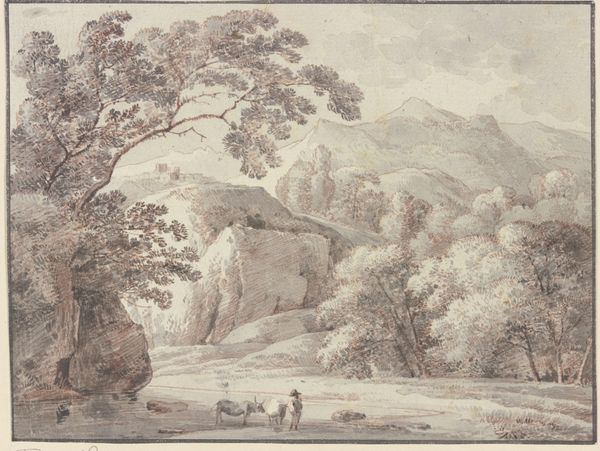
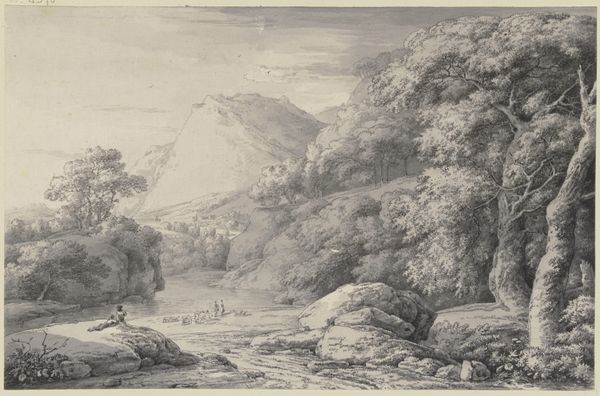
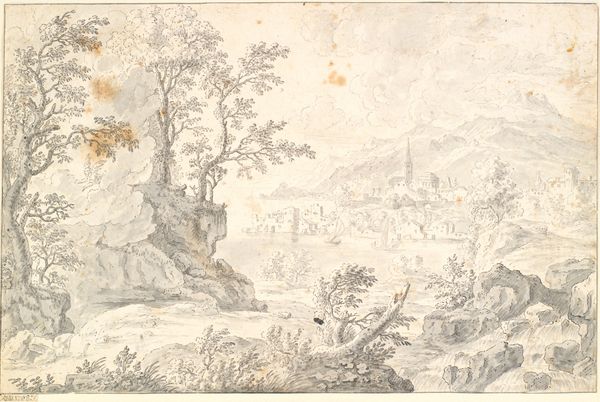
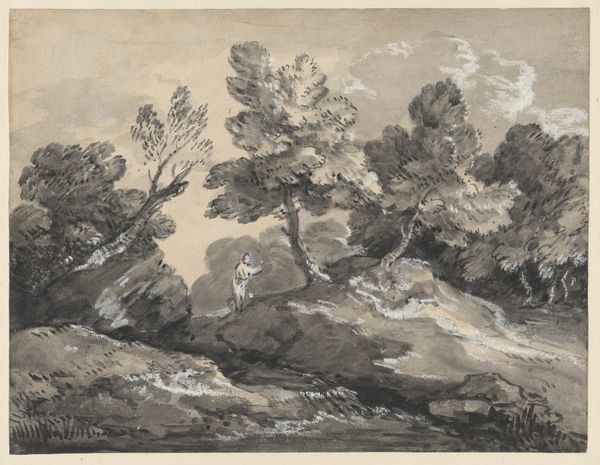
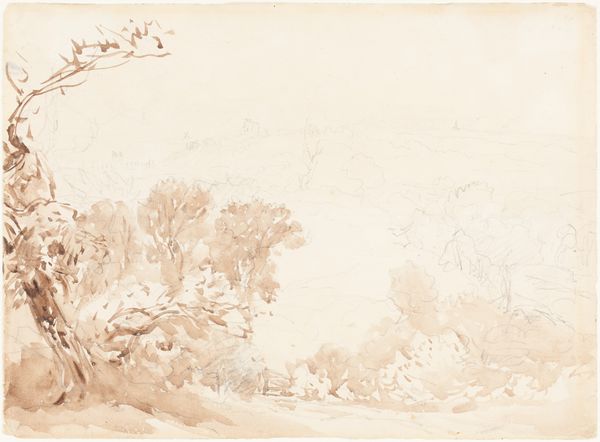
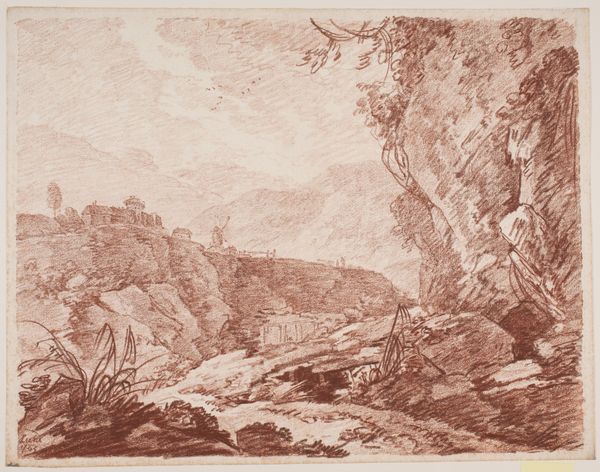
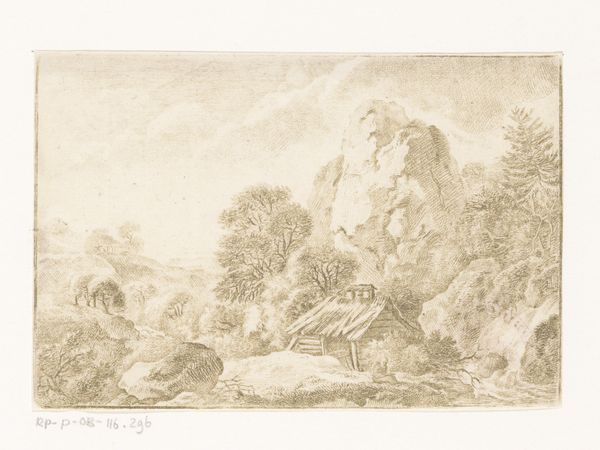
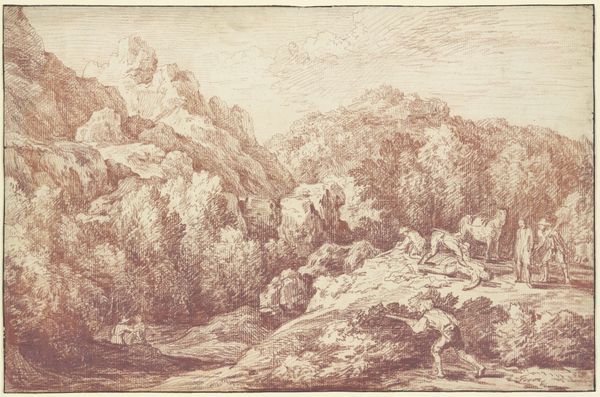
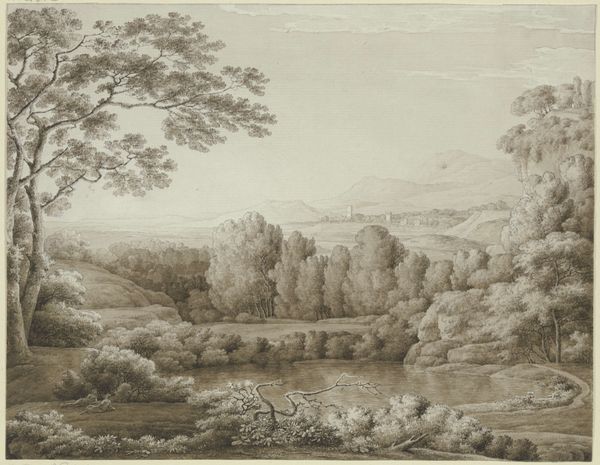
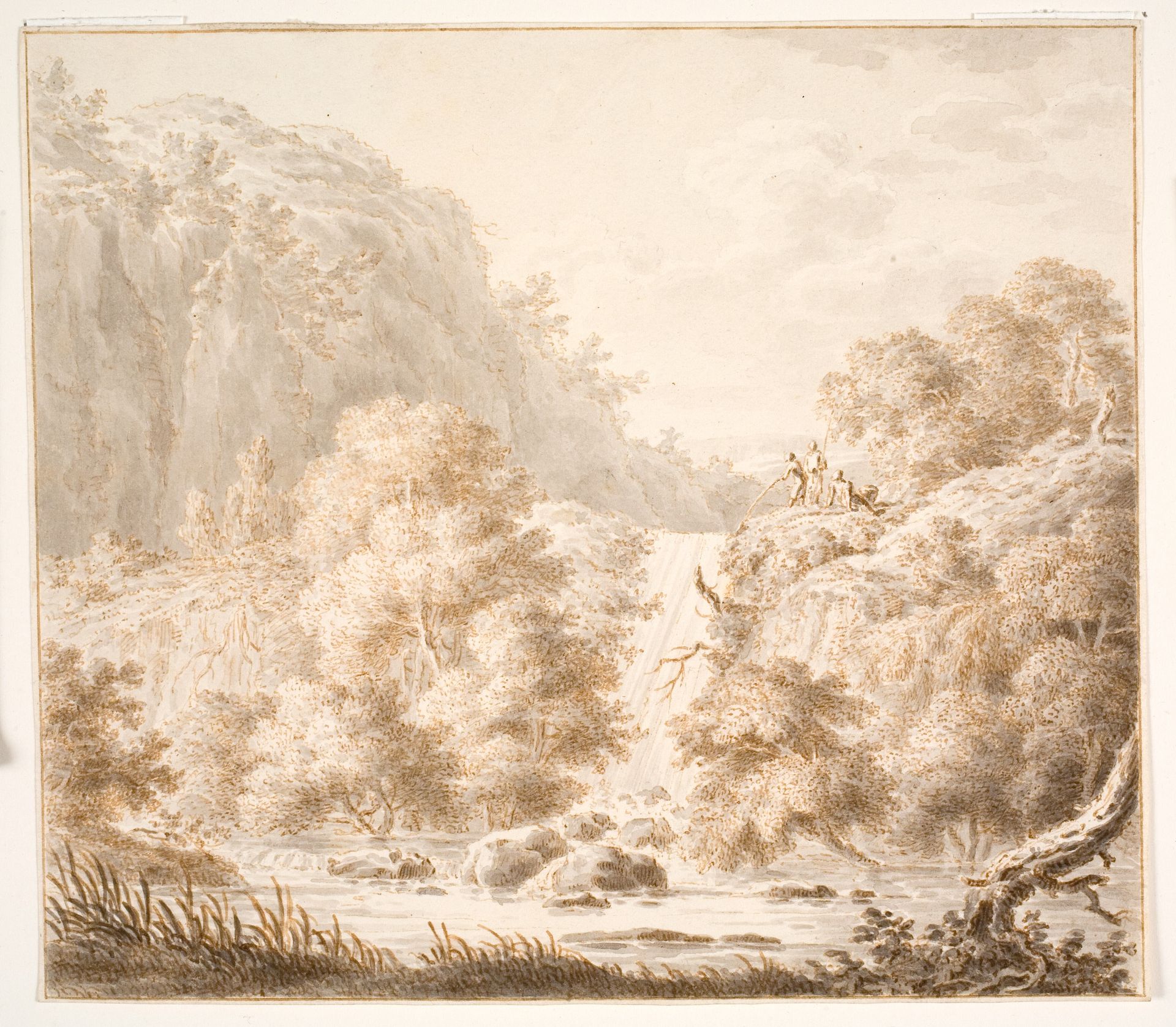
Thorsten Elias Hjaltelin made this landscape drawing with trees, a waterfall, and three figures in Denmark sometime before 1817. Waterfalls were an important motif in the late 18th century. The sublime and powerful force of nature in the waterfall contrasts with the tiny figures at the top, highlighting the theme of humanity's relationship to nature. Such landscapes were not just innocent depictions of nature; they carried cultural and political weight. In Denmark, the late 1700s were a time of emerging national identity. Artists like Hjaltelin contributed to this by creating images of the Danish countryside. To truly understand this image, we must consider the institutional context, such as the art academies where artists were trained, and the social conditions that shaped the demand for landscape art. Researching travelogues and literature from the time can reveal how people viewed and interacted with nature, further enriching our understanding.
Bjerglandskab med træer og vandfald, samt tre figurer 1785 - 1817


Artwork details
- Medium
- drawing, plein-air, watercolor
- Dimensions
- 141 mm (height) x 159 mm (width) (bladmaal)
- Location
- SMK - Statens Museum for Kunst
Tags
drawing
plein-air
landscape
watercolor
romanticism
Comments
No comments
About this artwork
Thorsten Elias Hjaltelin made this landscape drawing with trees, a waterfall, and three figures in Denmark sometime before 1817. Waterfalls were an important motif in the late 18th century. The sublime and powerful force of nature in the waterfall contrasts with the tiny figures at the top, highlighting the theme of humanity's relationship to nature. Such landscapes were not just innocent depictions of nature; they carried cultural and political weight. In Denmark, the late 1700s were a time of emerging national identity. Artists like Hjaltelin contributed to this by creating images of the Danish countryside. To truly understand this image, we must consider the institutional context, such as the art academies where artists were trained, and the social conditions that shaped the demand for landscape art. Researching travelogues and literature from the time can reveal how people viewed and interacted with nature, further enriching our understanding.
Comments
No comments