About this artwork
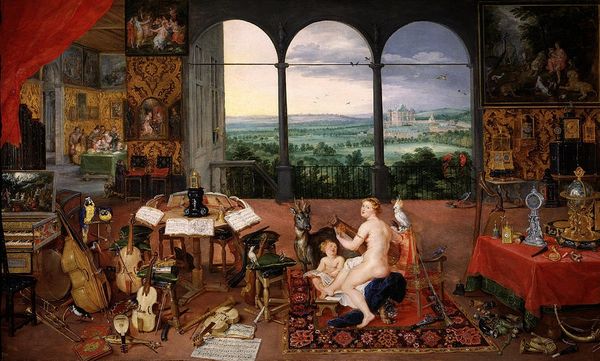
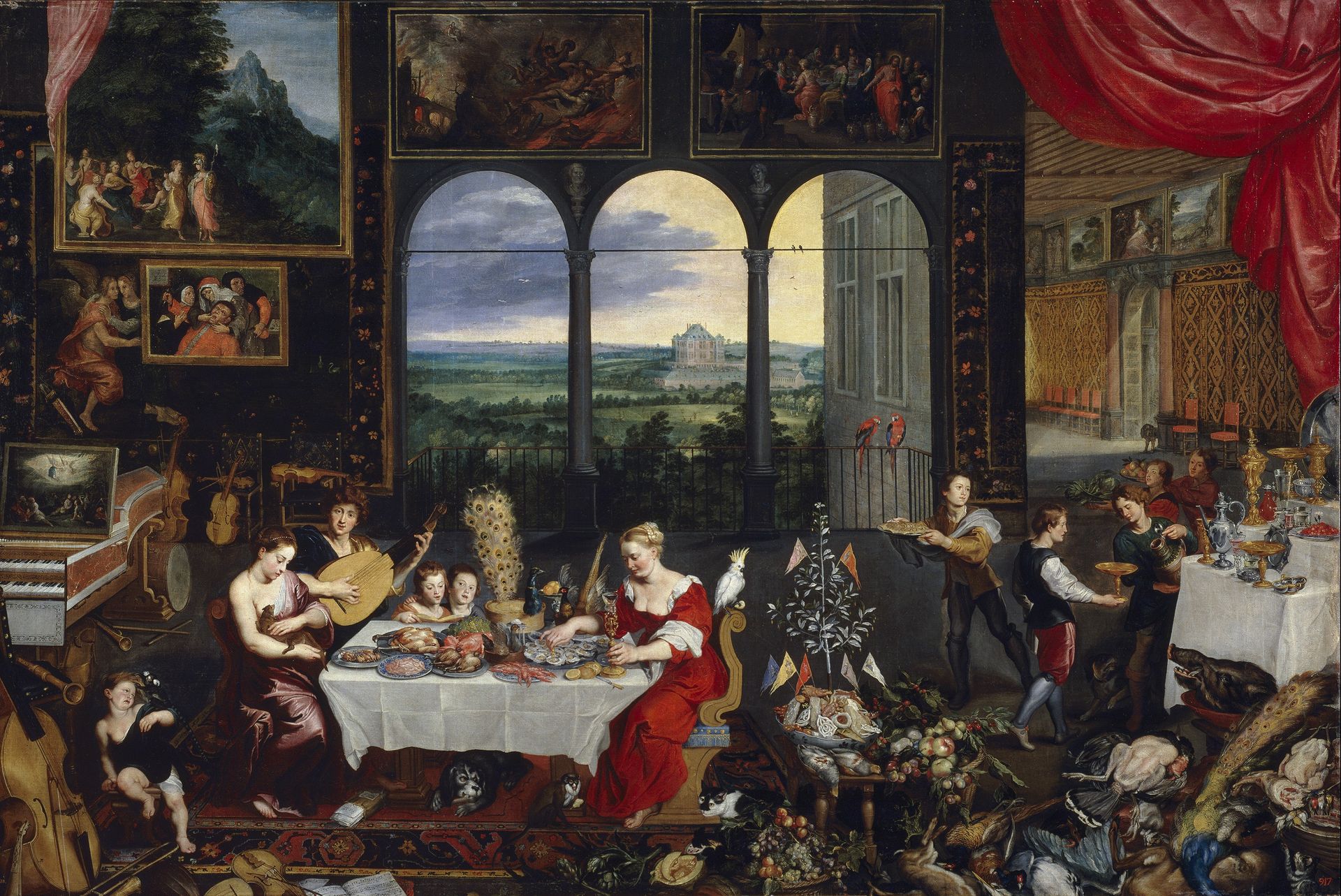
Jan Brueghel the Elder painted “The Senses of Hearing, Touch, and Taste” in the 17th century, a period marked by both the scientific revolution and the continuation of rigid social hierarchies. Brueghel presents us with an allegorical representation of sensory experience firmly rooted in the privilege of the European elite. The painting’s opulence, from the rich garments to the abundance of food and musical instruments, signifies a world of leisure and cultivated taste, possible due to the exploitation of resources and labor. The painting also tells us about gender roles; women are depicted engaging in the arts and caring for children, while men serve or observe. What does it mean to link sensory pleasure so explicitly to class and gender? The abundance on display can evoke a sense of wonder, or perhaps, for the contemporary viewer, it elicits a more critical reflection on the politics of pleasure and access.
The Senses of Hearing, Touch and Taste
1618

Jan Brueghel the Elder
1568 - 1625Location
Museo del Prado, Madrid, SpainArtwork details
- Medium
- painting, oil-paint
- Location
- Museo del Prado, Madrid, Spain
- Copyright
- Public domain
Tags
Comments
Share your thoughts
About this artwork
Jan Brueghel the Elder painted “The Senses of Hearing, Touch, and Taste” in the 17th century, a period marked by both the scientific revolution and the continuation of rigid social hierarchies. Brueghel presents us with an allegorical representation of sensory experience firmly rooted in the privilege of the European elite. The painting’s opulence, from the rich garments to the abundance of food and musical instruments, signifies a world of leisure and cultivated taste, possible due to the exploitation of resources and labor. The painting also tells us about gender roles; women are depicted engaging in the arts and caring for children, while men serve or observe. What does it mean to link sensory pleasure so explicitly to class and gender? The abundance on display can evoke a sense of wonder, or perhaps, for the contemporary viewer, it elicits a more critical reflection on the politics of pleasure and access.
Comments
Share your thoughts