About this artwork
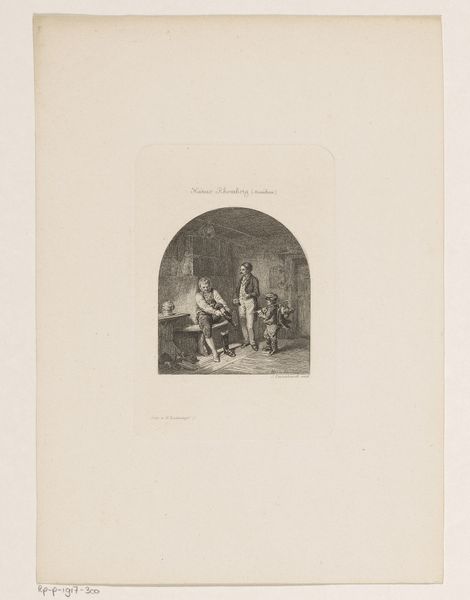
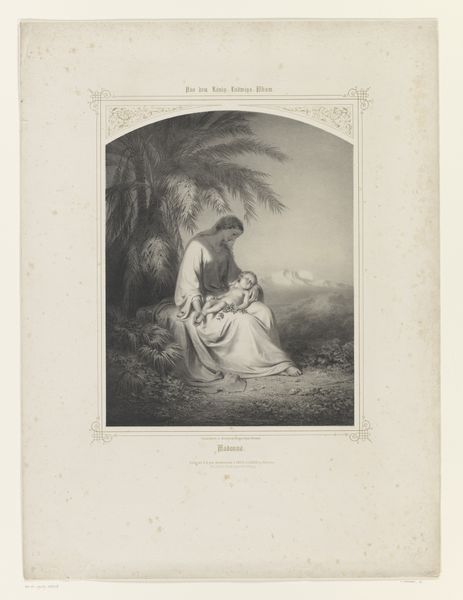
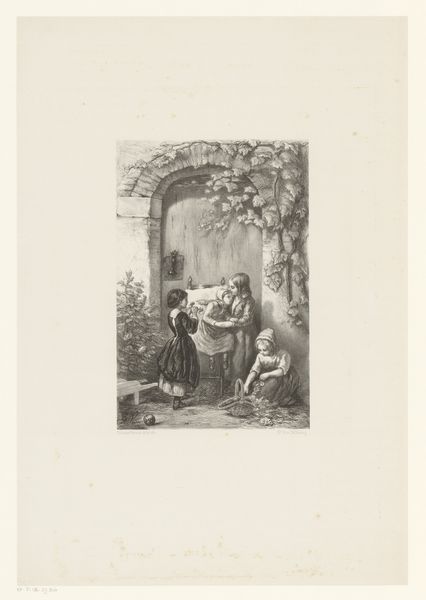
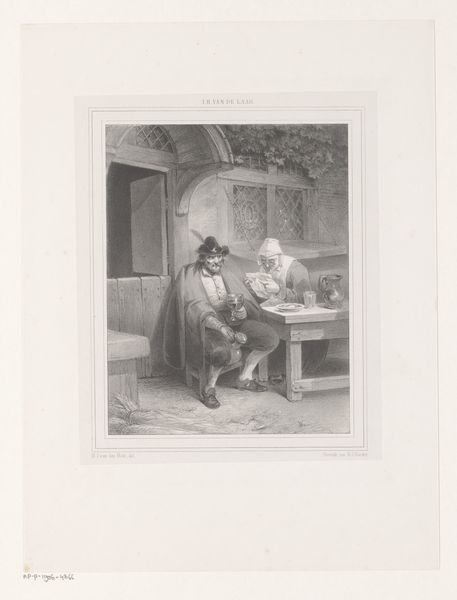
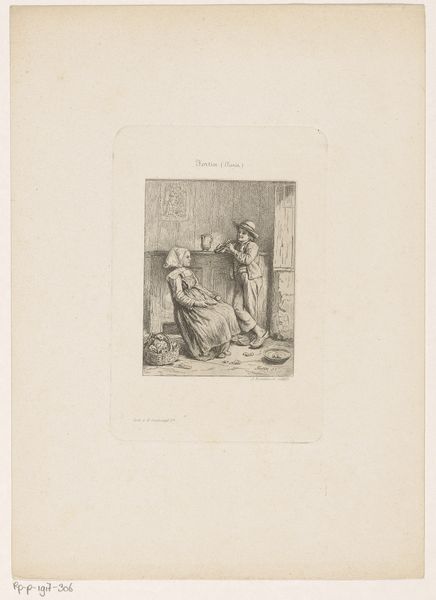
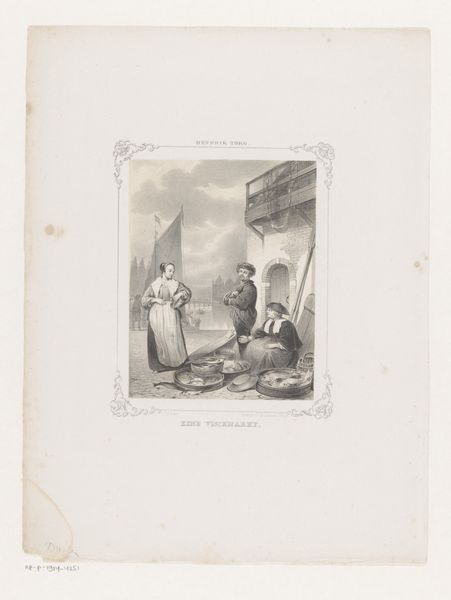
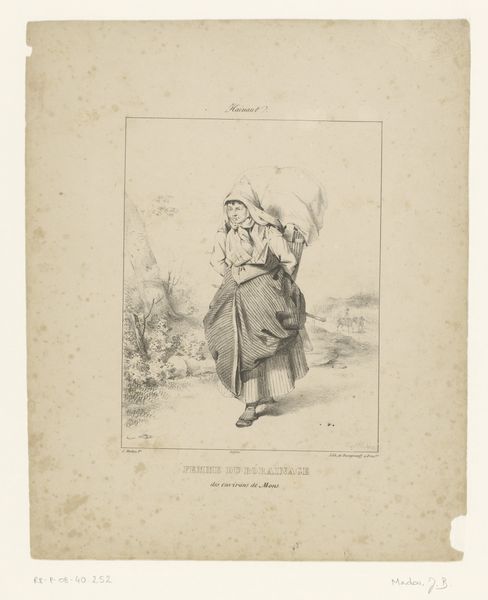
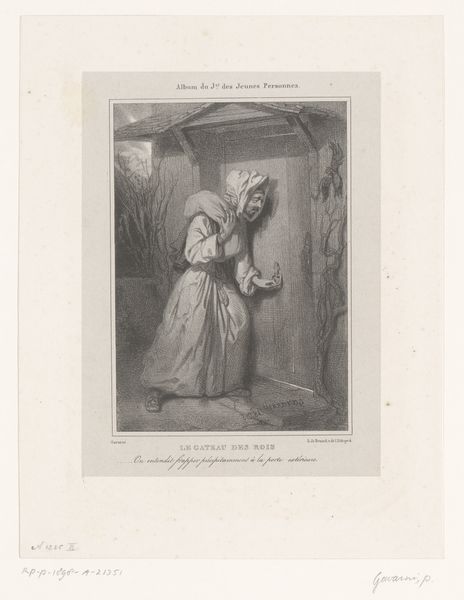
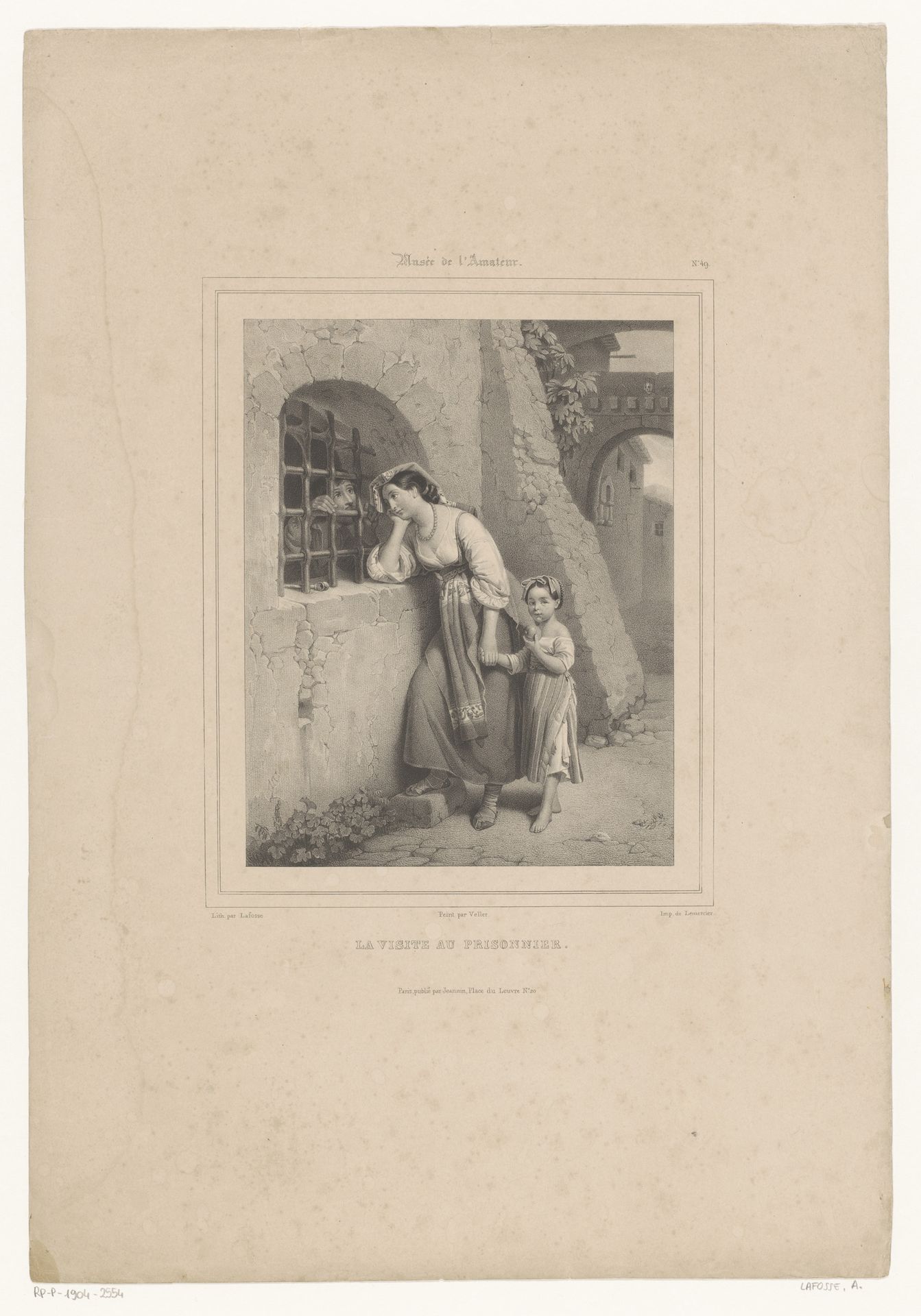
Jean-Baptiste Adolphe Lafosse created this print of a woman and child visiting a prisoner using lithography. This printing technique, developed in the late 18th century, involves drawing on a flat stone or metal plate with a greasy substance, then applying ink that adheres only to the drawn areas. The resulting prints, like this one, could be produced in large numbers, making images more accessible to a wider audience. Look closely, and you can see how the lithographic process renders the image with soft gradations of tone, creating a sense of depth and atmosphere. The artist would have needed considerable skill to create the drawing in reverse on the plate, capturing the emotional weight of the scene. This reproductive method allowed for distribution of images beyond the elite circles who could afford original paintings, influencing social and political discourse. The choice of lithography highlights the democratization of art in the 19th century, challenging traditional notions of artistic value and accessibility.
Vrouw en kind bezoeken een gevangene
1836 - 1842

Jean-Baptiste Adolphe Lafosse
1810 - 1879Location
RijksmuseumArtwork details
- Medium
- print, engraving
- Dimensions
- height 447 mm, width 308 mm
- Location
- Rijksmuseum
- Copyright
- Rijks Museum: Open Domain
Tags
Comments
Share your thoughts
About this artwork
Jean-Baptiste Adolphe Lafosse created this print of a woman and child visiting a prisoner using lithography. This printing technique, developed in the late 18th century, involves drawing on a flat stone or metal plate with a greasy substance, then applying ink that adheres only to the drawn areas. The resulting prints, like this one, could be produced in large numbers, making images more accessible to a wider audience. Look closely, and you can see how the lithographic process renders the image with soft gradations of tone, creating a sense of depth and atmosphere. The artist would have needed considerable skill to create the drawing in reverse on the plate, capturing the emotional weight of the scene. This reproductive method allowed for distribution of images beyond the elite circles who could afford original paintings, influencing social and political discourse. The choice of lithography highlights the democratization of art in the 19th century, challenging traditional notions of artistic value and accessibility.
Comments
Share your thoughts