About this artwork
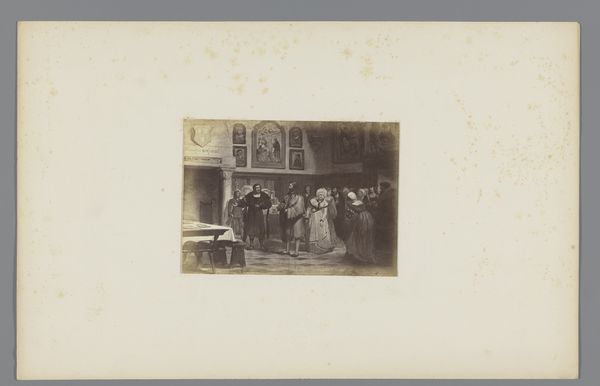
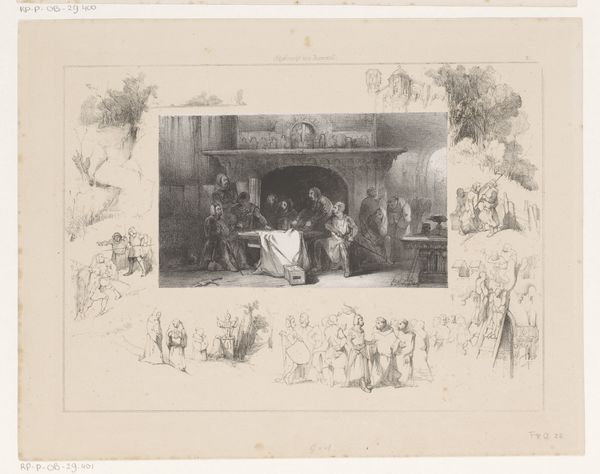
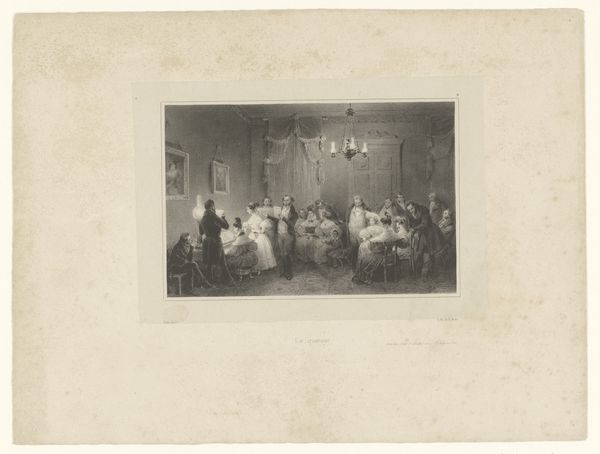
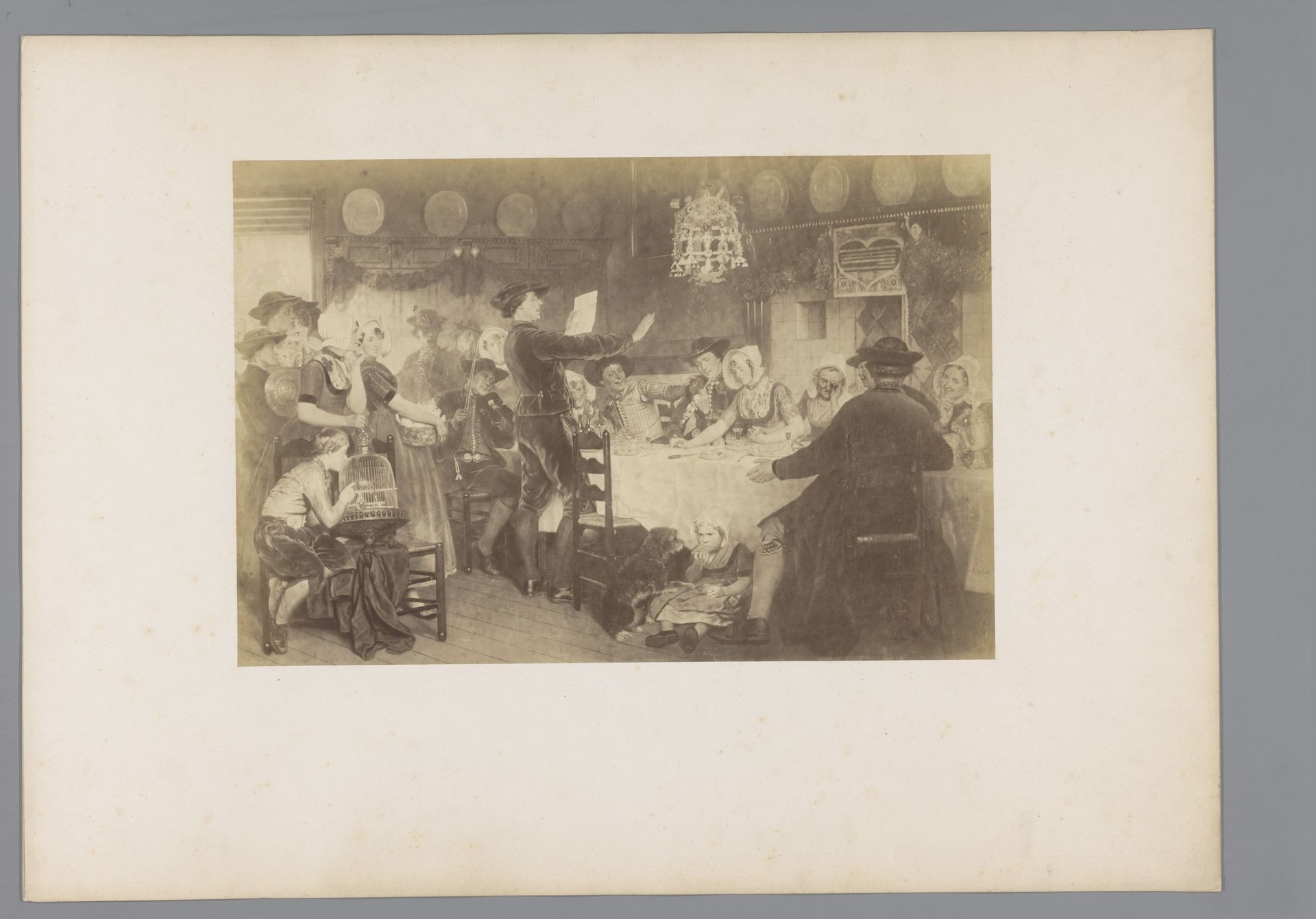
This photograph by Edmond Fierlants captures a painting, presumably by Fanny Geefs-Corr, depicting a man reading a letter to a gathering. Rendered in sepia tones, the composition is structured around a central table, drawing the eye through the layers of figures that surround it. This creates a textured surface of human forms. The photograph flattens the painterly qualities of the original, emphasizing the arrangement of bodies and objects within the depicted space. The scene is rich with anecdotal detail and arranged around the man reading a letter who stands like an actor on a small stage. It highlights a moment of shared communication. The composition invites questions about the nature of domestic narrative, and the staging of social exchange. Consider how Fierlants' photographic reproduction alters our perception of the original painting. By mediating the artwork through a different medium, he invites a reassessment of its formal and narrative elements, opening up new avenues for interpretation and understanding.
Fotoreproductie van een schilderij van een man die een brief voorleest aan een gezelschap aan tafel, door Fanny Geefs-Corr
before 1863

Artwork details
- Medium
- print, photography
- Dimensions
- height 242 mm, width 362 mm
- Copyright
- Rijks Museum: Open Domain
Tags
Comments
Share your thoughts
About this artwork
This photograph by Edmond Fierlants captures a painting, presumably by Fanny Geefs-Corr, depicting a man reading a letter to a gathering. Rendered in sepia tones, the composition is structured around a central table, drawing the eye through the layers of figures that surround it. This creates a textured surface of human forms. The photograph flattens the painterly qualities of the original, emphasizing the arrangement of bodies and objects within the depicted space. The scene is rich with anecdotal detail and arranged around the man reading a letter who stands like an actor on a small stage. It highlights a moment of shared communication. The composition invites questions about the nature of domestic narrative, and the staging of social exchange. Consider how Fierlants' photographic reproduction alters our perception of the original painting. By mediating the artwork through a different medium, he invites a reassessment of its formal and narrative elements, opening up new avenues for interpretation and understanding.
Comments
Share your thoughts