About this artwork
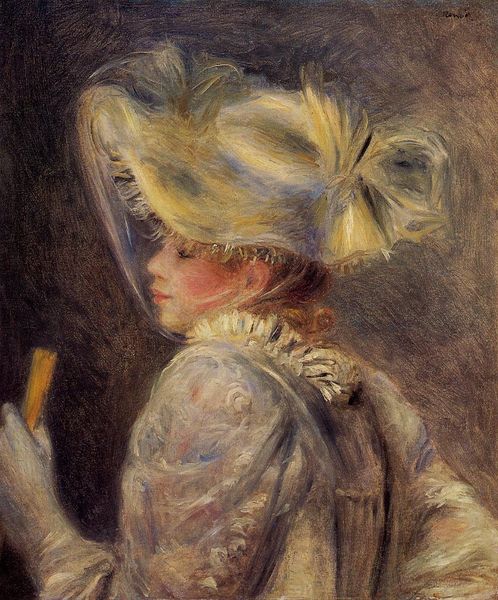
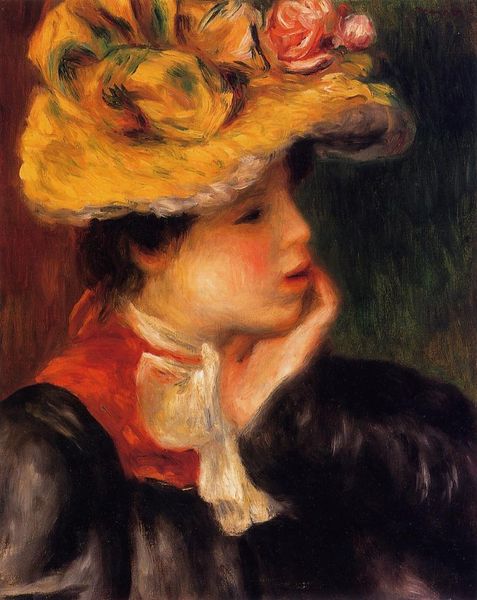
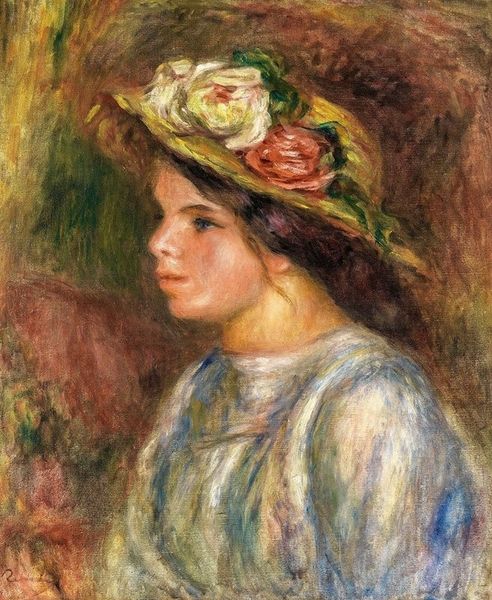
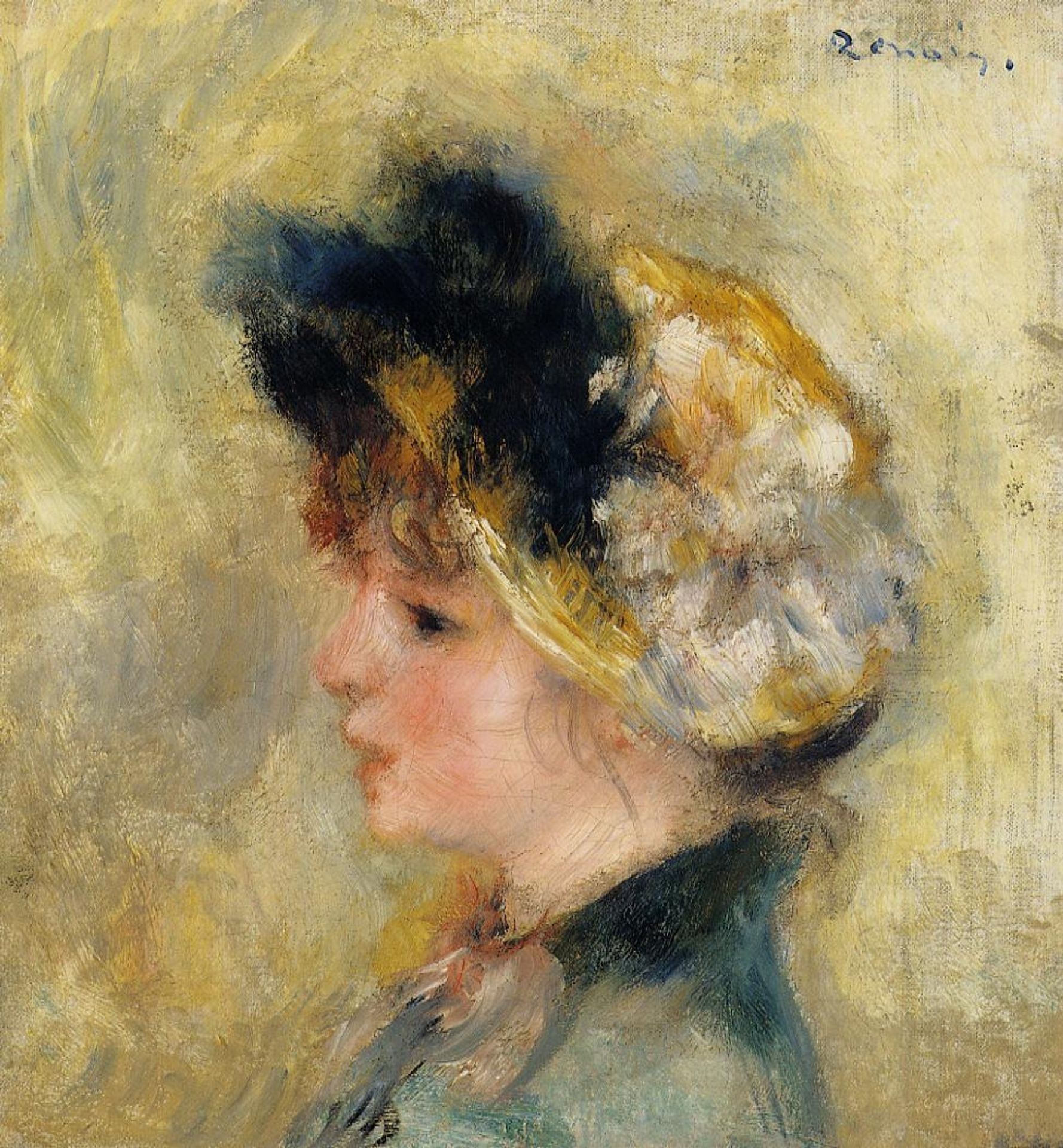
Editor: Here we have Renoir’s “Head of a Young Girl,” painted in 1878 using oil. I find it to be quite soft, the colors blending into each other so smoothly. What stands out to you in this piece? Curator: Well, I see more than just softness. This painting, beyond its aesthetic appeal, represents a specific social class and the performative nature of femininity in 19th-century France. How does the girl's attire, the hat in particular, contribute to your understanding of her social standing and the expectations placed upon young women during that era? Editor: I suppose the hat is quite elaborate. Maybe it shows she has some means, or is trying to present herself that way? Curator: Precisely. The elaborate hat, the delicate brushstrokes rendering her skin, and her overall demure posture all construct a carefully curated image. How might this relate to contemporary discussions around the male gaze and female representation in art? Consider that Renoir was also criticized for idealizing women. Editor: It's like she’s aware of being watched, almost posing. So, it raises questions about how women were perceived and how theyNavypresented themselves. I hadn't thought about that before. Curator: Exactly. Art becomes a powerful tool to examine those power dynamics. This artwork encapsulates those social and historical nuances about that time period. It’s a glimpse of class, gender, and representation all rolled into one. Editor: I'll never see another Impressionist portrait the same way. There's a lot more depth here than I originally assumed. Curator: Agreed. And by questioning the representation and social dynamics of Renoir's time, hopefully, we may better contextualize representation within art, today.

Artwork details
- Location
- Private Collection
- Copyright
- Public domain
Comments
Share your thoughts
About this artwork
Editor: Here we have Renoir’s “Head of a Young Girl,” painted in 1878 using oil. I find it to be quite soft, the colors blending into each other so smoothly. What stands out to you in this piece? Curator: Well, I see more than just softness. This painting, beyond its aesthetic appeal, represents a specific social class and the performative nature of femininity in 19th-century France. How does the girl's attire, the hat in particular, contribute to your understanding of her social standing and the expectations placed upon young women during that era? Editor: I suppose the hat is quite elaborate. Maybe it shows she has some means, or is trying to present herself that way? Curator: Precisely. The elaborate hat, the delicate brushstrokes rendering her skin, and her overall demure posture all construct a carefully curated image. How might this relate to contemporary discussions around the male gaze and female representation in art? Consider that Renoir was also criticized for idealizing women. Editor: It's like she’s aware of being watched, almost posing. So, it raises questions about how women were perceived and how theyNavypresented themselves. I hadn't thought about that before. Curator: Exactly. Art becomes a powerful tool to examine those power dynamics. This artwork encapsulates those social and historical nuances about that time period. It’s a glimpse of class, gender, and representation all rolled into one. Editor: I'll never see another Impressionist portrait the same way. There's a lot more depth here than I originally assumed. Curator: Agreed. And by questioning the representation and social dynamics of Renoir's time, hopefully, we may better contextualize representation within art, today.
Comments
Share your thoughts