About this artwork
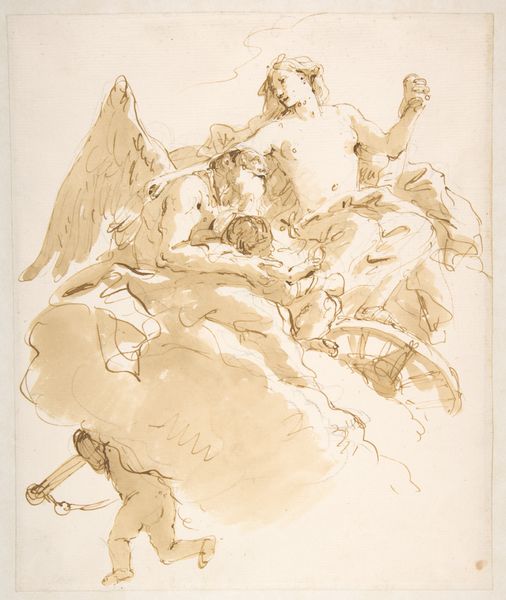
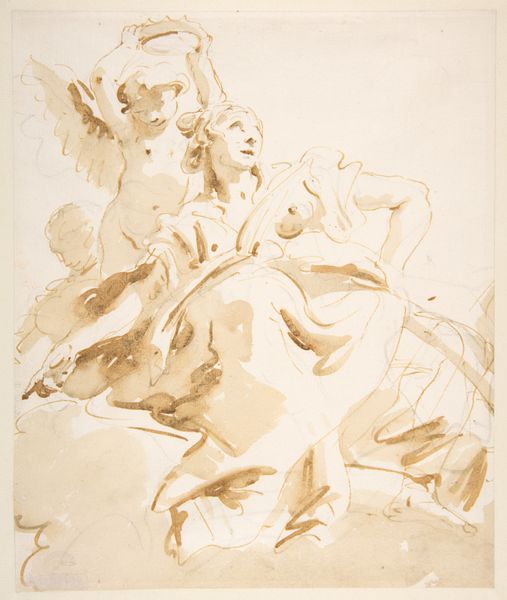
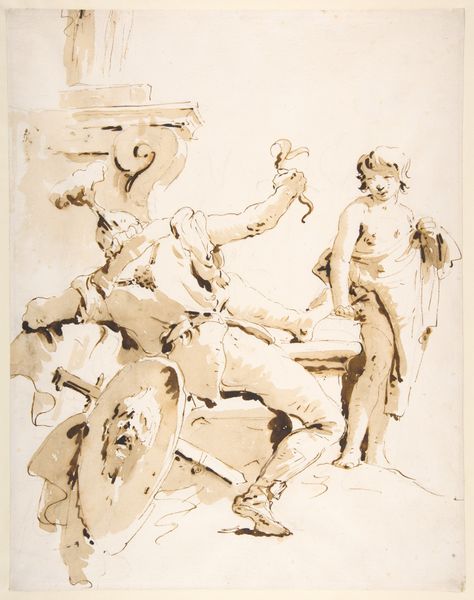
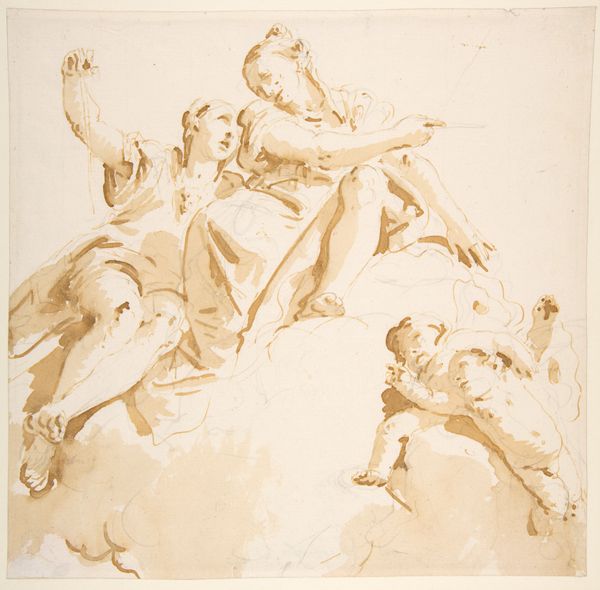
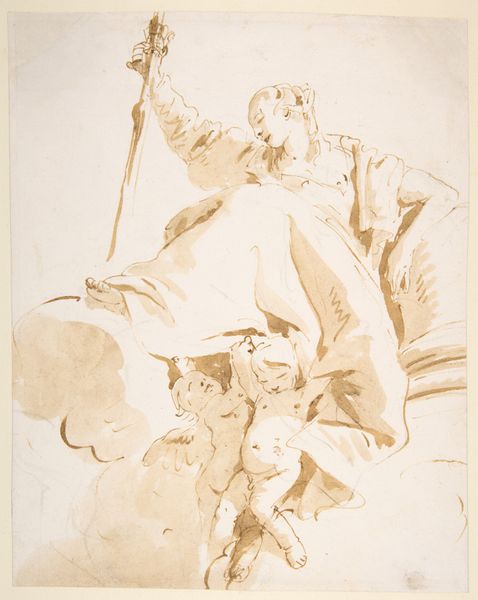
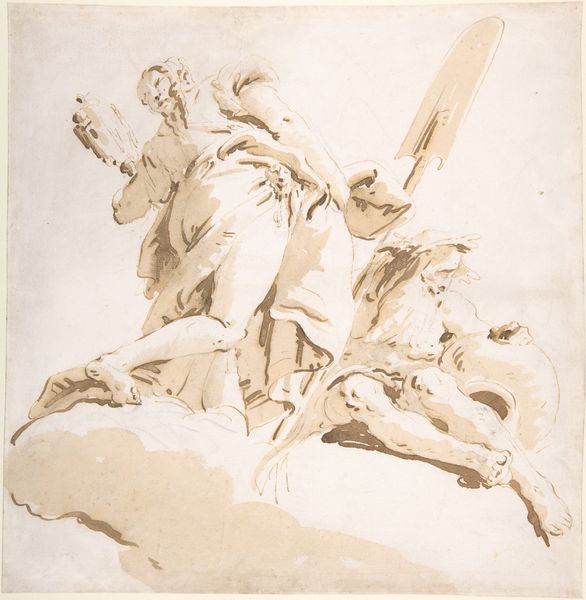
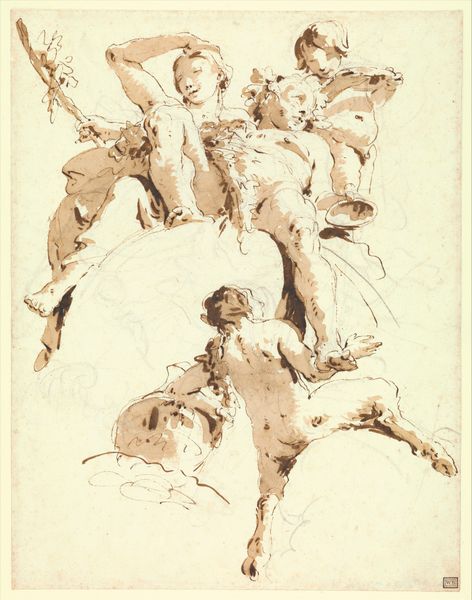
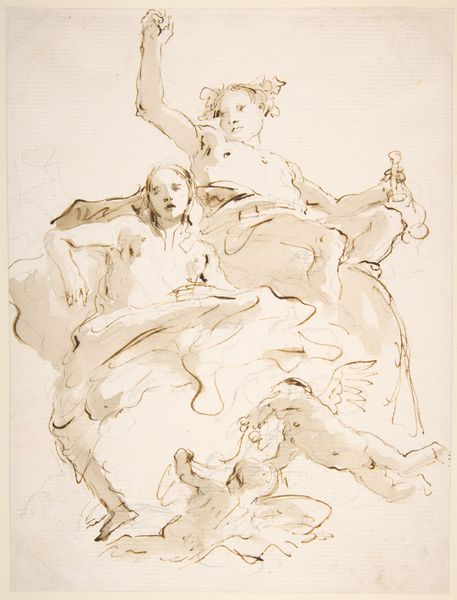
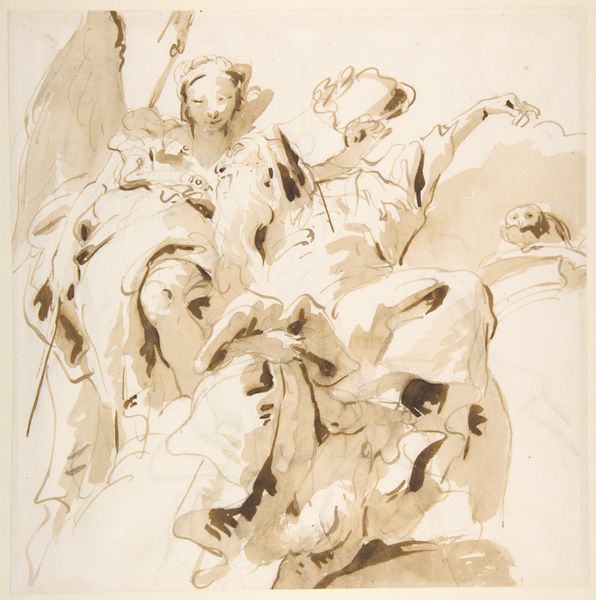
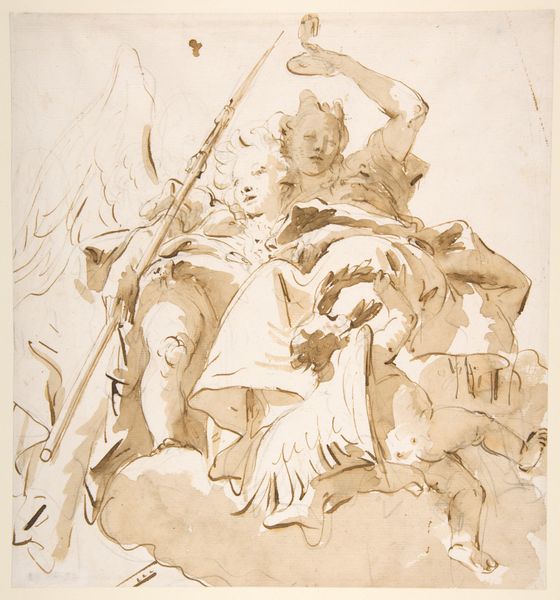
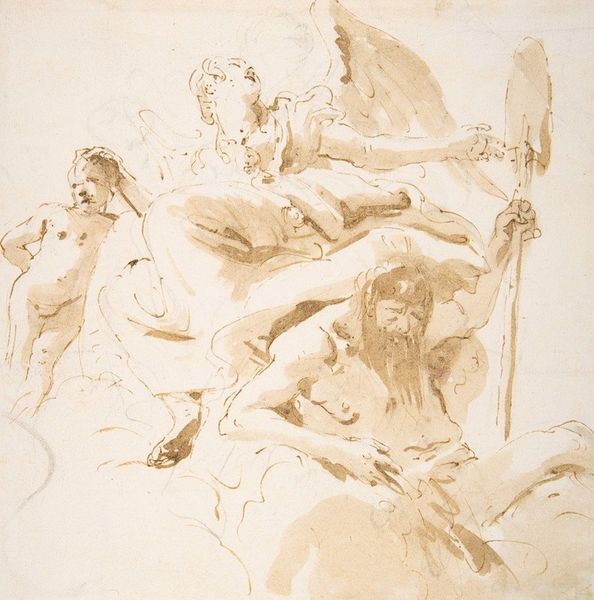
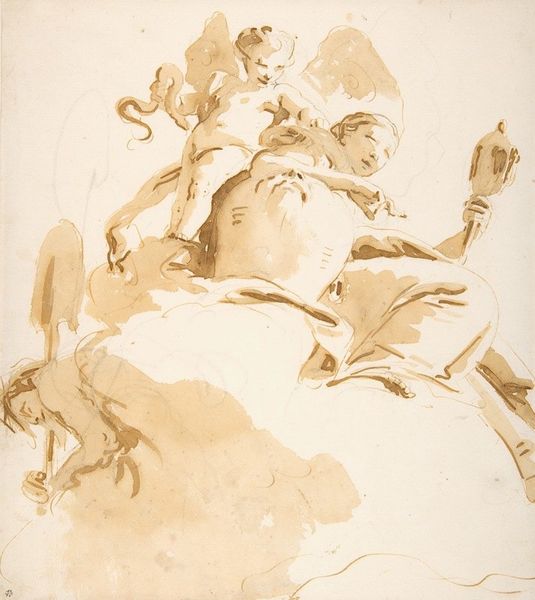
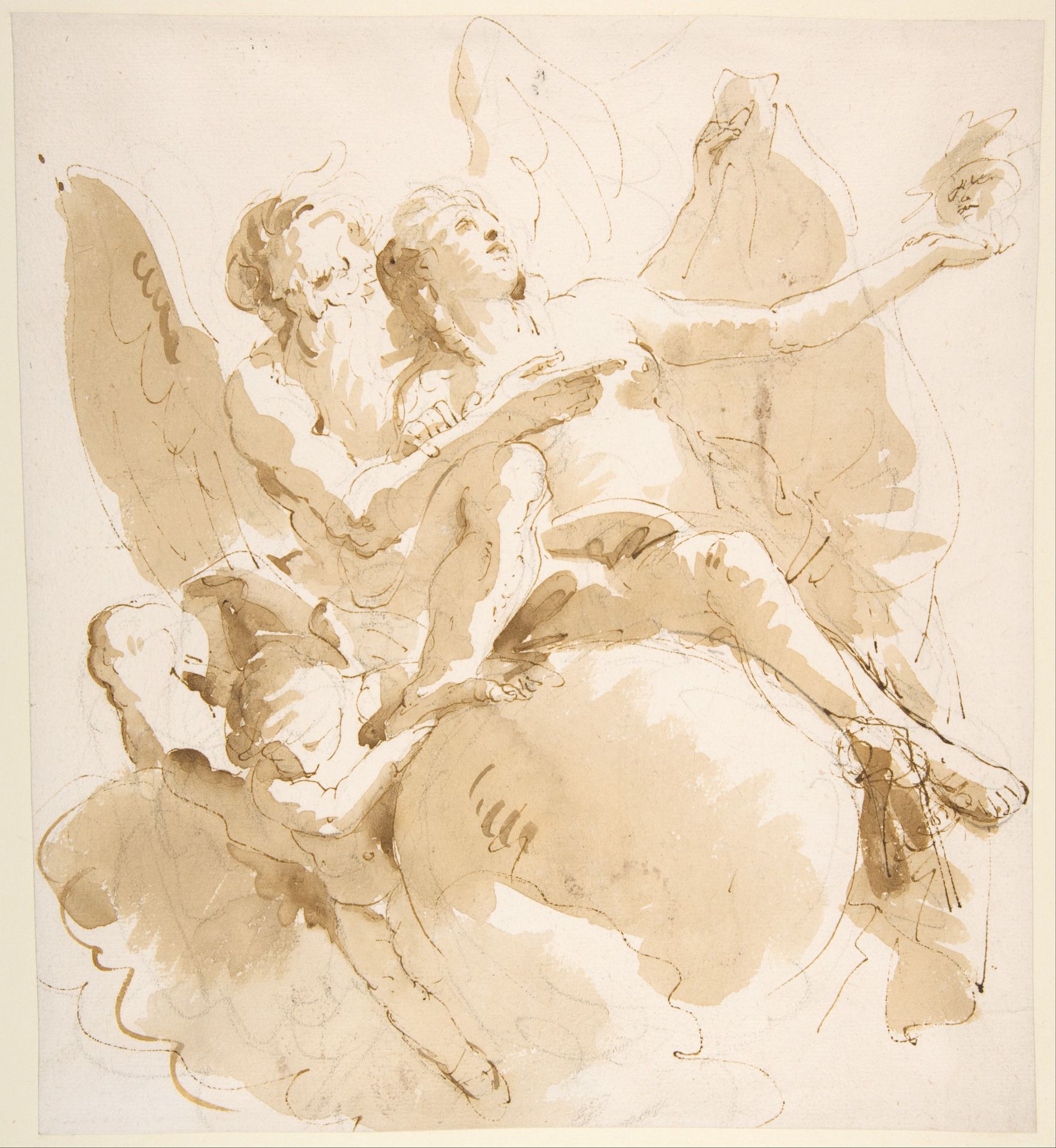
Giovanni Battista Tiepolo made this study, in pen and brown wash on paper, sometime in his lifetime, before 1770. Pen and wash is a very immediate technique – a quick way for an artist to get down ideas, test out compositions, and plan for larger, more elaborate projects. Here, the fluid strokes of Tiepolo’s pen create a swirling composition, dominated by allegorical figures. Time, often depicted as an old man with wings, supports Truth, who is reaching out to receive a radiant sun. Tiepolo’s expert handling of the wash – diluted ink applied with a brush – gives depth and volume to the figures, emphasizing their classical forms. This technique, requiring years of practice, was essential for conveying the dynamism and emotional intensity characteristic of the Baroque period. While seemingly distinct from industrial modes of production, even drawings like these reveal the presence of labor, skill, and established artistic traditions. By acknowledging the art of making, we enrich our understanding of the work.
Time and Truth
1696 - 1770

Giovanni Battista Tiepolo
1696 - 1770
The Metropolitan Museum of Art
Metropolitan Museum of Art, New York, NYArtwork details
- Medium
- drawing, print, ink
- Dimensions
- 10 x 9-3/16 in. (25.4 x 23.4 cm)
- Location
- Metropolitan Museum of Art, New York, NY
- Copyright
- Public Domain
Tags
drawing
baroque
ink painting
pencil sketch
possibly oil pastel
female-nude
ink
watercolour illustration
history-painting
nude
male-nude
watercolor
Comments
Be the first to share your thoughts about this work.
About this artwork
Giovanni Battista Tiepolo made this study, in pen and brown wash on paper, sometime in his lifetime, before 1770. Pen and wash is a very immediate technique – a quick way for an artist to get down ideas, test out compositions, and plan for larger, more elaborate projects. Here, the fluid strokes of Tiepolo’s pen create a swirling composition, dominated by allegorical figures. Time, often depicted as an old man with wings, supports Truth, who is reaching out to receive a radiant sun. Tiepolo’s expert handling of the wash – diluted ink applied with a brush – gives depth and volume to the figures, emphasizing their classical forms. This technique, requiring years of practice, was essential for conveying the dynamism and emotional intensity characteristic of the Baroque period. While seemingly distinct from industrial modes of production, even drawings like these reveal the presence of labor, skill, and established artistic traditions. By acknowledging the art of making, we enrich our understanding of the work.
Comments
Be the first to share your thoughts about this work.