About this artwork
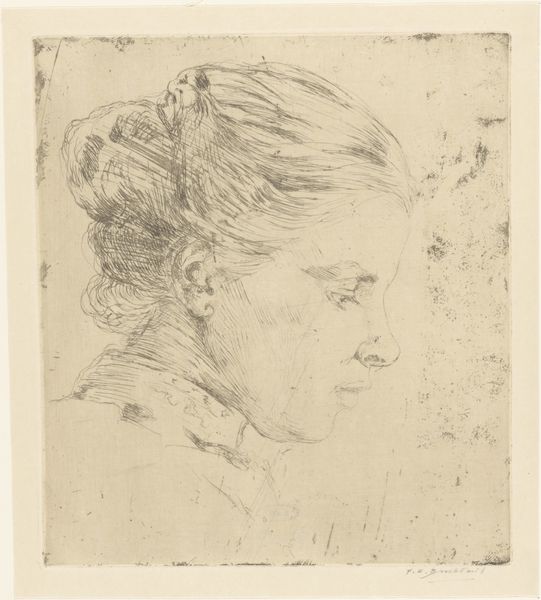
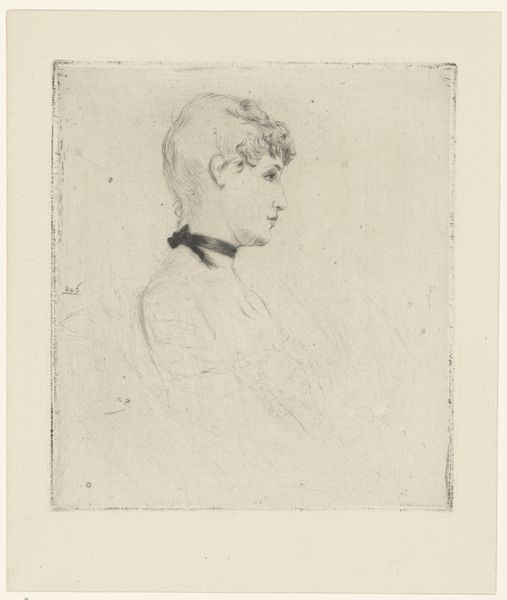
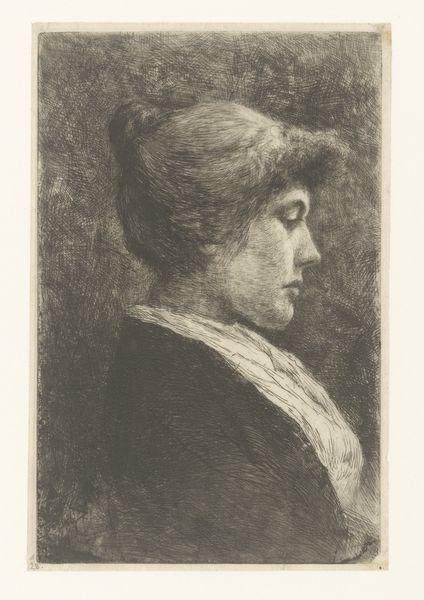
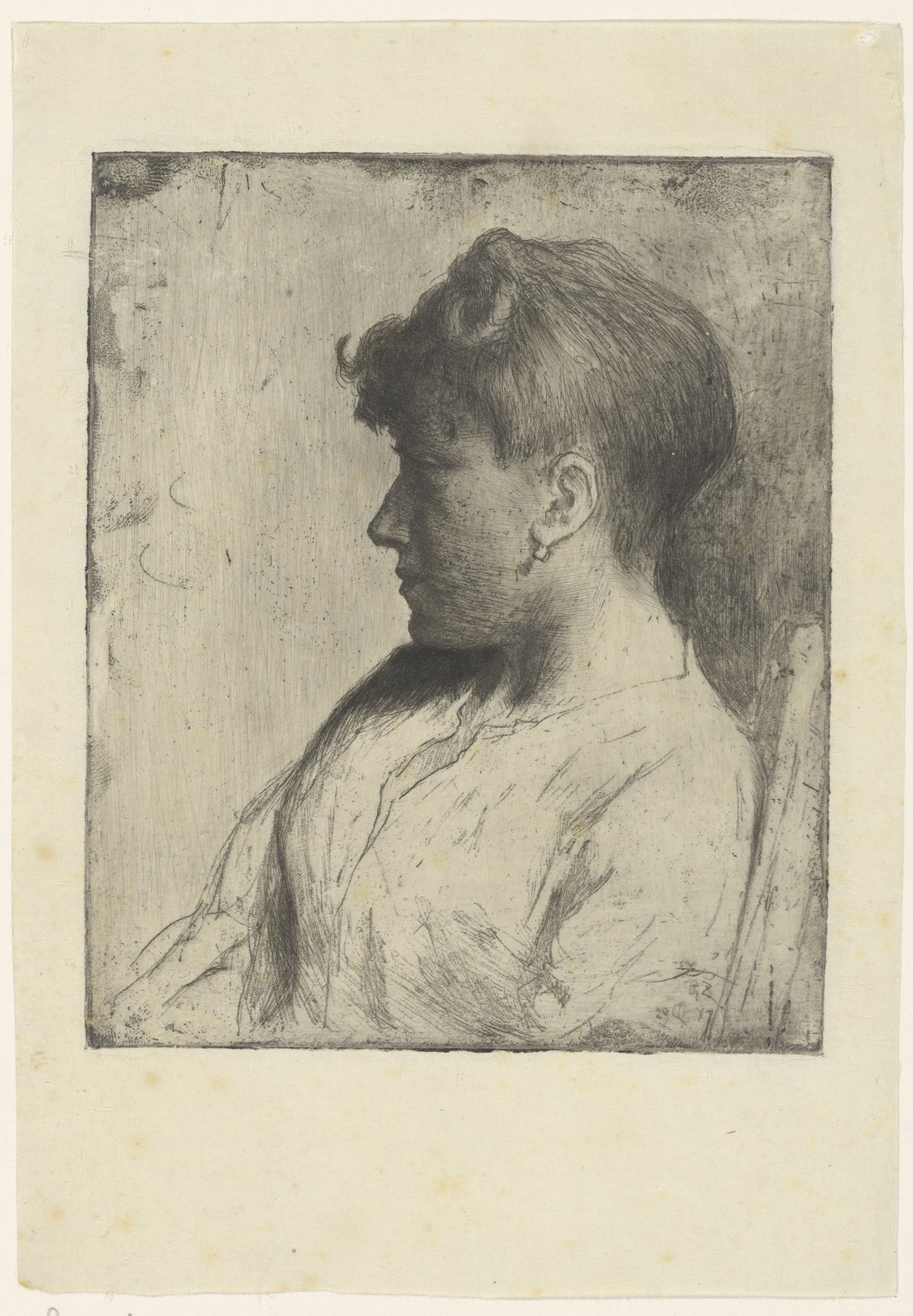
Editor: This etching, "Portret van een jonge vrouw, en profil," possibly from 1887, by Philip Zilcken, presents a profile view of a young woman. There's something quite delicate and subtle about the shading, and it evokes a sense of quiet contemplation. What strikes you about this work? Curator: The very fact that it is a woman depicted by a man at this time brings up interesting questions. While on the surface, it's a study of a young woman in profile, the work can be interpreted through the lens of the male gaze and how women were perceived and represented within patriarchal societal structures. The technique, the etching, further informs our understanding, because it often allowed for broader distribution of the image. Did this democratize art, or did it perpetuate stereotypes? Editor: That's a really interesting point, considering how limited women's agency was at that time. The distribution of this image raises issues regarding spectatorship. Were there expectations placed on how women should behave and appear? Curator: Exactly. Who was this image created for, and what social norms did it reinforce or perhaps challenge? Etchings, especially portraits, often catered to a specific clientele or conveyed specific ideals of beauty, class, and status. Was Zilcken trying to critique the existing social norms, or was he simply a participant in the aesthetic traditions of his time? What kind of conversation do you think that Zilcken was trying to spark? Editor: I hadn't thought about it in that context, but it makes me consider how the very act of portraying a woman, even in what seems like a simple profile, carries so much social and political baggage. The artistic expression reveals more than what is visible to the eye. Curator: Absolutely. Examining these images in a historical context prompts us to challenge our preconceived notions and view art as a powerful form of social and cultural commentary. It requires that we ask these hard questions, even when easy answers aren't available.
Portret van een jonge vrouw, en profil
Possibly 1887

Philip Zilcken
1857 - 1930Location
RijksmuseumArtwork details
- Medium
- drawing, print, etching
- Dimensions
- height 170 mm, width 141 mm
- Location
- Rijksmuseum
- Copyright
- Rijks Museum: Open Domain
Tags
Comments
Share your thoughts
About this artwork
Editor: This etching, "Portret van een jonge vrouw, en profil," possibly from 1887, by Philip Zilcken, presents a profile view of a young woman. There's something quite delicate and subtle about the shading, and it evokes a sense of quiet contemplation. What strikes you about this work? Curator: The very fact that it is a woman depicted by a man at this time brings up interesting questions. While on the surface, it's a study of a young woman in profile, the work can be interpreted through the lens of the male gaze and how women were perceived and represented within patriarchal societal structures. The technique, the etching, further informs our understanding, because it often allowed for broader distribution of the image. Did this democratize art, or did it perpetuate stereotypes? Editor: That's a really interesting point, considering how limited women's agency was at that time. The distribution of this image raises issues regarding spectatorship. Were there expectations placed on how women should behave and appear? Curator: Exactly. Who was this image created for, and what social norms did it reinforce or perhaps challenge? Etchings, especially portraits, often catered to a specific clientele or conveyed specific ideals of beauty, class, and status. Was Zilcken trying to critique the existing social norms, or was he simply a participant in the aesthetic traditions of his time? What kind of conversation do you think that Zilcken was trying to spark? Editor: I hadn't thought about it in that context, but it makes me consider how the very act of portraying a woman, even in what seems like a simple profile, carries so much social and political baggage. The artistic expression reveals more than what is visible to the eye. Curator: Absolutely. Examining these images in a historical context prompts us to challenge our preconceived notions and view art as a powerful form of social and cultural commentary. It requires that we ask these hard questions, even when easy answers aren't available.
Comments
Share your thoughts