About this artwork
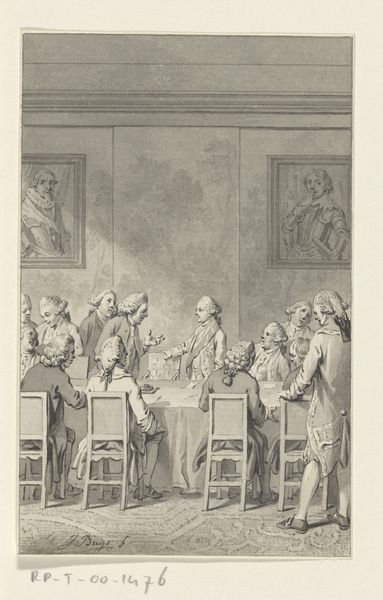
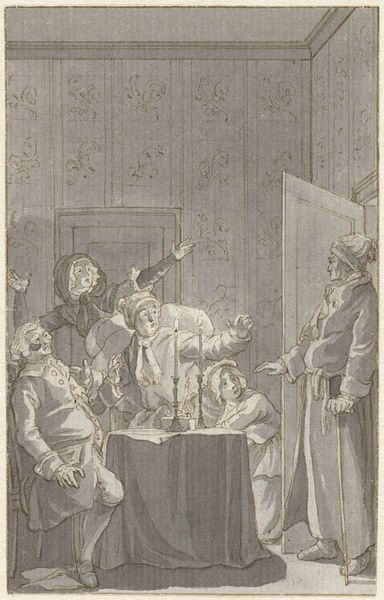
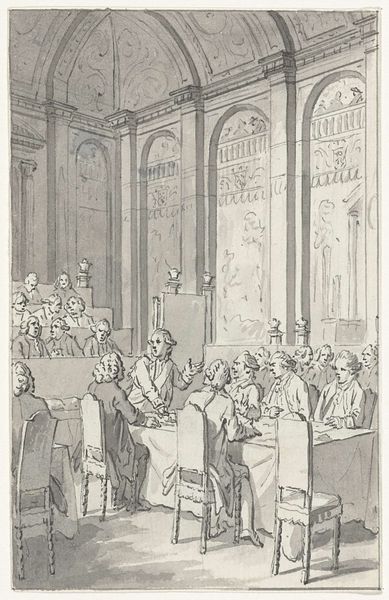
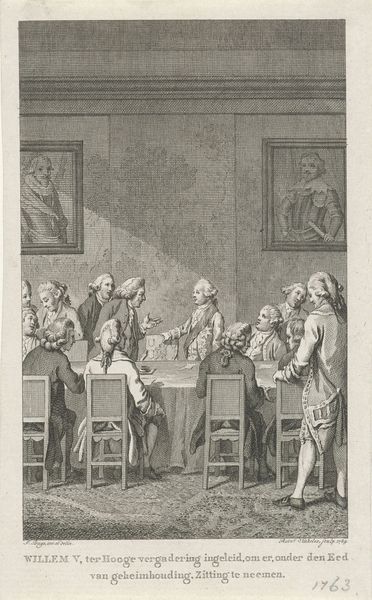
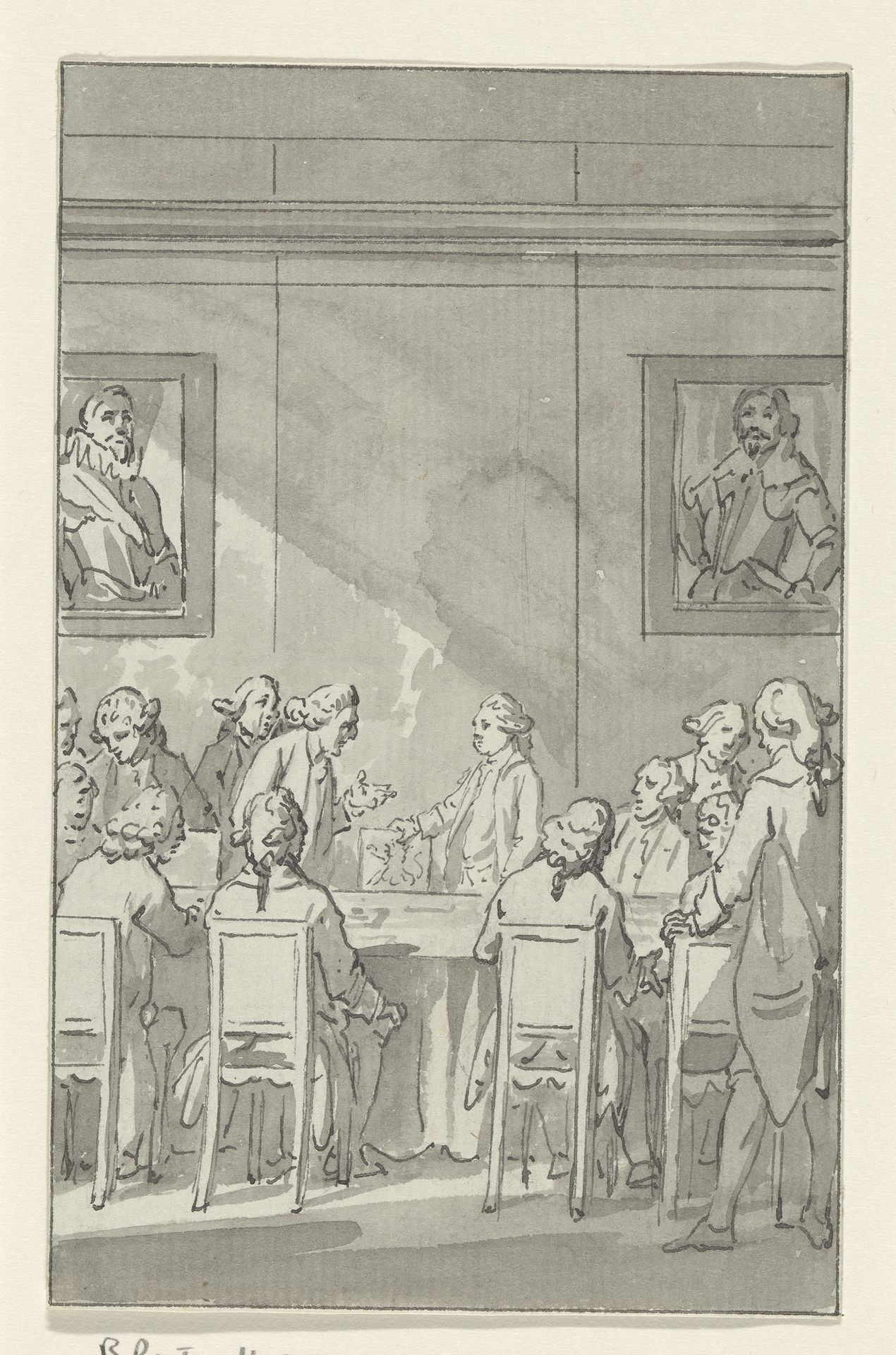
Jacobus Buys created this drawing, "Willem V takes seat in the Council of State for the first time", in 1763. The work, rendered in muted grays, captures a pivotal moment with a classical composition where we are invited to observe an assembly of figures around a long table. The artist uses line and space to define the scene. The figures are arranged to create a sense of depth and order. The architecture in the background and the portraits on the wall add layers of meaning, framing the central event within a historical and political context. The careful balance of figures and architecture invites us to consider power structures and social contracts. Ultimately, the drawing functions as a tableau, freezing a moment in time that speaks to broader themes of governance and legacy. Its artistic and philosophical discourse prompts ongoing interpretation and reinterpretation.
Willem V neemt voor het eerst zitting in de Raad van State, 1763
1795 - 1797

Jacobus Buys
1724 - 1801Location
RijksmuseumArtwork details
- Medium
- drawing, paper, ink
- Dimensions
- height 143 mm, width 91 mm
- Location
- Rijksmuseum
- Copyright
- Rijks Museum: Open Domain
Tags
portrait
drawing
narrative-art
paper
ink
classicism
group-portraits
genre-painting
history-painting
academic-art
Comments
Be the first to share your thoughts about this work.
About this artwork
Jacobus Buys created this drawing, "Willem V takes seat in the Council of State for the first time", in 1763. The work, rendered in muted grays, captures a pivotal moment with a classical composition where we are invited to observe an assembly of figures around a long table. The artist uses line and space to define the scene. The figures are arranged to create a sense of depth and order. The architecture in the background and the portraits on the wall add layers of meaning, framing the central event within a historical and political context. The careful balance of figures and architecture invites us to consider power structures and social contracts. Ultimately, the drawing functions as a tableau, freezing a moment in time that speaks to broader themes of governance and legacy. Its artistic and philosophical discourse prompts ongoing interpretation and reinterpretation.
Comments
Be the first to share your thoughts about this work.