About this artwork
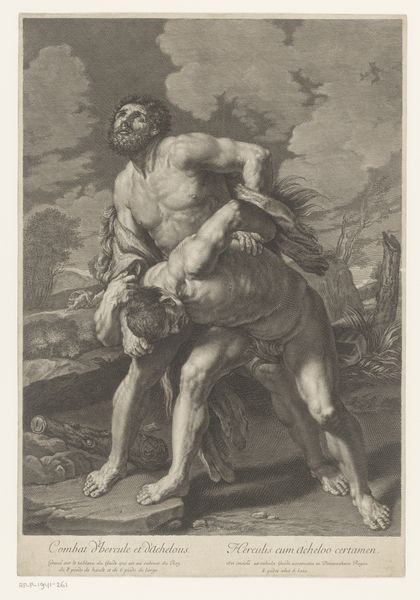
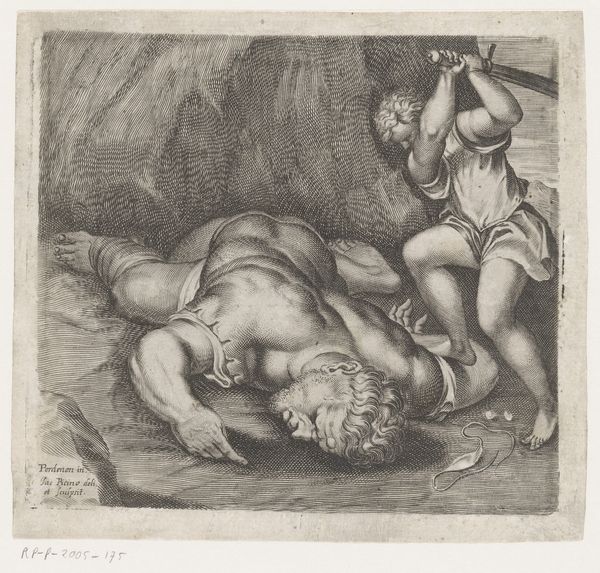
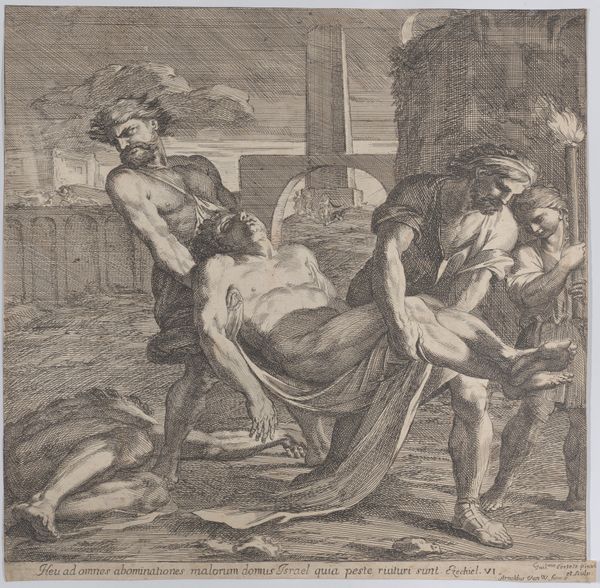
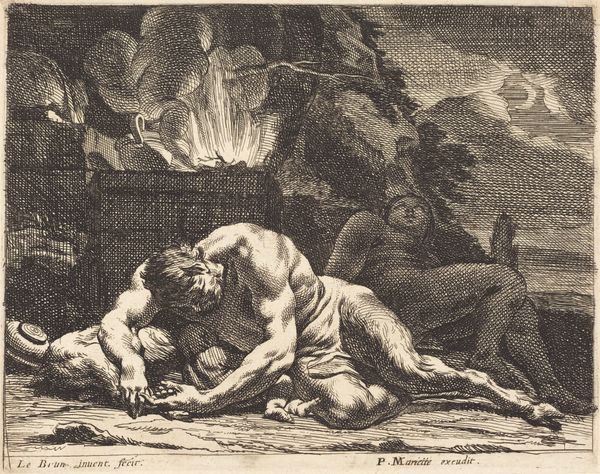
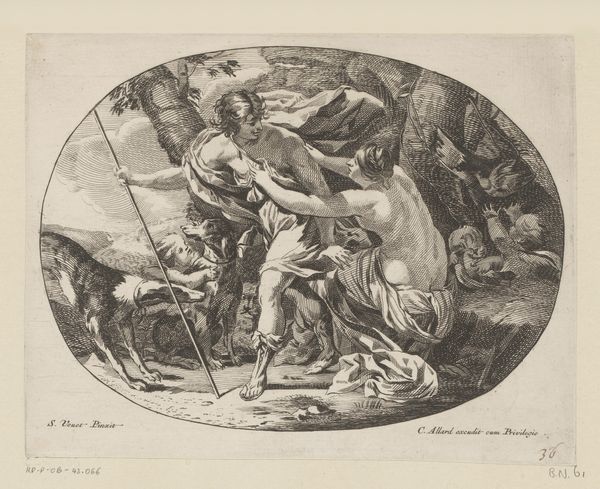
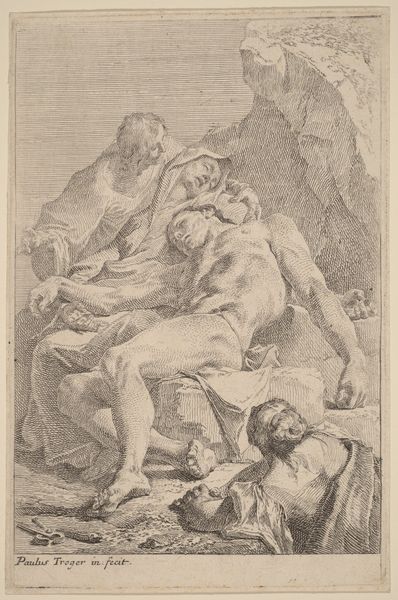
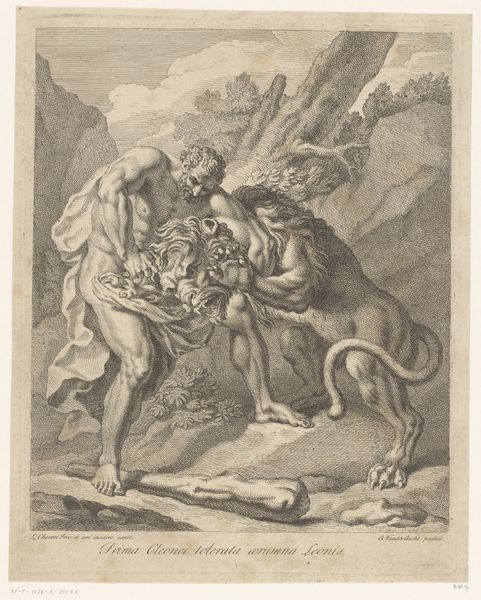
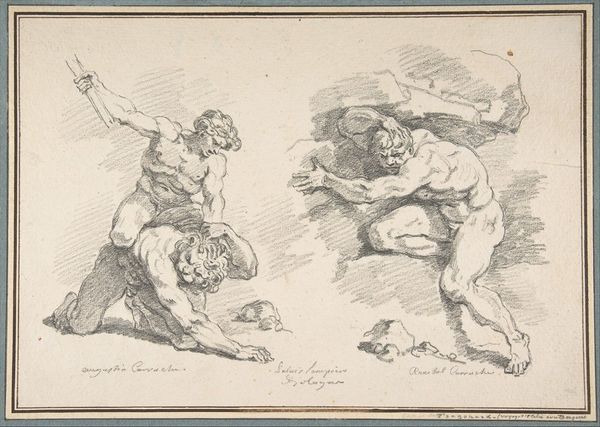
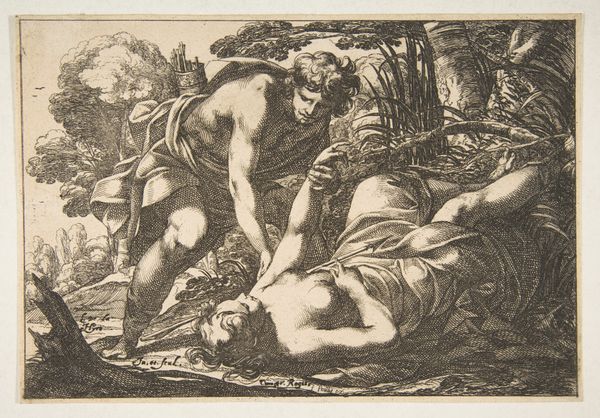
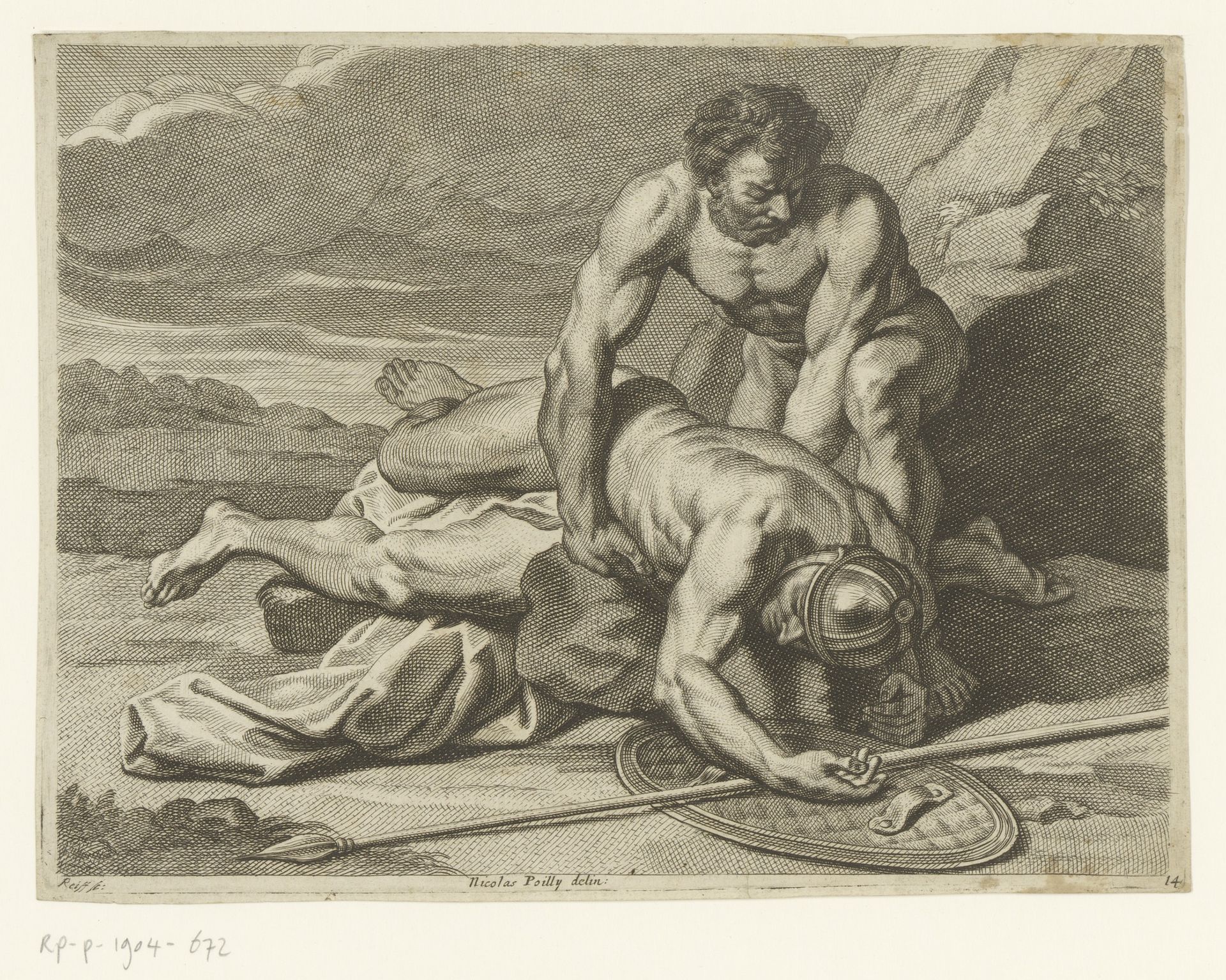
This print, made by Johann Conrad Reiff, probably around the turn of the 18th century, is a fine example of the engraver’s art. The artist would have started with a metal plate, most likely copper, meticulously incising lines into its surface using a tool called a burin. This painstaking process demanded immense skill, as the depth and spacing of each line determined the tonal values and textures of the final image. Look closely, and you can see how Reiff varied his mark-making to create areas of light and shadow, giving the scene its dramatic intensity. The cross-hatching in the darker areas creates a sense of depth, while the finer lines suggest the smooth contours of the figures’ bodies. Engraving, like other forms of printmaking, was a highly valued craft at the time. It served not only artistic purposes, but also played a crucial role in disseminating information and images, often used in book illustrations or for reproducing paintings. By understanding the labor and technical expertise involved, we gain a greater appreciation for the print’s cultural significance.
Een man neemt het lijk van een Romeins speerdrager in de armen
17th century

Johann Conrad Reiff
1726Location
RijksmuseumArtwork details
- Medium
- engraving
- Dimensions
- height 196 mm, width 263 mm
- Location
- Rijksmuseum
- Copyright
- Rijks Museum: Open Domain
Tags
Comments
Share your thoughts
About this artwork
This print, made by Johann Conrad Reiff, probably around the turn of the 18th century, is a fine example of the engraver’s art. The artist would have started with a metal plate, most likely copper, meticulously incising lines into its surface using a tool called a burin. This painstaking process demanded immense skill, as the depth and spacing of each line determined the tonal values and textures of the final image. Look closely, and you can see how Reiff varied his mark-making to create areas of light and shadow, giving the scene its dramatic intensity. The cross-hatching in the darker areas creates a sense of depth, while the finer lines suggest the smooth contours of the figures’ bodies. Engraving, like other forms of printmaking, was a highly valued craft at the time. It served not only artistic purposes, but also played a crucial role in disseminating information and images, often used in book illustrations or for reproducing paintings. By understanding the labor and technical expertise involved, we gain a greater appreciation for the print’s cultural significance.
Comments
Share your thoughts