About this artwork
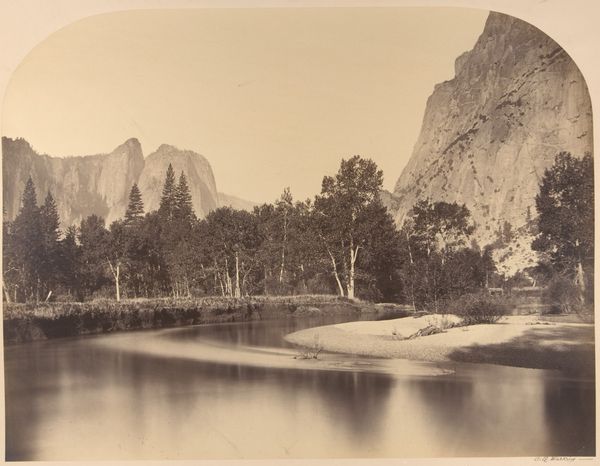
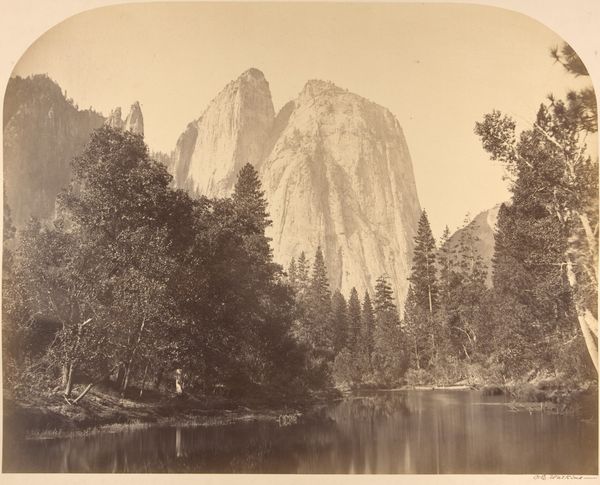
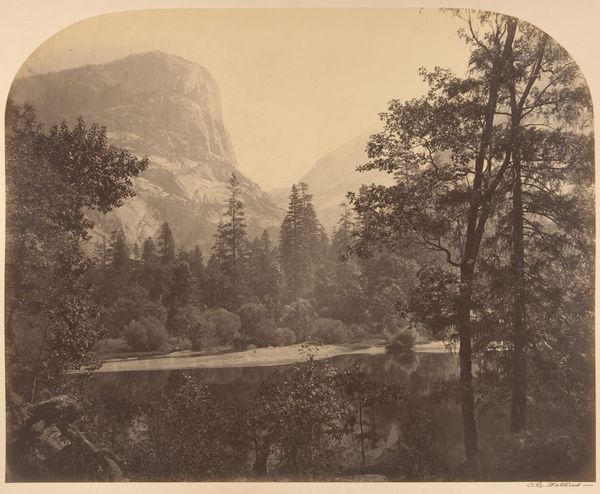
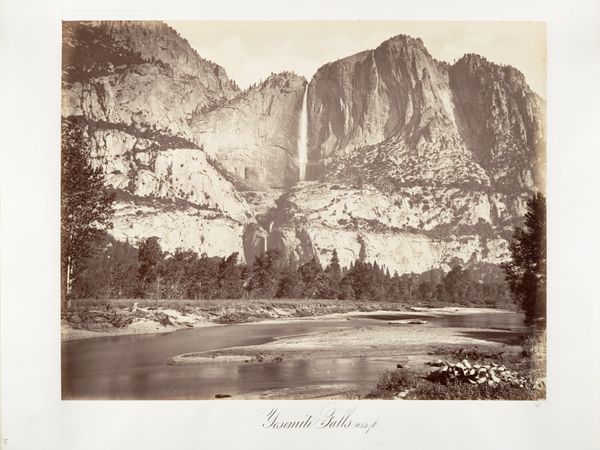
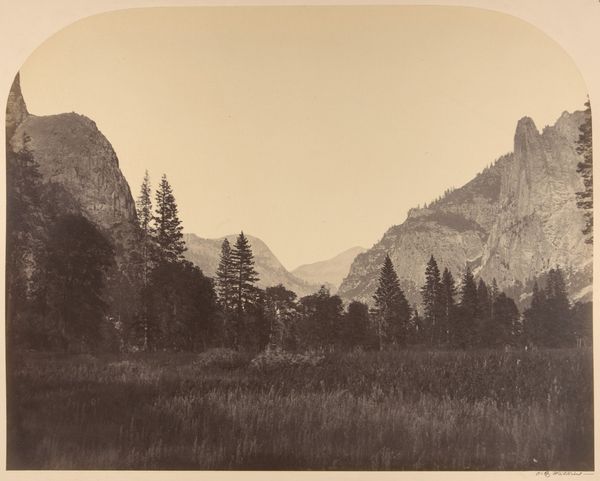
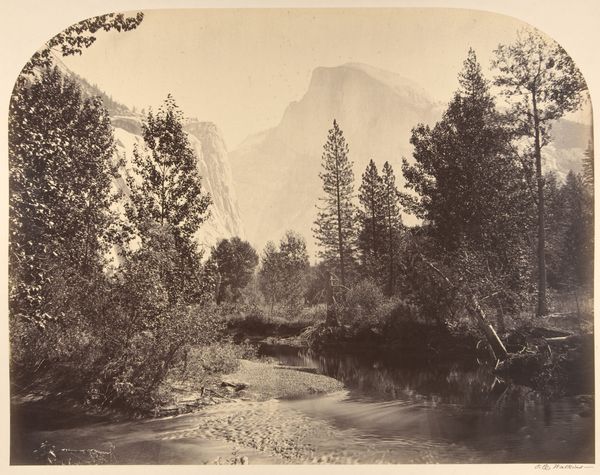
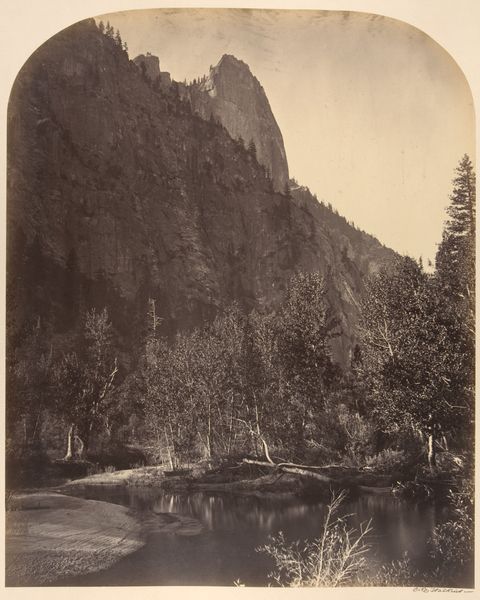
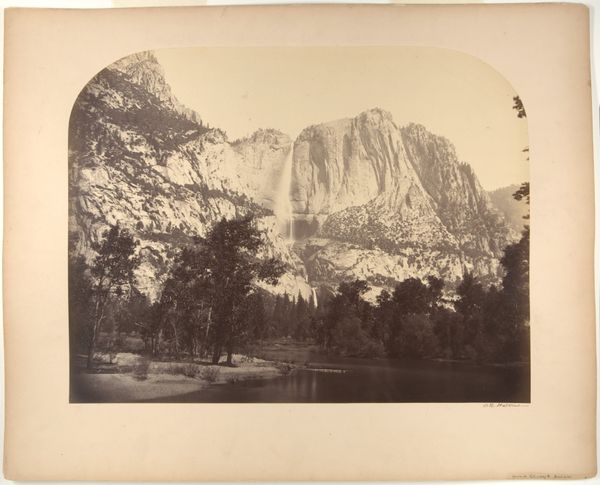
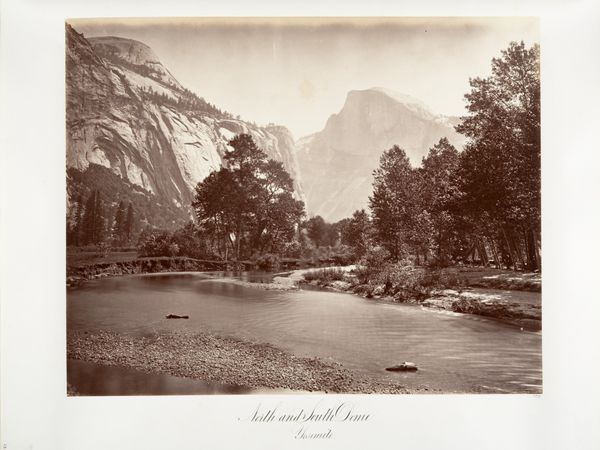
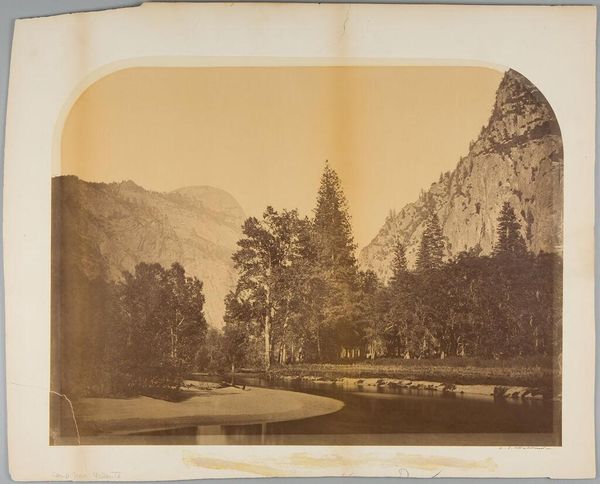
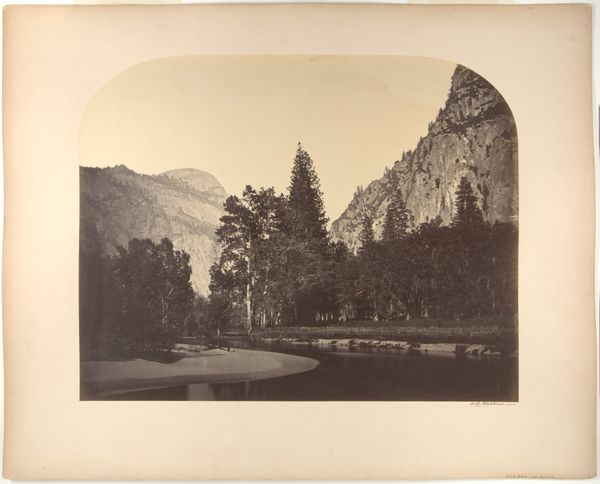
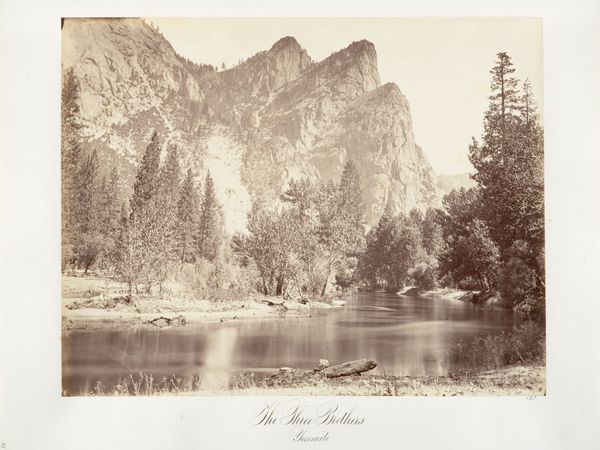
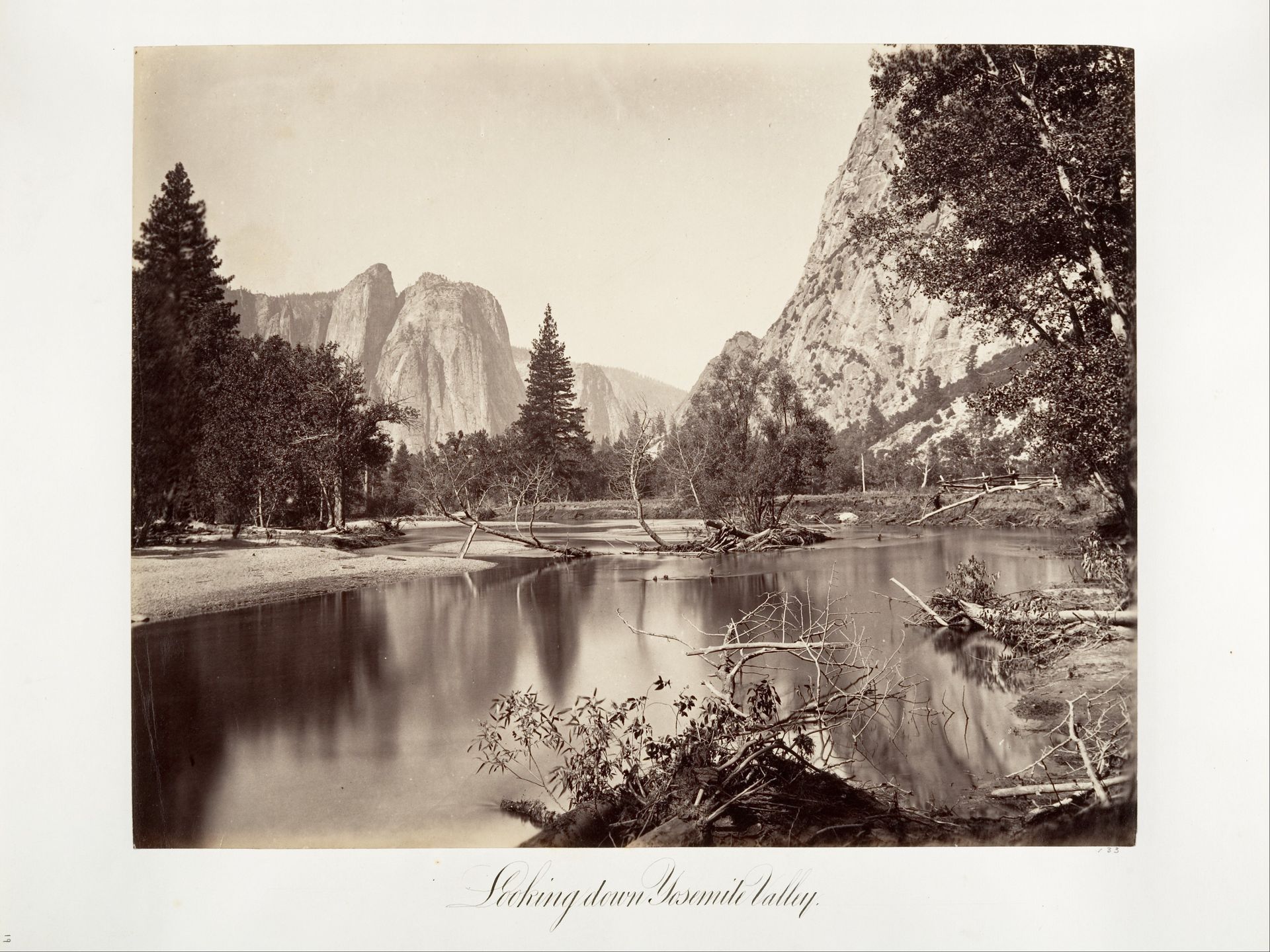
Carleton Watkins composed this photograph of Yosemite Valley with a remarkable clarity and depth using the wet plate collodion process. Observe how the horizontal flow of the river leads our eye into the composition, balanced by the verticality of the valley’s rock formations and trees. The photograph's tonal range captures the textures of the natural landscape—from the smooth water surface to the rough, granite faces of the cliffs. The dark foreground provides a grounding base, while the lighter sky creates an atmospheric perspective, enhancing the valley’s vastness. Watkins's choice of vantage point and his technical mastery emphasize the sublime, drawing on ideas of the picturesque that were popular at the time. But it's more than just a pretty picture. It is a systematic exploration of space and form, inviting us to consider how we perceive and structure our understanding of the natural world. This photograph is not just a visual record; it's a constructed view, reflecting specific cultural values and modes of seeing.
Looking Down Yosemite Valley
1870 - 1874

Carleton E. Watkins
1829 - 1916
The Metropolitan Museum of Art
Metropolitan Museum of Art, New York, NYArtwork details
- Medium
- print, photography, albumen-print
- Location
- Metropolitan Museum of Art, New York, NY
- Copyright
- Public Domain
Tags
Comments
Share your thoughts
About this artwork
Carleton Watkins composed this photograph of Yosemite Valley with a remarkable clarity and depth using the wet plate collodion process. Observe how the horizontal flow of the river leads our eye into the composition, balanced by the verticality of the valley’s rock formations and trees. The photograph's tonal range captures the textures of the natural landscape—from the smooth water surface to the rough, granite faces of the cliffs. The dark foreground provides a grounding base, while the lighter sky creates an atmospheric perspective, enhancing the valley’s vastness. Watkins's choice of vantage point and his technical mastery emphasize the sublime, drawing on ideas of the picturesque that were popular at the time. But it's more than just a pretty picture. It is a systematic exploration of space and form, inviting us to consider how we perceive and structure our understanding of the natural world. This photograph is not just a visual record; it's a constructed view, reflecting specific cultural values and modes of seeing.
Comments
Share your thoughts