About this artwork
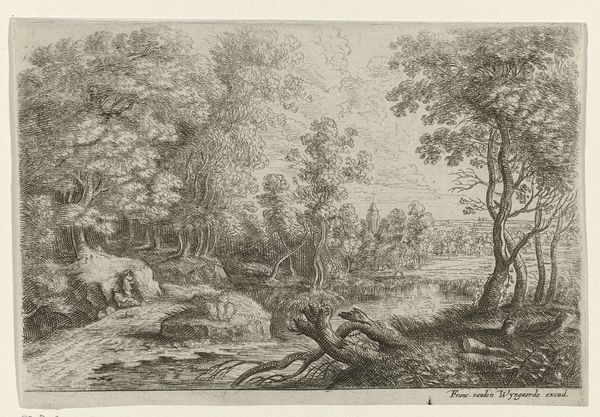
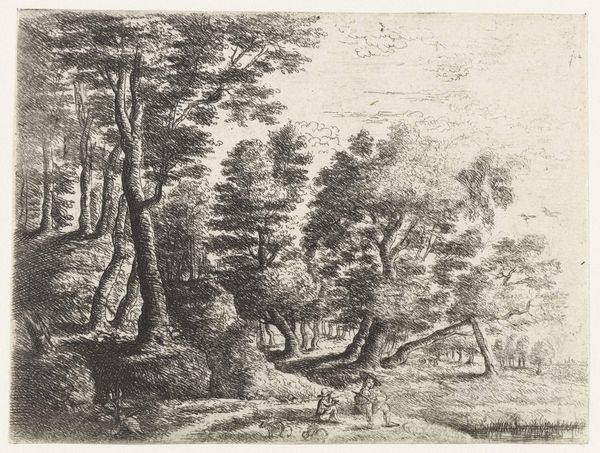
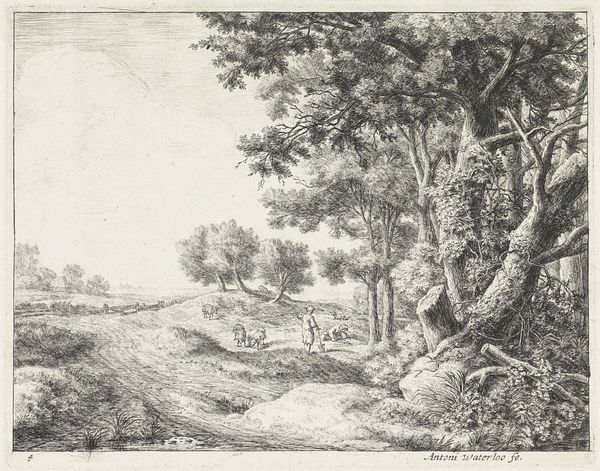
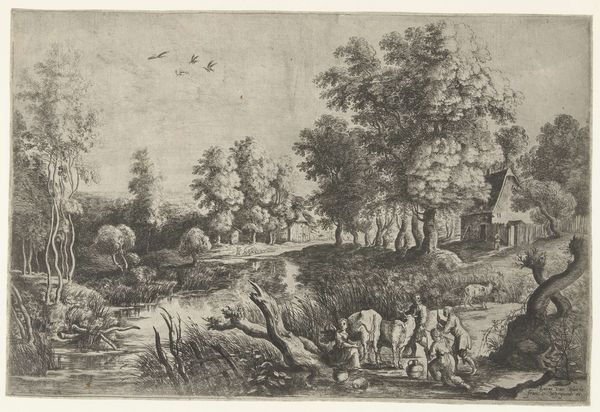
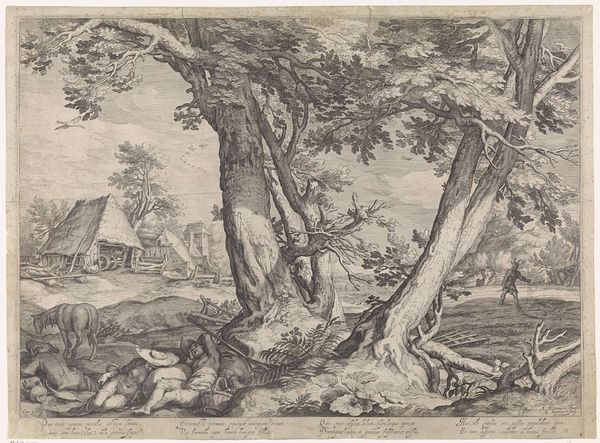
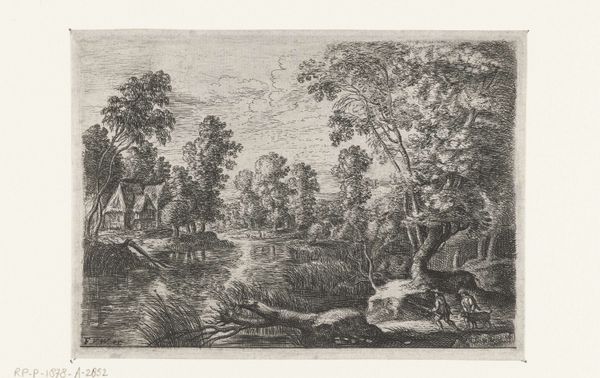
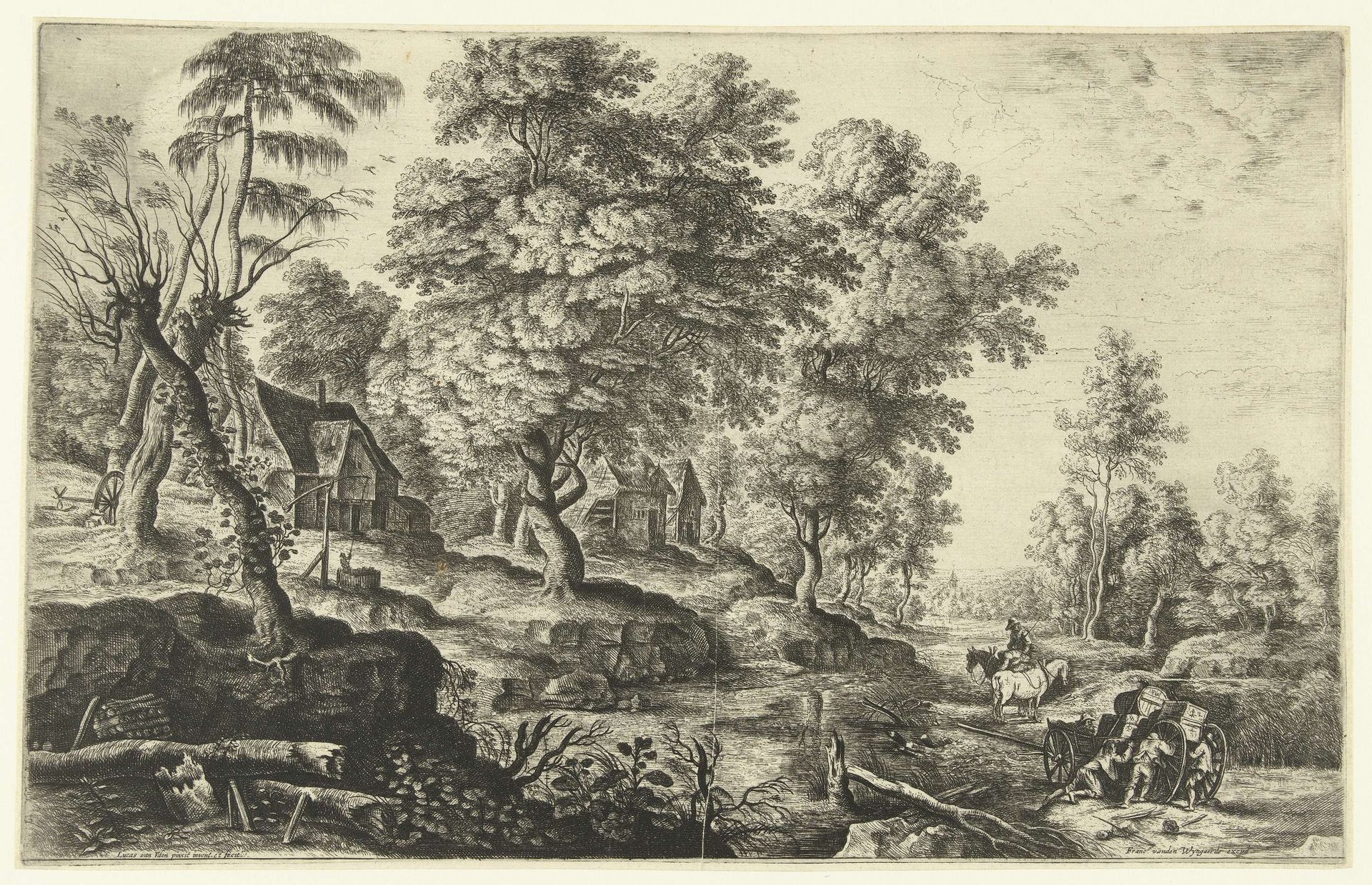
Curator: What catches my eye is how deeply etched this landscape feels, like a memory surfacing. I see tired laborers pushing their cart. How about you? Editor: I love how the dark, rich etching renders such a tranquil scene. It almost feels cinematic—the deep shadows and contrasting light giving it this amazing visual texture. It’s melancholic and earthy. Curator: Absolutely. We're looking at "Landscape with Men Pushing an Unloaded Cart," an etching and print by Lucas van Uden, likely created sometime between 1605 and 1673. Van Uden, a master of the Baroque style, encapsulates something fascinating here. Editor: It’s funny because initially I didn’t place it within a specific style but more of an impulse. I saw struggle and perseverance—it made me think of my own hauling burdens sometimes—so the weight definitely communicates! But I see now it’s very much echoing themes from that period. Curator: Well, the Northern Renaissance lingers in the incredible detail he achieves, while the Baroque influence can be observed in the drama of the composition, the light and shadow interplay, the theatrical rendering of nature itself as if conveying profound life lessons. Notice the weight given to daily tasks; that itself holds significance. The wagon-pushers symbolize human endurance amid the vicissitudes of the world. The artist subtly communicates universal challenges. Editor: Yes, definitely. Now when I consider that it does resonate how we perceive nature in a theatrical and grand manner and relate it to humanity's experiences. Now, what about the hidden cottages in the hills, as faint as dreams. Do they hold symbolic weight, too? Curator: Indeed. Cottages represent domesticity, safety but, rendered so faintly here, possibly fragility. This echoes the transient nature of life contrasted with an eternal, more permanent setting within the expansive, immutable landscape. They're fragile existences beneath vast nature's enduring stage. Editor: So it’s both deeply personal but symbolic. I will remember that and also I will remember the light—and shadow! Thanks! Curator: It was my pleasure! And thank you. Indeed a beautiful moment encapsulated.
Landschap met mannen die uitgespannen wagen duwen
1605 - 1673

Lucas van Uden
1595 - 1673Location
RijksmuseumArtwork details
- Medium
- drawing, print, etching
- Dimensions
- height 195 mm, width 307 mm
- Location
- Rijksmuseum
- Copyright
- Rijks Museum: Open Domain
Tags
Comments
Share your thoughts
About this artwork
Curator: What catches my eye is how deeply etched this landscape feels, like a memory surfacing. I see tired laborers pushing their cart. How about you? Editor: I love how the dark, rich etching renders such a tranquil scene. It almost feels cinematic—the deep shadows and contrasting light giving it this amazing visual texture. It’s melancholic and earthy. Curator: Absolutely. We're looking at "Landscape with Men Pushing an Unloaded Cart," an etching and print by Lucas van Uden, likely created sometime between 1605 and 1673. Van Uden, a master of the Baroque style, encapsulates something fascinating here. Editor: It’s funny because initially I didn’t place it within a specific style but more of an impulse. I saw struggle and perseverance—it made me think of my own hauling burdens sometimes—so the weight definitely communicates! But I see now it’s very much echoing themes from that period. Curator: Well, the Northern Renaissance lingers in the incredible detail he achieves, while the Baroque influence can be observed in the drama of the composition, the light and shadow interplay, the theatrical rendering of nature itself as if conveying profound life lessons. Notice the weight given to daily tasks; that itself holds significance. The wagon-pushers symbolize human endurance amid the vicissitudes of the world. The artist subtly communicates universal challenges. Editor: Yes, definitely. Now when I consider that it does resonate how we perceive nature in a theatrical and grand manner and relate it to humanity's experiences. Now, what about the hidden cottages in the hills, as faint as dreams. Do they hold symbolic weight, too? Curator: Indeed. Cottages represent domesticity, safety but, rendered so faintly here, possibly fragility. This echoes the transient nature of life contrasted with an eternal, more permanent setting within the expansive, immutable landscape. They're fragile existences beneath vast nature's enduring stage. Editor: So it’s both deeply personal but symbolic. I will remember that and also I will remember the light—and shadow! Thanks! Curator: It was my pleasure! And thank you. Indeed a beautiful moment encapsulated.
Comments
Share your thoughts