![Untitled [standing female nude with left foot on chair seat] by Richard Diebenkorn](https://d2w8kbdekdi1gv.cloudfront.net/eyJidWNrZXQiOiAiYXJ0ZXJhLWltYWdlcy1idWNrZXQiLCAia2V5IjogImFydHdvcmtzL2ZkNTBlZjUyLTAyOGQtNDJlNS1hYmU2LWIzZTljNmNjZjI0ZC9mZDUwZWY1Mi0wMjhkLTQyZTUtYWJlNi1iM2U5YzZjY2YyNGRfZnVsbC5qcGciLCAiZWRpdHMiOiB7InJlc2l6ZSI6IHsid2lkdGgiOiAxOTIwLCAiaGVpZ2h0IjogMTkyMCwgImZpdCI6ICJpbnNpZGUifX19)
About this artwork
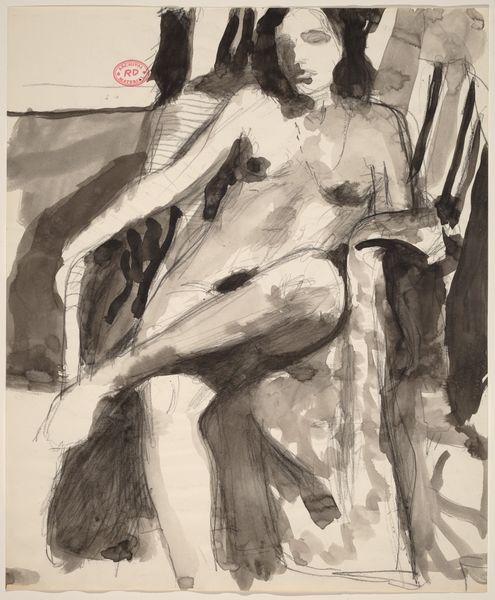
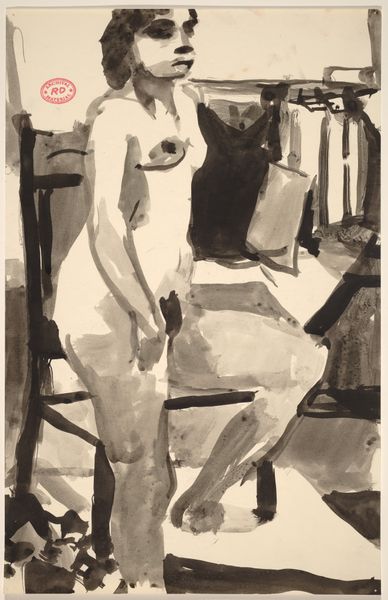
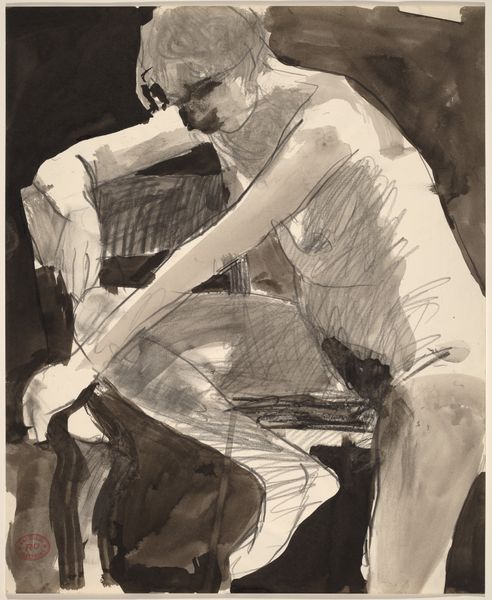
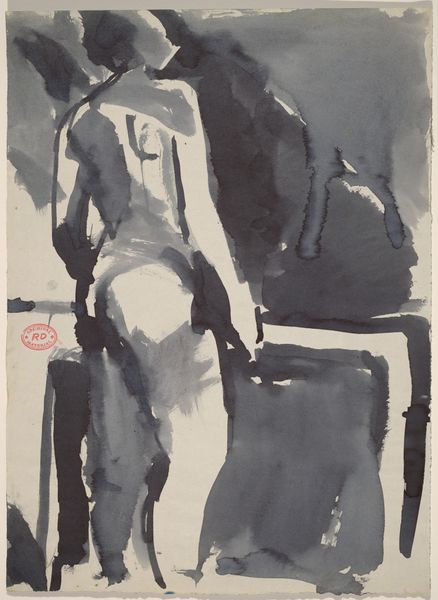
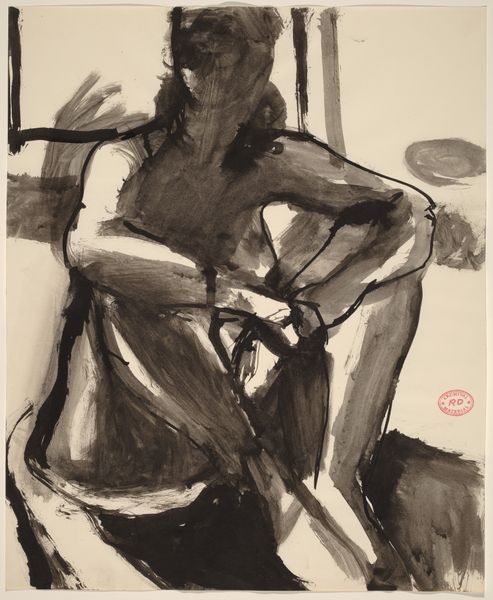
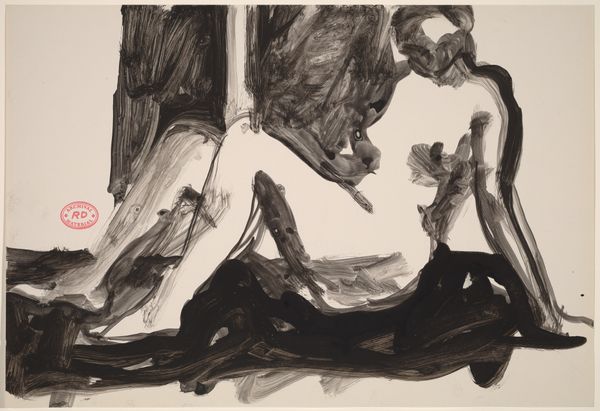
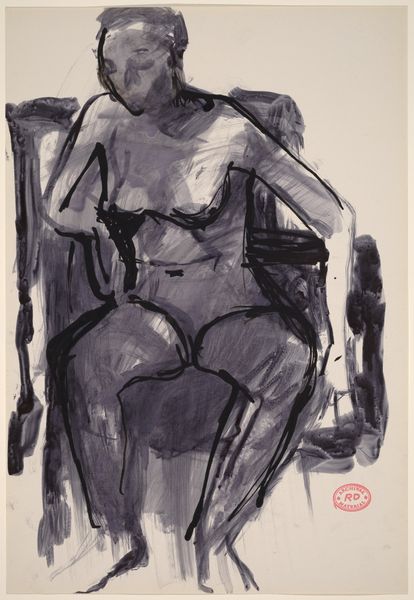
Curator: Richard Diebenkorn created this untitled ink drawing, "standing female nude with left foot on chair seat," sometime between 1955 and 1967. It’s striking, wouldn't you say? Editor: Yes, my first impression is how raw and immediate it feels. The stark black ink on the paper and the very deliberate visible brushstrokes create a palpable tension. Curator: Absolutely. The figure dominates the composition, reflecting the evolving representation of the female body in art during that period. What do you make of the almost confrontational gaze? Editor: That direct stare, combined with the partial nudity and the chair acting almost as a symbolic throne, lends her a certain authority, perhaps even vulnerability. Nudes are always so layered. Curator: Indeed. Diebenkorn’s choice to render the body in such a bold, almost unfinished manner departs from traditional academic depictions, marking a shift towards a more subjective interpretation. The drawing speaks to post-war anxieties about representation, challenging idealized notions of beauty. Editor: I'm interested in the negative space too; the lack of background and detail focuses attention on the subject’s form. In leaving so much undefined, isn’t Diebenkorn inviting us to complete the image with our own assumptions? Curator: Precisely! By reducing the setting to a bare minimum, Diebenkorn strips away any potential narrative baggage, leaving the viewer face-to-face with the essential human form. The figure isn't just an object; she becomes an emblem of self-possession in an era undergoing tremendous social transformation. Editor: It is a study of light and shadow; both reveal the shape and also conceal the body. I think there's also some comment being made on public perceptions of gender, especially for female artists at this time. Curator: An incisive reading, I'd say. It highlights how deeply the seemingly simple form embodies wider tensions present in a fast-changing post-war American society. Editor: Definitely something to contemplate further. Curator: A stimulating piece offering much for audiences to consider when evaluating depictions of women during this fascinating epoch.
Untitled [standing female nude with left foot on chair seat] 1955 - 1967


Artwork details
- Medium
- drawing, ink
- Dimensions
- overall: 27.9 x 43.2 cm (11 x 17 in.)
- Copyright
- National Gallery of Art: CC0 1.0
Tags
portrait
drawing
figuration
bay-area-figurative-movement
ink
portrait drawing
nude
Comments
No comments
About this artwork
Curator: Richard Diebenkorn created this untitled ink drawing, "standing female nude with left foot on chair seat," sometime between 1955 and 1967. It’s striking, wouldn't you say? Editor: Yes, my first impression is how raw and immediate it feels. The stark black ink on the paper and the very deliberate visible brushstrokes create a palpable tension. Curator: Absolutely. The figure dominates the composition, reflecting the evolving representation of the female body in art during that period. What do you make of the almost confrontational gaze? Editor: That direct stare, combined with the partial nudity and the chair acting almost as a symbolic throne, lends her a certain authority, perhaps even vulnerability. Nudes are always so layered. Curator: Indeed. Diebenkorn’s choice to render the body in such a bold, almost unfinished manner departs from traditional academic depictions, marking a shift towards a more subjective interpretation. The drawing speaks to post-war anxieties about representation, challenging idealized notions of beauty. Editor: I'm interested in the negative space too; the lack of background and detail focuses attention on the subject’s form. In leaving so much undefined, isn’t Diebenkorn inviting us to complete the image with our own assumptions? Curator: Precisely! By reducing the setting to a bare minimum, Diebenkorn strips away any potential narrative baggage, leaving the viewer face-to-face with the essential human form. The figure isn't just an object; she becomes an emblem of self-possession in an era undergoing tremendous social transformation. Editor: It is a study of light and shadow; both reveal the shape and also conceal the body. I think there's also some comment being made on public perceptions of gender, especially for female artists at this time. Curator: An incisive reading, I'd say. It highlights how deeply the seemingly simple form embodies wider tensions present in a fast-changing post-war American society. Editor: Definitely something to contemplate further. Curator: A stimulating piece offering much for audiences to consider when evaluating depictions of women during this fascinating epoch.
Comments
No comments