About this artwork
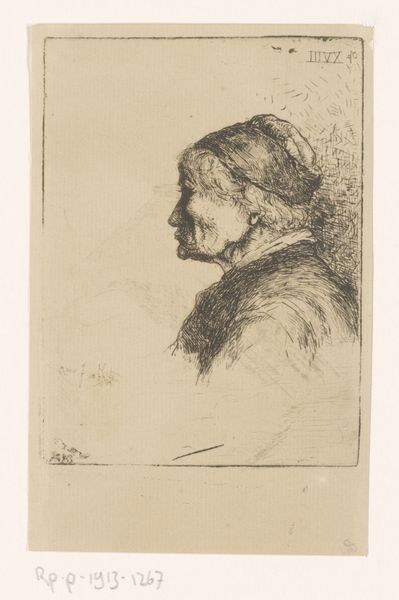
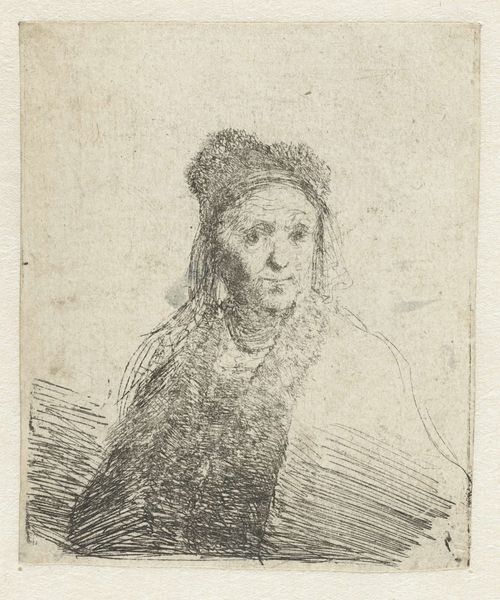
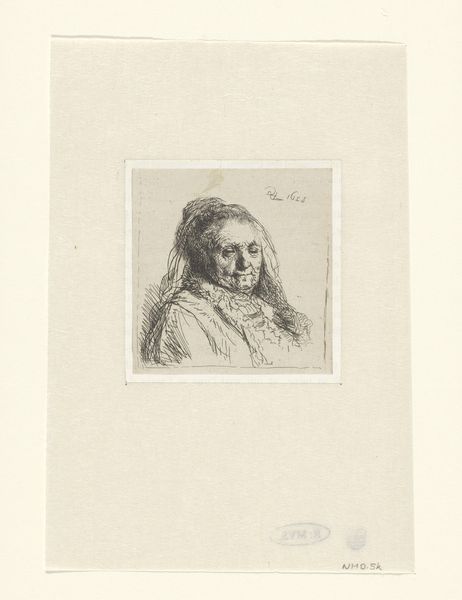
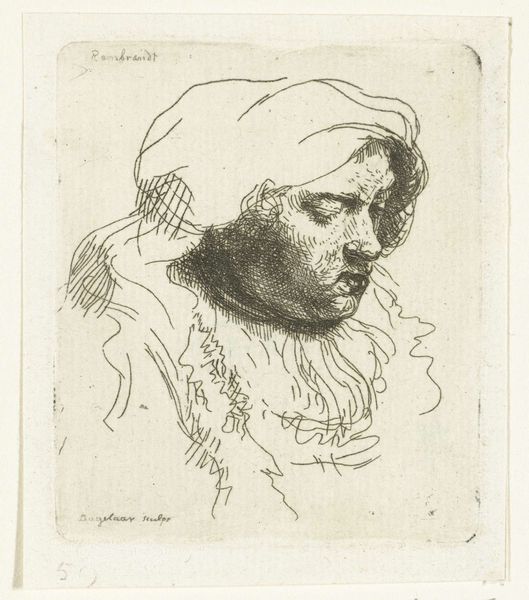
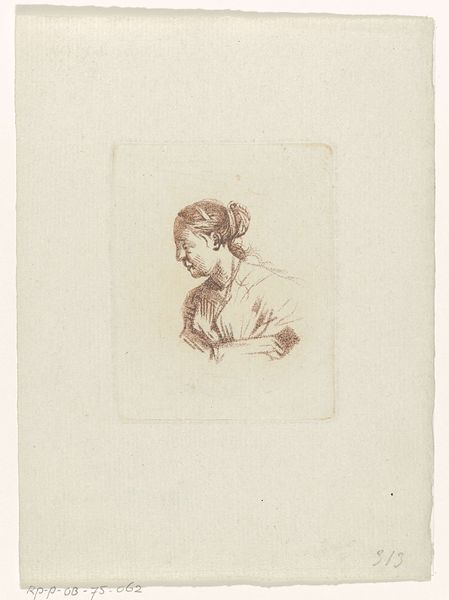
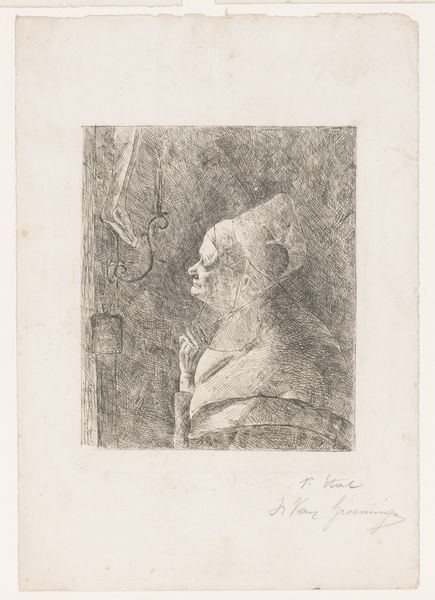
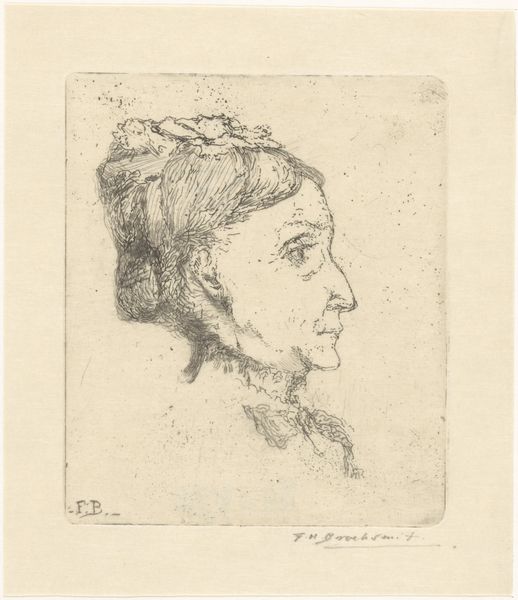
This is Philip Zilcken’s small etching of an elderly woman in profile. Zilcken was a Dutch painter, etcher, and writer, living from 1857 to 1930, a time of tremendous change in Europe. Zilcken’s print participates in a long history of representing older women. But unlike many of his contemporaries, his approach here seems less interested in idealizing youth or beauty. Instead, there's a focus on the details that come with age – the wrinkles, the way the skin sags, and the quiet dignity that experience etches onto a face. What strikes me most is how Zilcken uses the etching technique to convey not just the physical appearance, but also perhaps something of the woman’s inner life. The stark lines and the shadows give her an almost sculptural presence, highlighting a life lived, a story etched as deeply as the lines on the plate. It feels respectful, even tender, inviting us to consider the lives of women who are so often rendered invisible.
Portret van een oude vrouw, en profil 1867 - 1890

Philip Zilcken
1857 - 1930Location
RijksmuseumArtwork details
- Medium
- drawing, ink, pencil
- Dimensions
- height 109 mm, width 80 mm
- Location
- Rijksmuseum
- Copyright
- Rijks Museum: Open Domain
Tags
portrait
drawing
amateur sketch
light pencil work
pen sketch
pencil sketch
incomplete sketchy
figuration
personal sketchbook
ink
ink drawing experimentation
pen-ink sketch
pencil
sketchbook drawing
pencil work
Comments
No comments
About this artwork
This is Philip Zilcken’s small etching of an elderly woman in profile. Zilcken was a Dutch painter, etcher, and writer, living from 1857 to 1930, a time of tremendous change in Europe. Zilcken’s print participates in a long history of representing older women. But unlike many of his contemporaries, his approach here seems less interested in idealizing youth or beauty. Instead, there's a focus on the details that come with age – the wrinkles, the way the skin sags, and the quiet dignity that experience etches onto a face. What strikes me most is how Zilcken uses the etching technique to convey not just the physical appearance, but also perhaps something of the woman’s inner life. The stark lines and the shadows give her an almost sculptural presence, highlighting a life lived, a story etched as deeply as the lines on the plate. It feels respectful, even tender, inviting us to consider the lives of women who are so often rendered invisible.
Comments
No comments