About this artwork
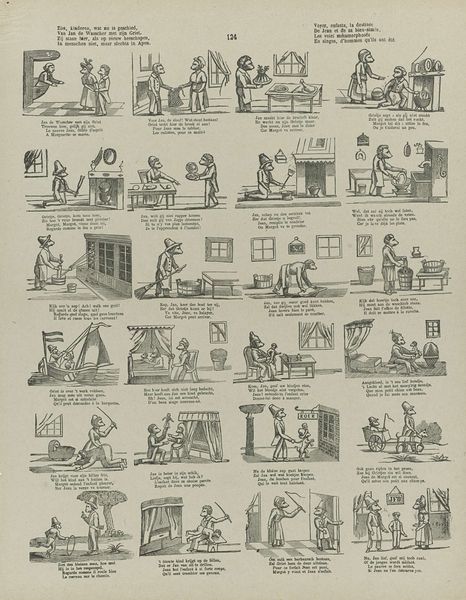
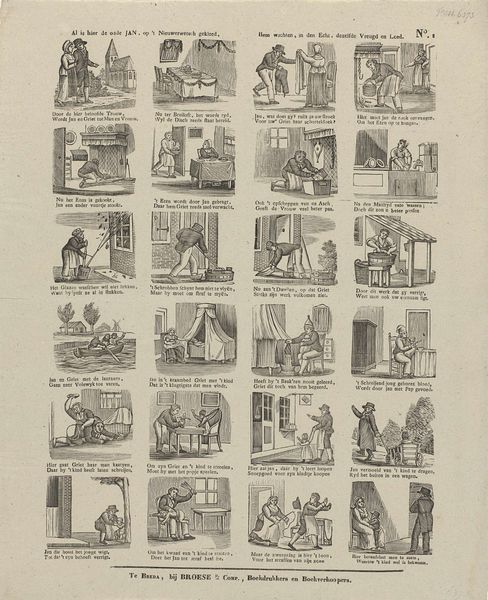
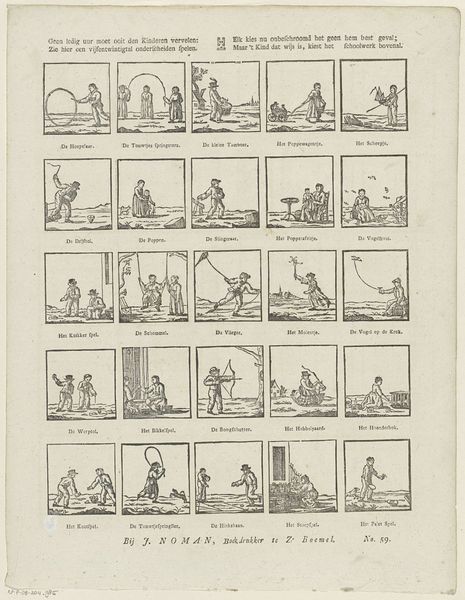
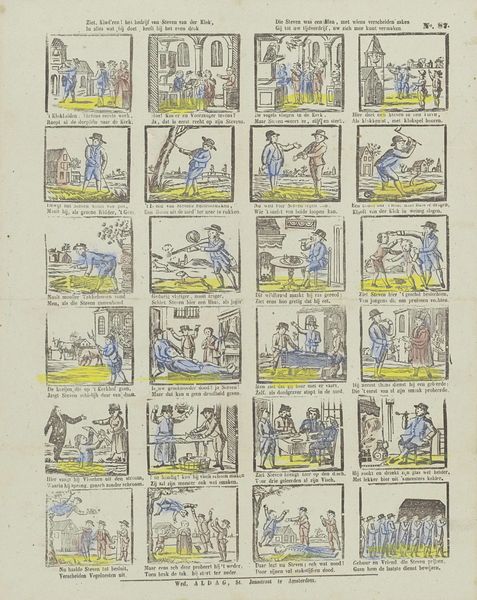
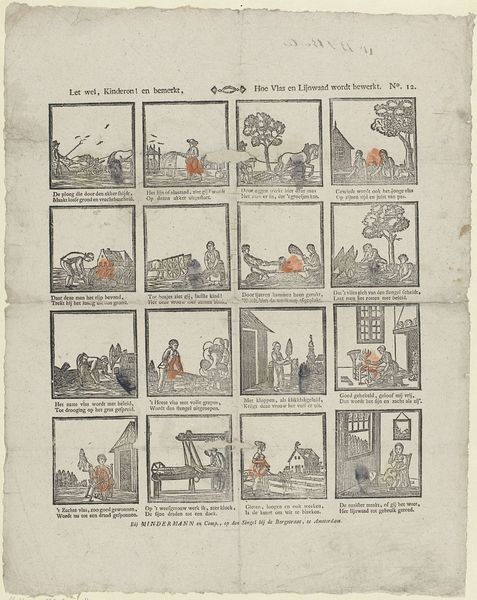
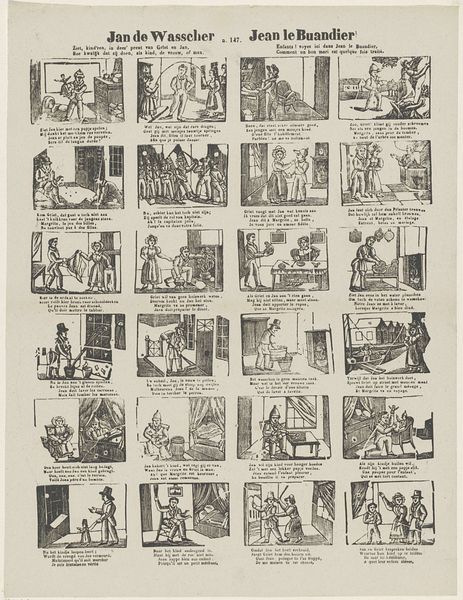
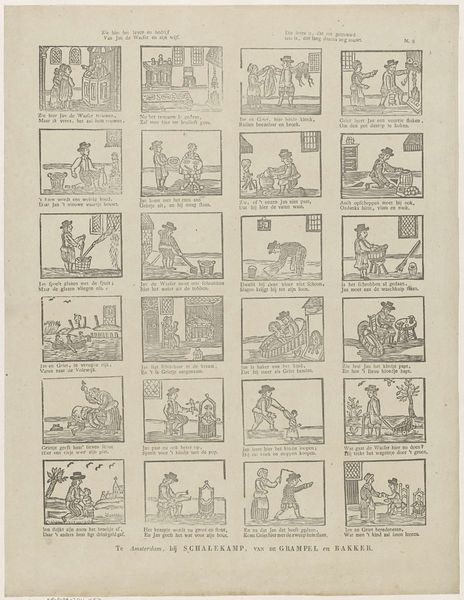
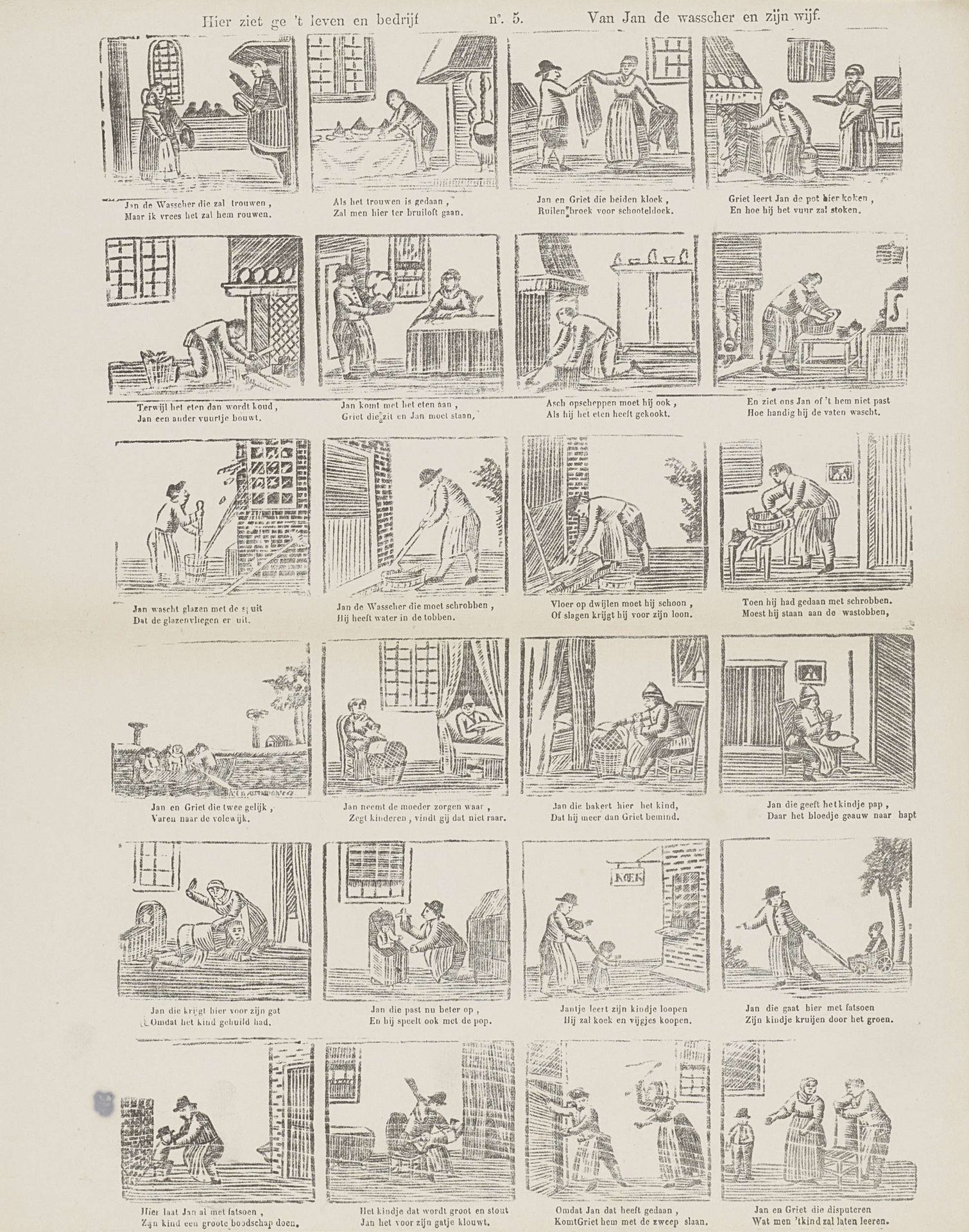
Alexander Cranendoncq created this lithograph titled 'Here you see the life and business of Jan de Wasscher and his wife' sometime in the first half of the 19th century. It is a piece that uses a comic strip-like structure to lay out the life and labour of a working-class couple. It reflects the social realities and gendered division of labor that were part of daily life. We see Jan and his wife doing their chores, seemingly locked in a cycle of endless work. The woman is often depicted caring for the child, emphasizing her role in the domestic sphere. The emotional weight of the endless cycle of work is palpable; there's a sense of exhaustion and resignation. This work offers a narrative about working-class life and reflects the artists interest in depicting everyday life, while also commenting on the economic and social realities of the 19th century.
Hier ziet ge 't leven en bedrijf / Van Jan de Wasscher en zijn wijf 1848 - 1881

Alexander Cranendoncq
1799 - 1869Location
RijksmuseumArtwork details
- Medium
- graphic-art, print, engraving
- Dimensions
- height 376 mm, width 300 mm
- Location
- Rijksmuseum
- Copyright
- Rijks Museum: Open Domain
Tags
graphic-art
narrative-art
ukiyo-e
folk-art
genre-painting
engraving
Comments
No comments
About this artwork
Alexander Cranendoncq created this lithograph titled 'Here you see the life and business of Jan de Wasscher and his wife' sometime in the first half of the 19th century. It is a piece that uses a comic strip-like structure to lay out the life and labour of a working-class couple. It reflects the social realities and gendered division of labor that were part of daily life. We see Jan and his wife doing their chores, seemingly locked in a cycle of endless work. The woman is often depicted caring for the child, emphasizing her role in the domestic sphere. The emotional weight of the endless cycle of work is palpable; there's a sense of exhaustion and resignation. This work offers a narrative about working-class life and reflects the artists interest in depicting everyday life, while also commenting on the economic and social realities of the 19th century.
Comments
No comments