About this artwork
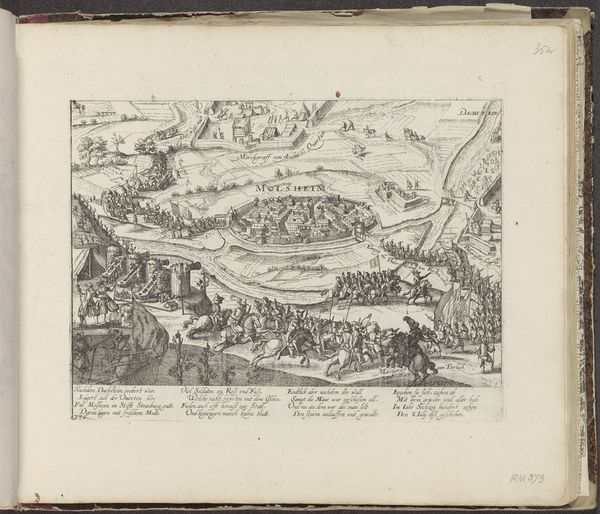
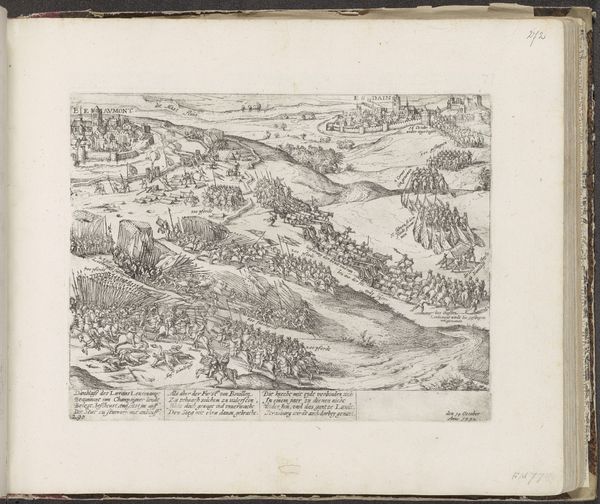
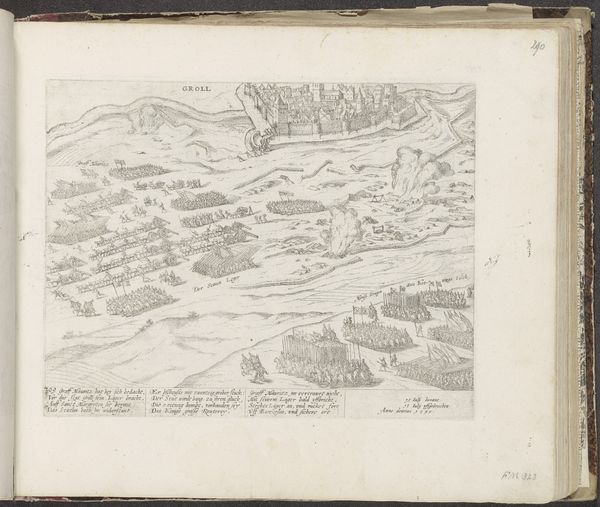
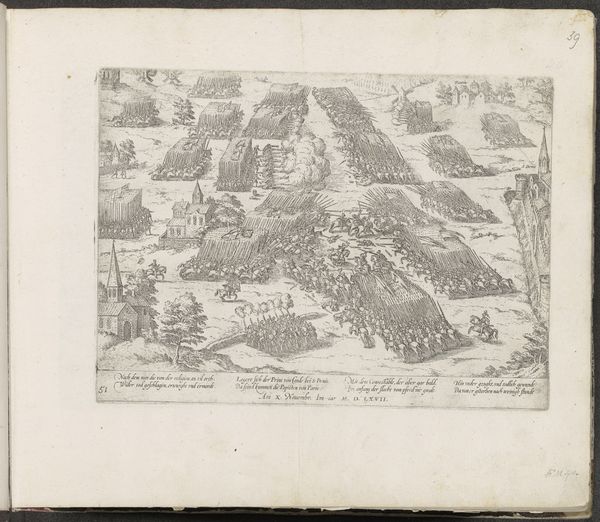
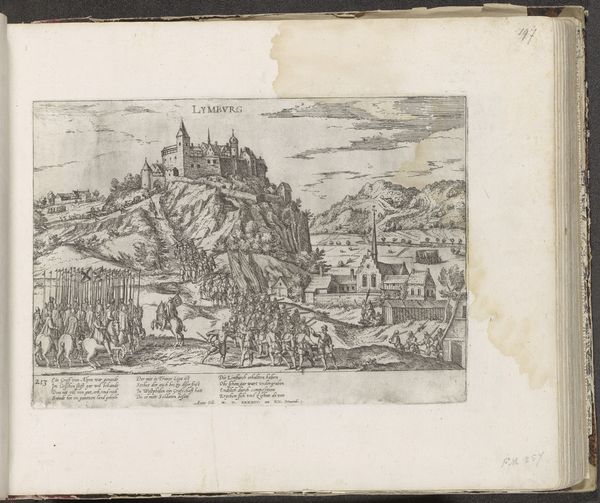
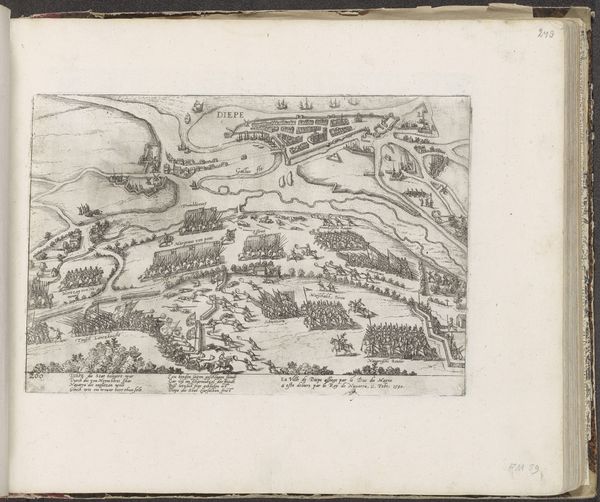
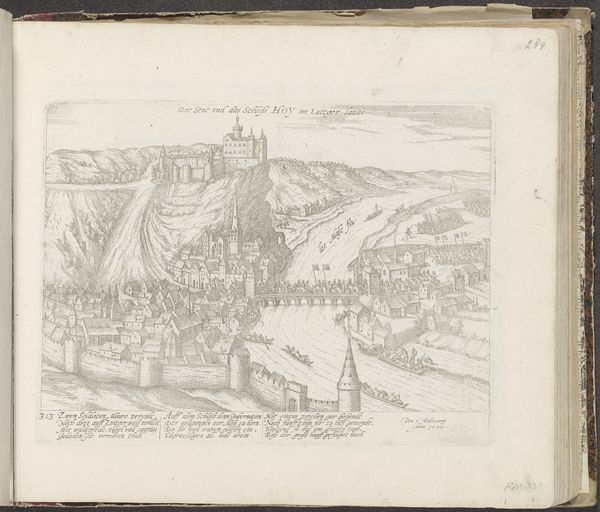
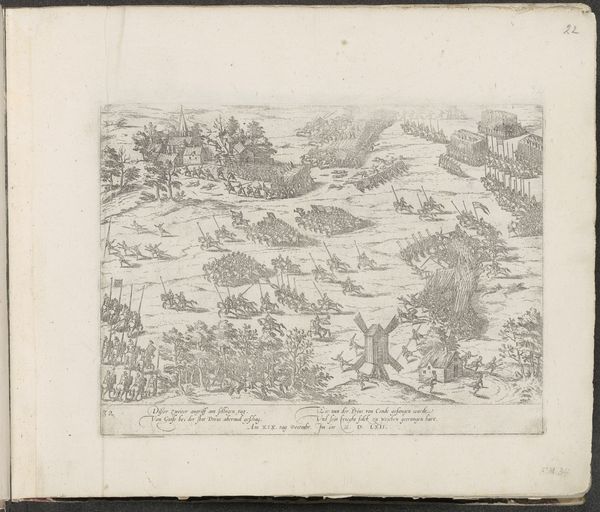
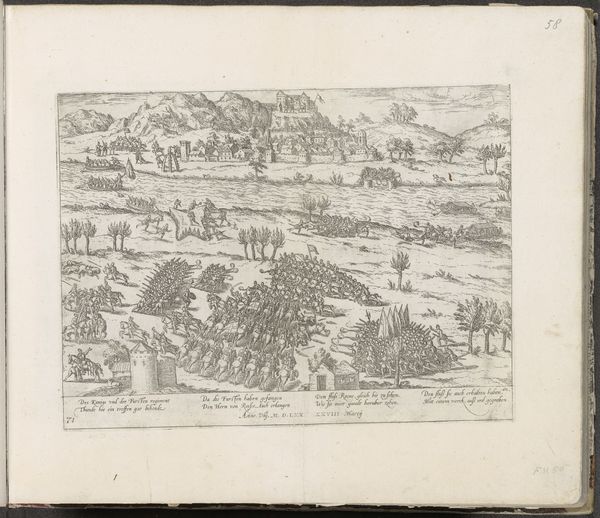
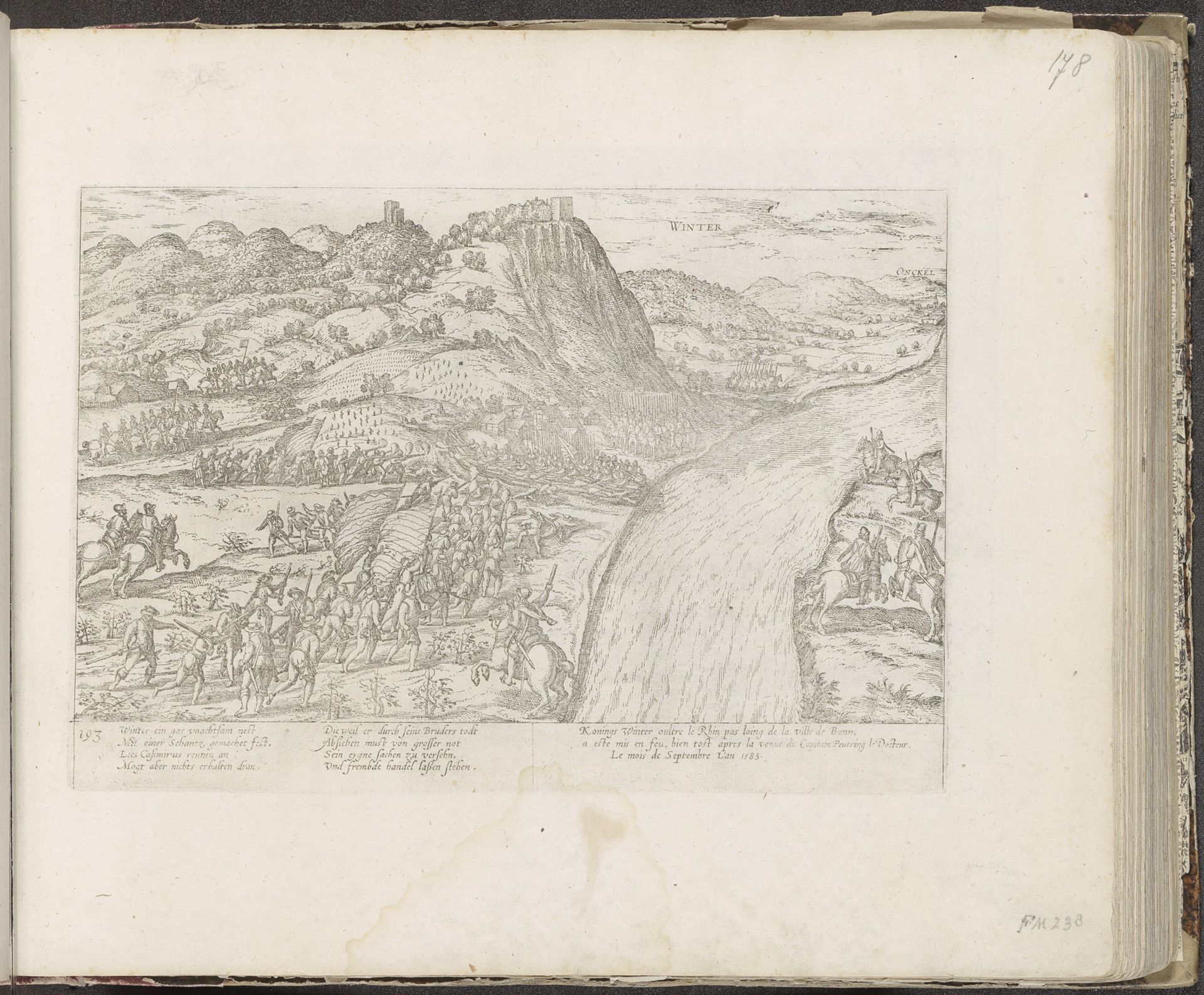
This is Frans Hogenberg's etching "Beschieting van Königswinter, 1583," created circa 1583. The composition immediately draws the eye across the landscape, structured by a prominent river that divides the space. The densely packed figures, rendered with fine lines, create a textured foreground in stark contrast to the smoother, sloping hills. Note how Hogenberg uses line and perspective to structure not just the physical space, but also the implied narrative of conflict. The town perches atop the hill, rendered almost as a theatrical backdrop. Hogenberg’s structuring of space and events reflects a broader shift toward visual storytelling in the 16th century. The image is not just a depiction of war; it's a carefully constructed representation of power dynamics and historical narrative. It invites us to consider how space and action, through form, can shape our understanding of history itself.
Beschieting van Königswinter, 1583
c. 1587 - 1591

Frans Hogenberg
1540 - 1590Location
RijksmuseumArtwork details
- Medium
- print, engraving
- Dimensions
- height 196 mm, width 285 mm
- Location
- Rijksmuseum
- Copyright
- Rijks Museum: Open Domain
Tags
Comments
Share your thoughts
About this artwork
This is Frans Hogenberg's etching "Beschieting van Königswinter, 1583," created circa 1583. The composition immediately draws the eye across the landscape, structured by a prominent river that divides the space. The densely packed figures, rendered with fine lines, create a textured foreground in stark contrast to the smoother, sloping hills. Note how Hogenberg uses line and perspective to structure not just the physical space, but also the implied narrative of conflict. The town perches atop the hill, rendered almost as a theatrical backdrop. Hogenberg’s structuring of space and events reflects a broader shift toward visual storytelling in the 16th century. The image is not just a depiction of war; it's a carefully constructed representation of power dynamics and historical narrative. It invites us to consider how space and action, through form, can shape our understanding of history itself.
Comments
Share your thoughts