About this artwork
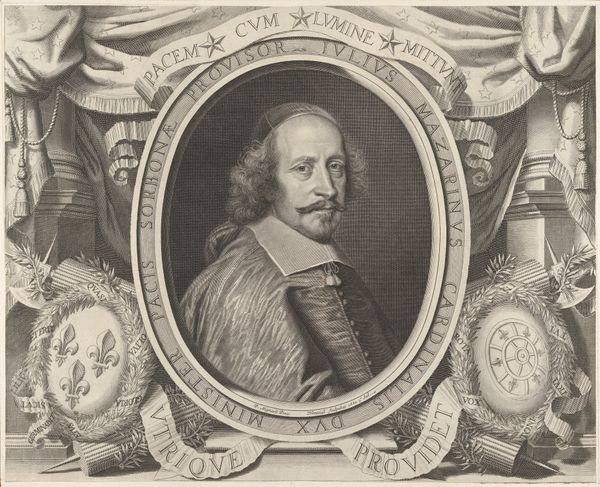
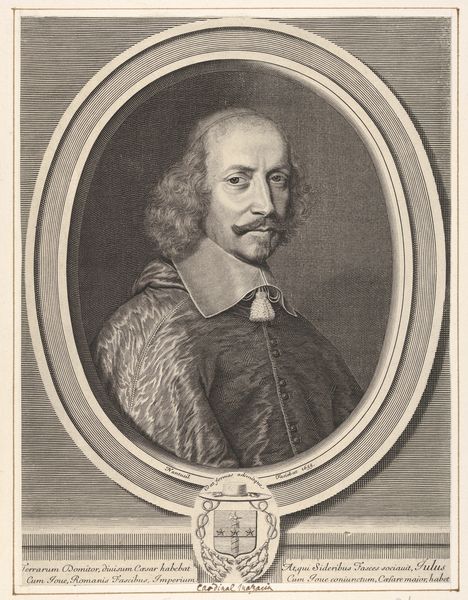
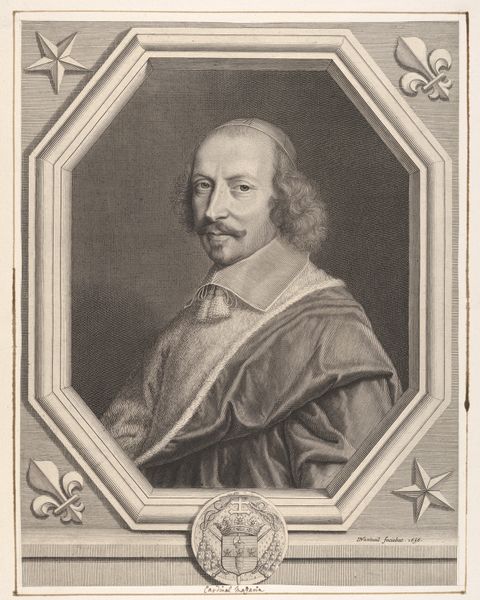
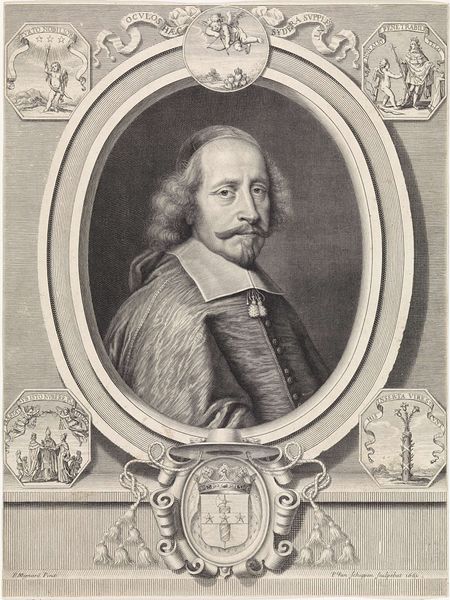
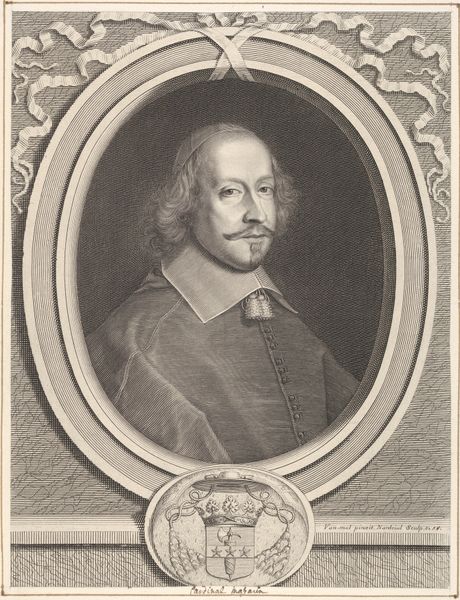
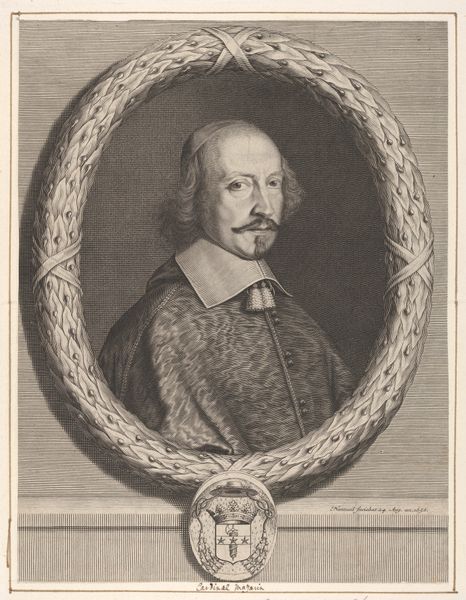
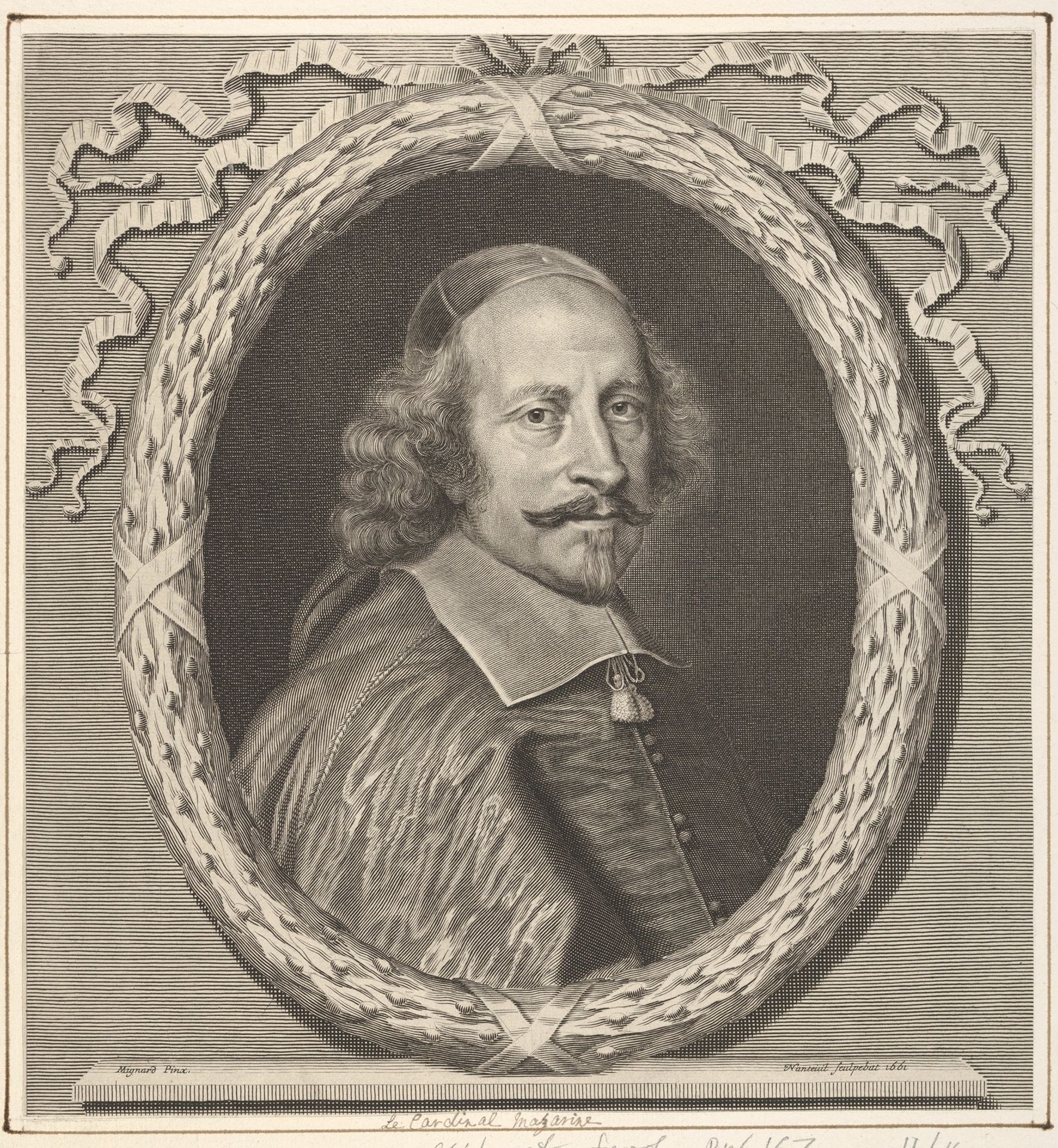
This is Robert Nanteuil’s portrait of Cardinal Jules Mazarin, made with engraving. Mazarin, an Italian diplomat and cardinal, served as the chief minister of France from 1642 until his death in 1661, wielding immense power during the reign of Louis XIV. Nanteuil’s masterful use of line captures Mazarin’s likeness, but also hints at the complex dynamics of power and representation in the 17th century. Consider the ways in which Mazarin, as a figure of both religious and political authority, navigates the intersections of church and state. His identity as a cardinal is visually communicated through his skullcap and clerical attire, which symbolizes his allegiance to the Catholic Church. At the same time, the fine fabrics and ornate details of his clothing reflect his secular status as a powerful statesman. Nanteuil captures both the private man and the public figure, leaving us to consider the weight of such duality.
Cardinal Jules Mazarin 1661


Artwork details
- Medium
- drawing, print, metal, engraving
- Dimensions
- sheet: 11 1/4 x 10 9/16 in. (28.6 x 26.8 cm) trimmed
- Location
- Metropolitan Museum of Art, New York, NY
- Copyright
- Public Domain
Tags
portrait
drawing
baroque
metal
men
history-painting
engraving
Comments
No comments
About this artwork
This is Robert Nanteuil’s portrait of Cardinal Jules Mazarin, made with engraving. Mazarin, an Italian diplomat and cardinal, served as the chief minister of France from 1642 until his death in 1661, wielding immense power during the reign of Louis XIV. Nanteuil’s masterful use of line captures Mazarin’s likeness, but also hints at the complex dynamics of power and representation in the 17th century. Consider the ways in which Mazarin, as a figure of both religious and political authority, navigates the intersections of church and state. His identity as a cardinal is visually communicated through his skullcap and clerical attire, which symbolizes his allegiance to the Catholic Church. At the same time, the fine fabrics and ornate details of his clothing reflect his secular status as a powerful statesman. Nanteuil captures both the private man and the public figure, leaving us to consider the weight of such duality.
Comments
No comments