About this artwork
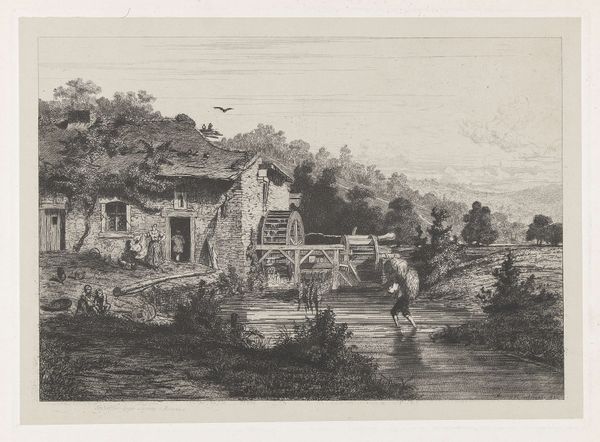
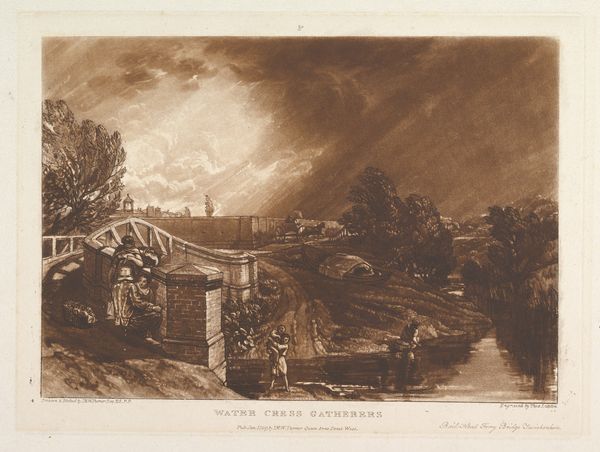
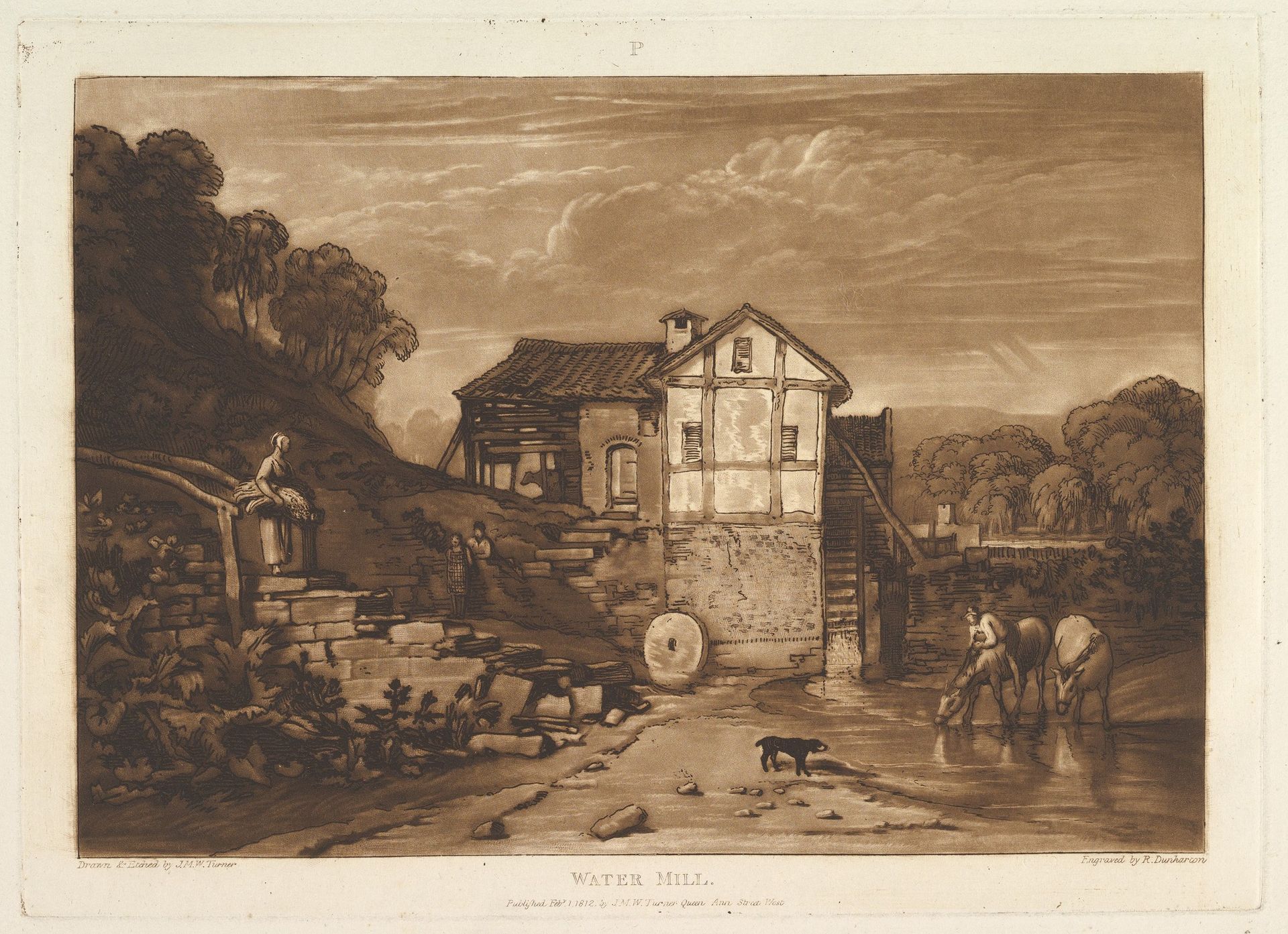
This is "Water Mill," a print made by J.M.W. Turner as part of his “Liber Studiorum” series. Turner used etching and mezzotint, processes rooted in craft, to capture his vision. The monochromatic aesthetic, achieved through careful manipulation of light and shadow, evokes a sense of nostalgia. Look closely and you can observe the texture and form of the water mill, the workers and animals, and the surrounding landscape. These details were created by using metal plates and acids to selectively carve lines into them, then applying ink to these lines and transferring them to paper. The labor-intensive process reflects the value of craftsmanship and challenges traditional distinctions between fine art and craft. The print reflects a society undergoing industrial change, where rural life and labor are increasingly viewed through a nostalgic lens. Appreciating the materials, the making, and the historical context enriches our understanding and deepens our connection with this image.
Water Mill (Liber Studiorum, part VIII, plate 37)
1812

Joseph Mallord William Turner
1775 - 1851
The Metropolitan Museum of Art
Metropolitan Museum of Art, New York, NYArtwork details
- Medium
- drawing, print
- Dimensions
- plate: 7 3/16 x 10 3/8 in. (18.3 x 26.4 cm) sheet: 8 1/4 x 11 7/16 in. (21 x 29.1 cm)
- Location
- Metropolitan Museum of Art, New York, NY
- Copyright
- Public Domain
Tags
Comments
Share your thoughts
About this artwork
This is "Water Mill," a print made by J.M.W. Turner as part of his “Liber Studiorum” series. Turner used etching and mezzotint, processes rooted in craft, to capture his vision. The monochromatic aesthetic, achieved through careful manipulation of light and shadow, evokes a sense of nostalgia. Look closely and you can observe the texture and form of the water mill, the workers and animals, and the surrounding landscape. These details were created by using metal plates and acids to selectively carve lines into them, then applying ink to these lines and transferring them to paper. The labor-intensive process reflects the value of craftsmanship and challenges traditional distinctions between fine art and craft. The print reflects a society undergoing industrial change, where rural life and labor are increasingly viewed through a nostalgic lens. Appreciating the materials, the making, and the historical context enriches our understanding and deepens our connection with this image.
Comments
Share your thoughts