About this artwork
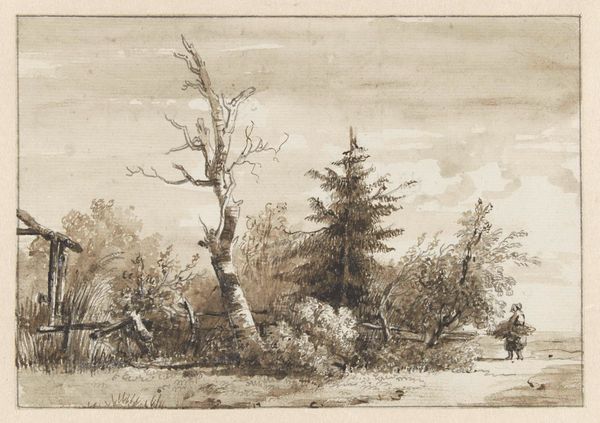
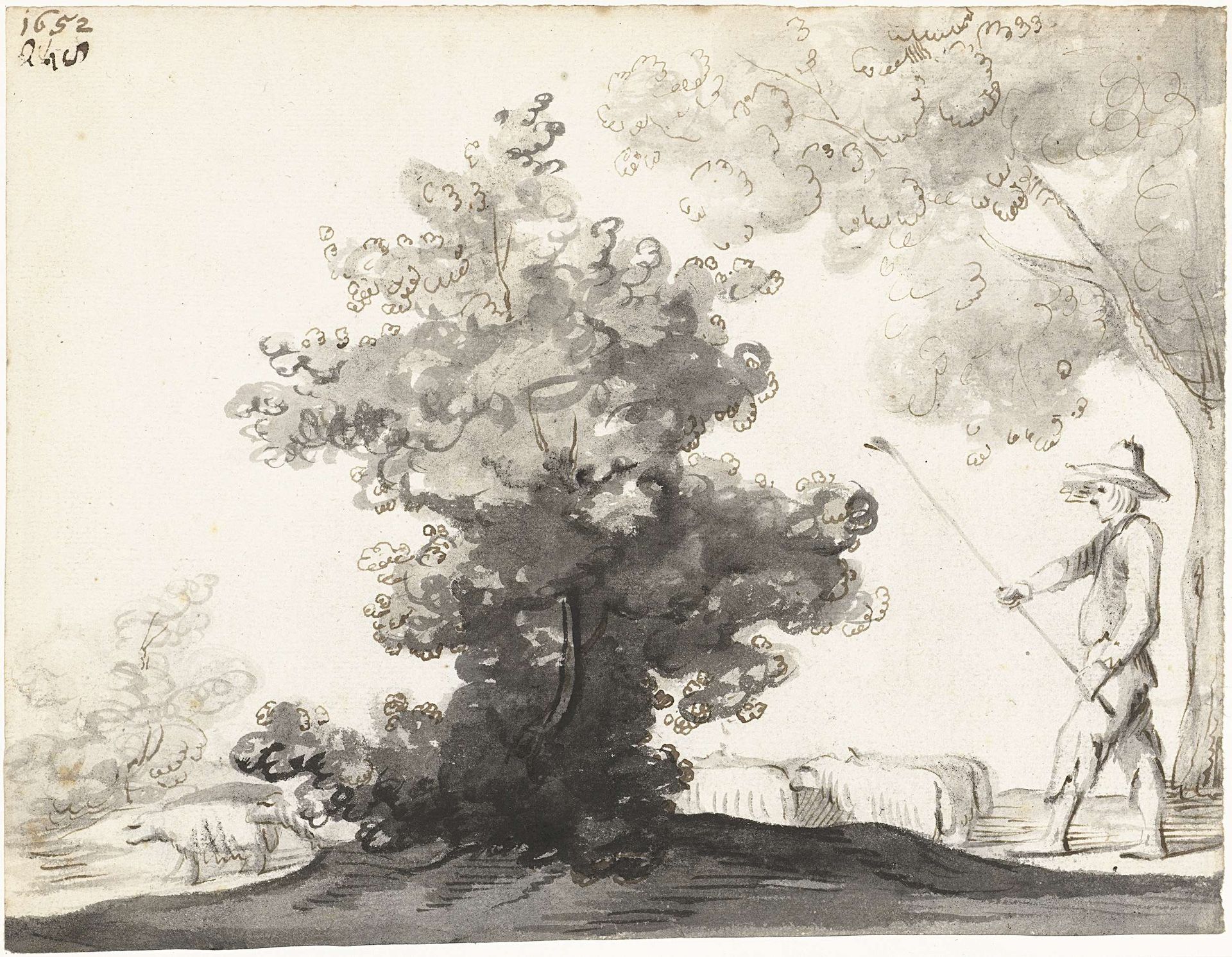
Harmen ter Borch rendered this drawing of a shepherd with staff and sheep with pen in gray ink. Notice how the shepherd’s staff, a simple tool, extends beyond its utilitarian function. The staff is an ancient attribute, a symbol of guidance, authority, and protection. We see echoes of this motif across time, from the scepter of kings to the crook of religious figures, each carrying the weight of leadership and care. Consider, too, the sheep. They are creatures of vulnerability, dependent on the shepherd's care. The flock becomes a symbol of community, of humanity itself, guided through life's landscape. The shepherd tending his flock touches something primal in us, a longing for order, security, and pastoral harmony. This scene taps into a deep well of cultural memory. These motifs transcend mere representation; they evoke the eternal themes of care, guidance, and belonging.
Herder met staf en schapen, lopend langs een struik 1652

Harmen ter Borch
1638 - 1677Location
RijksmuseumArtwork details
- Medium
- drawing, paper, ink
- Dimensions
- height 155 mm, width 205 mm
- Location
- Rijksmuseum
- Copyright
- Rijks Museum: Open Domain
Tags
drawing
baroque
dutch-golden-age
landscape
figuration
paper
ink
line
genre-painting
realism
Comments
No comments
About this artwork
Harmen ter Borch rendered this drawing of a shepherd with staff and sheep with pen in gray ink. Notice how the shepherd’s staff, a simple tool, extends beyond its utilitarian function. The staff is an ancient attribute, a symbol of guidance, authority, and protection. We see echoes of this motif across time, from the scepter of kings to the crook of religious figures, each carrying the weight of leadership and care. Consider, too, the sheep. They are creatures of vulnerability, dependent on the shepherd's care. The flock becomes a symbol of community, of humanity itself, guided through life's landscape. The shepherd tending his flock touches something primal in us, a longing for order, security, and pastoral harmony. This scene taps into a deep well of cultural memory. These motifs transcend mere representation; they evoke the eternal themes of care, guidance, and belonging.
Comments
No comments