About this artwork
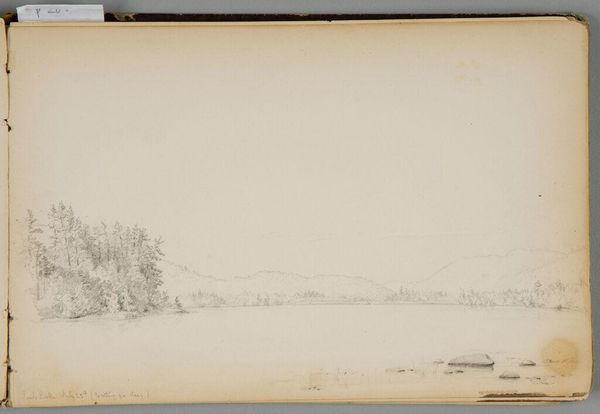
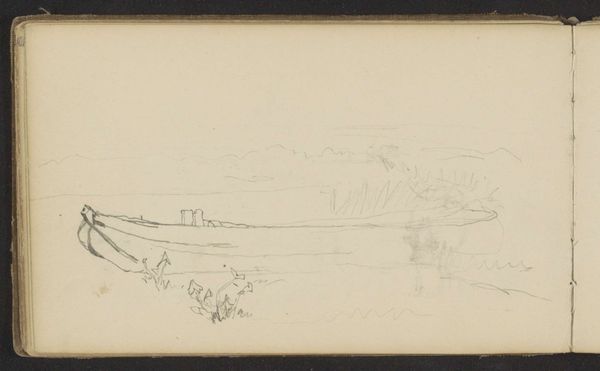
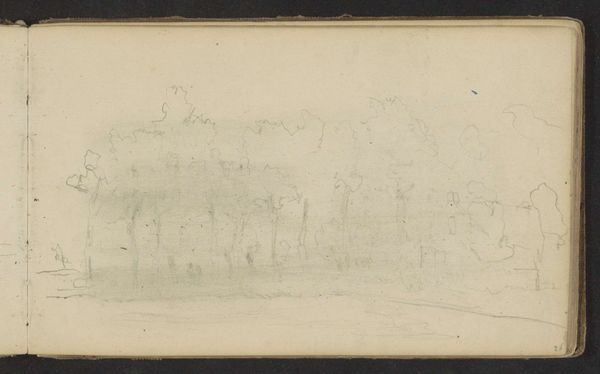
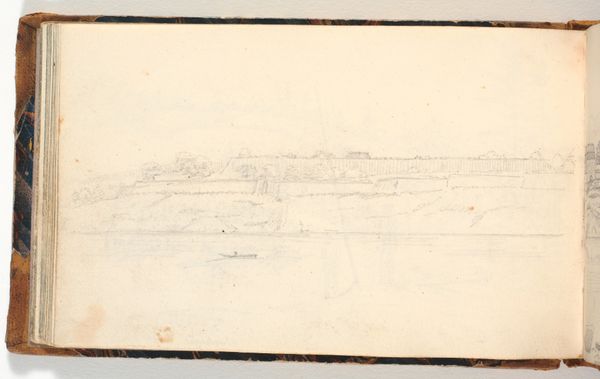
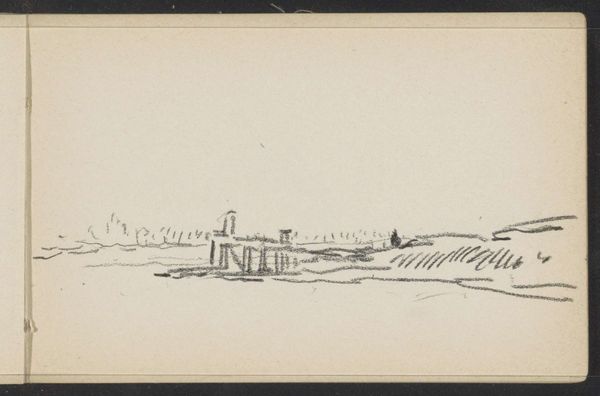
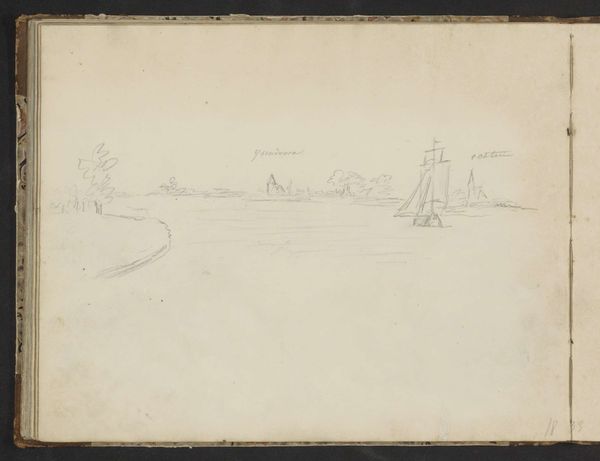
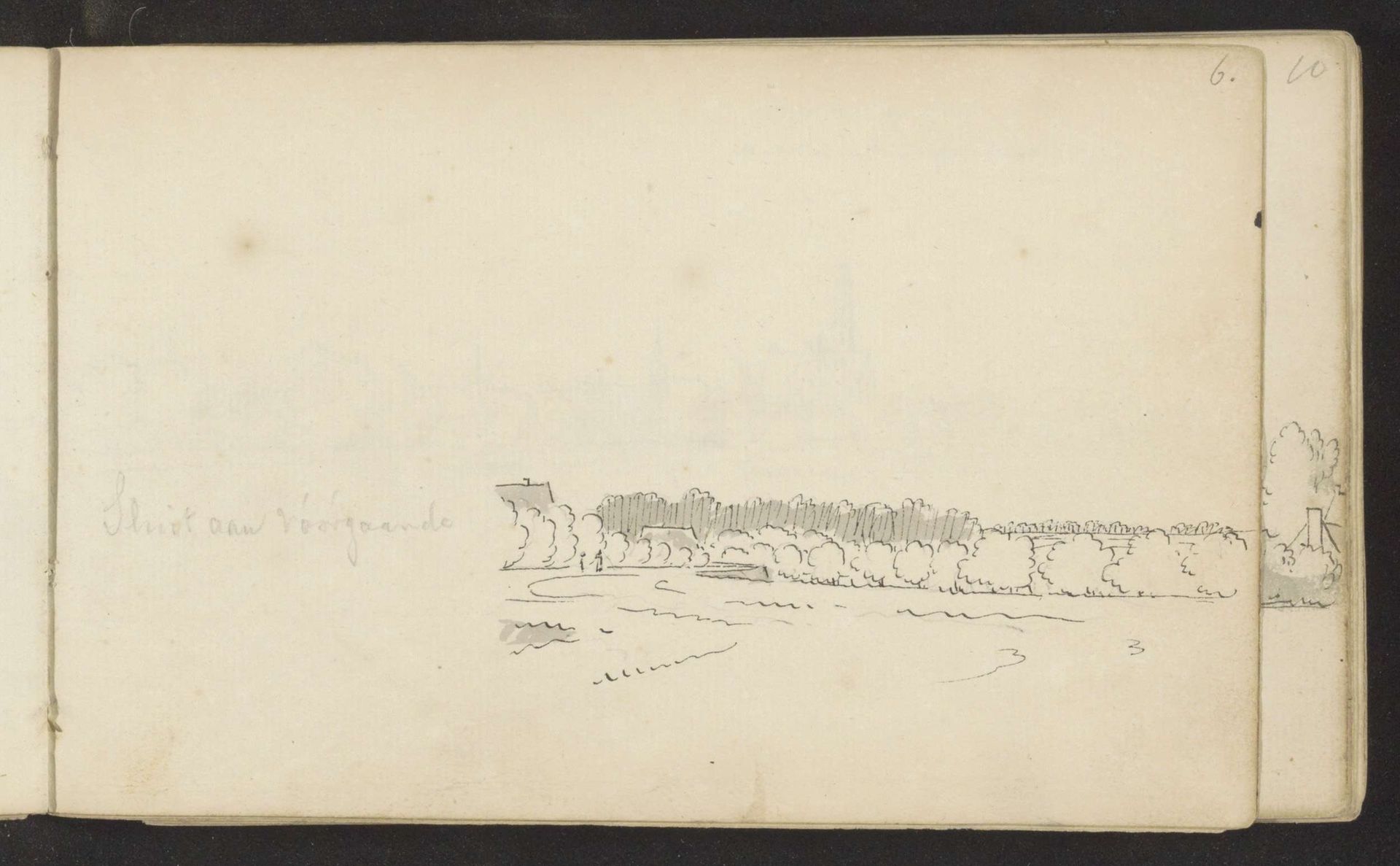
This sketch of Vlaardingen's meadows, captured by Abraham de Haen the Younger, presents a seemingly simple vista, yet it echoes deeper, pastoral longings. The trees, clustered like protective guardians, remind us of similar arboreal motifs from antiquity. Consider the sacred groves of Diana Nemorensis, where trees held spiritual weight, their rustling leaves whispering ancient secrets. Here, in De Haen's sketch, the trees define the edge of the meadow. Like a visual echo, the distant house mirrors mankind's timeless yearning for refuge and sanctuary. From the humble dwellings in medieval tapestries to Renaissance paintings that present us with a promise of domestic tranquility, the house motif speaks to our primal need for stability. Notice how the house is repeated at each side of the drawing. Perhaps, an attempt to secure the composition by framing the landscape into a static and peaceful scene. Through the artist's hand, we connect to the symbolic language of landscapes, passed down through generations, continuously evolving, yet forever rooted in our collective psyche.
Gezicht op weilanden rond Vlaardingen
1731 - 1732

Abraham de (II) Haen
1707 - 1748Location
RijksmuseumArtwork details
- Medium
- drawing, ink, pen
- Location
- Rijksmuseum
- Copyright
- Rijks Museum: Open Domain
Tags
drawing
dutch-golden-age
pen sketch
sketch book
landscape
ink
pen-ink sketch
pen work
sketchbook drawing
pen
realism
Comments
Be the first to share your thoughts about this work.
About this artwork
This sketch of Vlaardingen's meadows, captured by Abraham de Haen the Younger, presents a seemingly simple vista, yet it echoes deeper, pastoral longings. The trees, clustered like protective guardians, remind us of similar arboreal motifs from antiquity. Consider the sacred groves of Diana Nemorensis, where trees held spiritual weight, their rustling leaves whispering ancient secrets. Here, in De Haen's sketch, the trees define the edge of the meadow. Like a visual echo, the distant house mirrors mankind's timeless yearning for refuge and sanctuary. From the humble dwellings in medieval tapestries to Renaissance paintings that present us with a promise of domestic tranquility, the house motif speaks to our primal need for stability. Notice how the house is repeated at each side of the drawing. Perhaps, an attempt to secure the composition by framing the landscape into a static and peaceful scene. Through the artist's hand, we connect to the symbolic language of landscapes, passed down through generations, continuously evolving, yet forever rooted in our collective psyche.
Comments
Be the first to share your thoughts about this work.