1501 - 1504
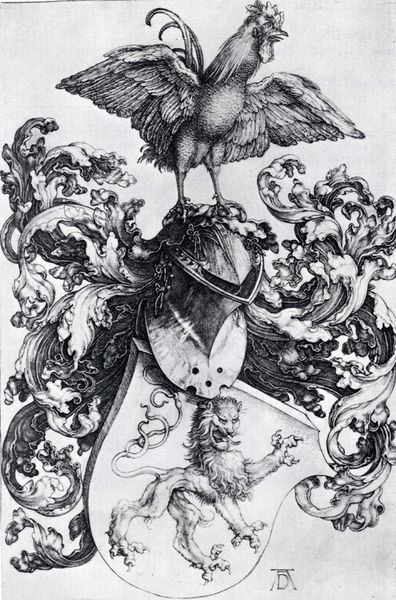
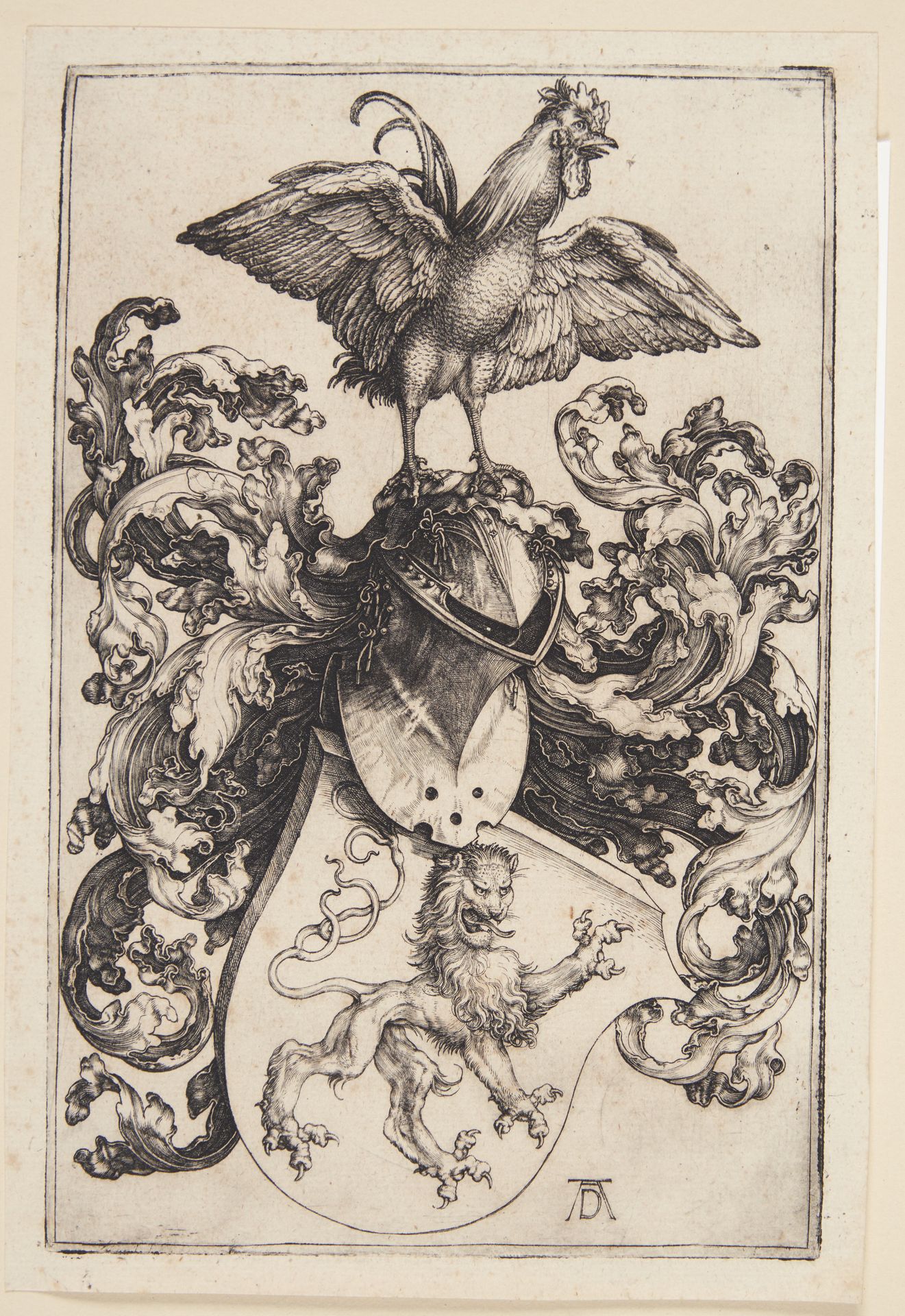
Coat-of-arms with lion and rooster


Listen to curator's interpretation
Curatorial notes
Albrecht Dürer etched this Coat-of-arms with lion and rooster in the late 15th or early 16th century. Here, the lion signifies courage and nobility, a heraldic emblem since the Middle Ages. The rooster, perched atop a knight's helmet, embodies vigilance and watchfulness. Such symbols weren't confined to mere decoration; they evoked deeply ingrained ancestral values. Consider how similar animal symbols appear in ancient Egyptian art, where animals embodied divine attributes. The lion, for example, was associated with power and kingship, a tradition echoed across cultures. This symbolic language connects us to the past through a visual vocabulary, shaped by collective memory. Even today, the image of a lion can unconsciously evoke a sense of authority. The appearance of these symbols is never a linear progression, they ebb and flow, reappearing with new meanings across time.