About this artwork
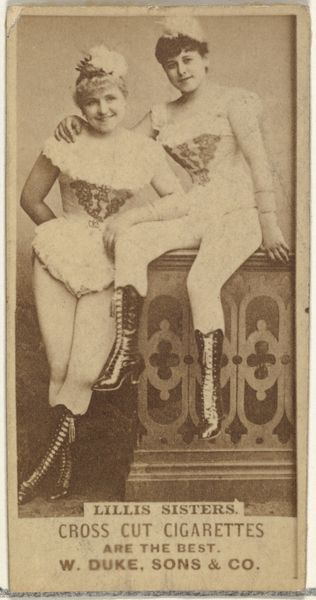
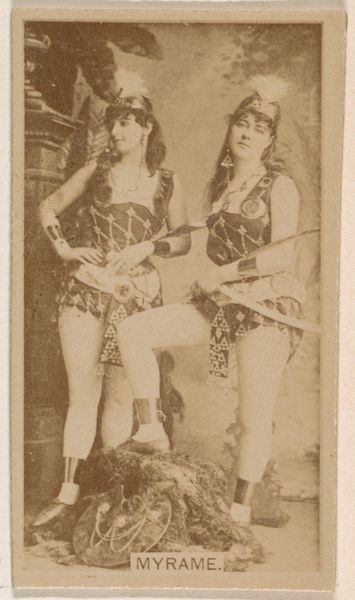
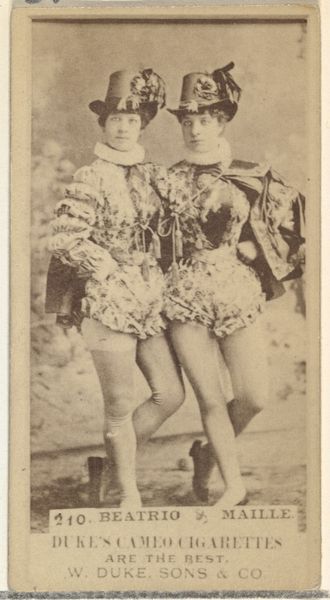
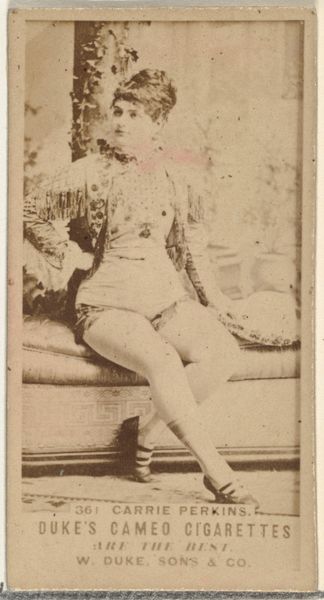
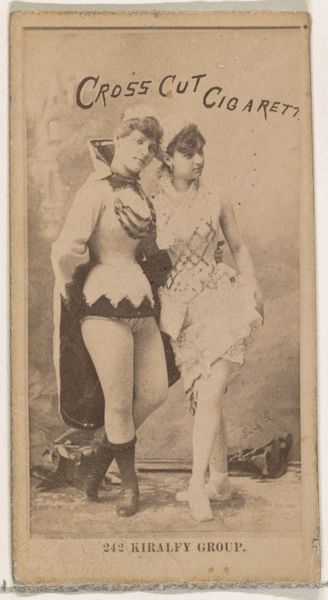
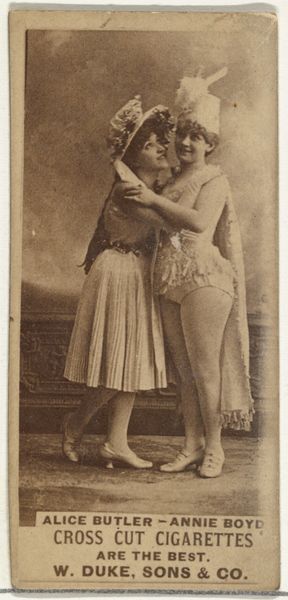
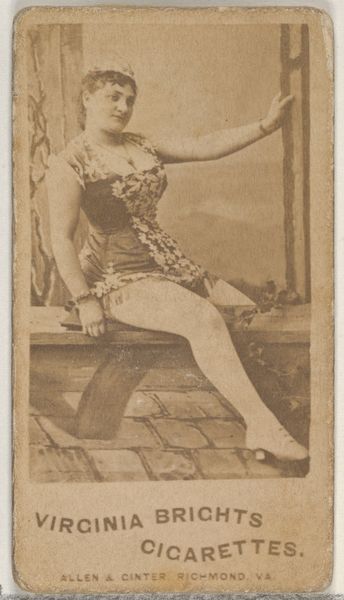
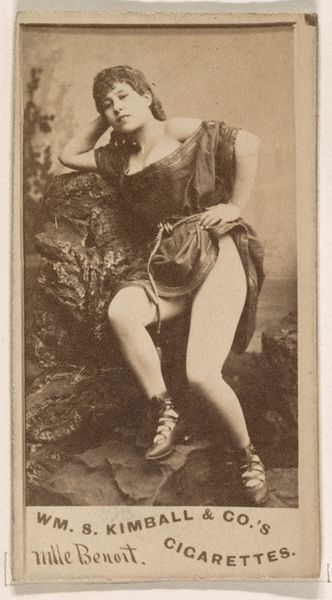
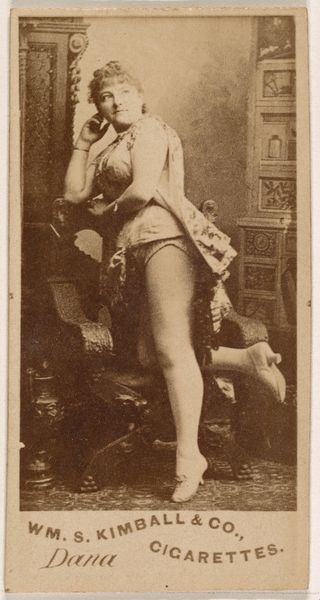
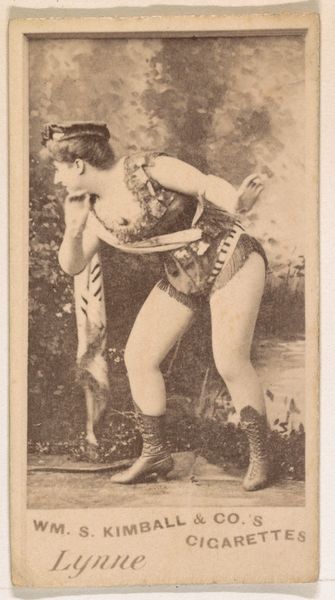
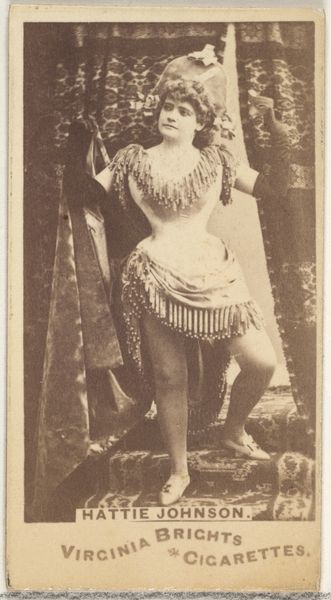
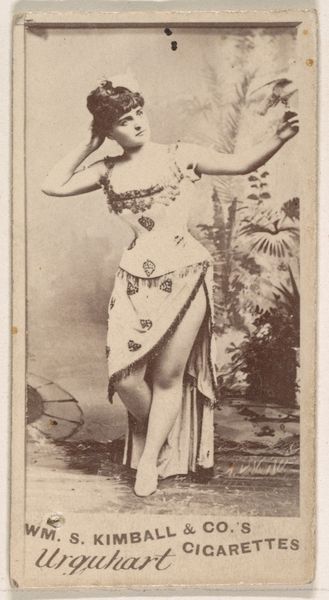
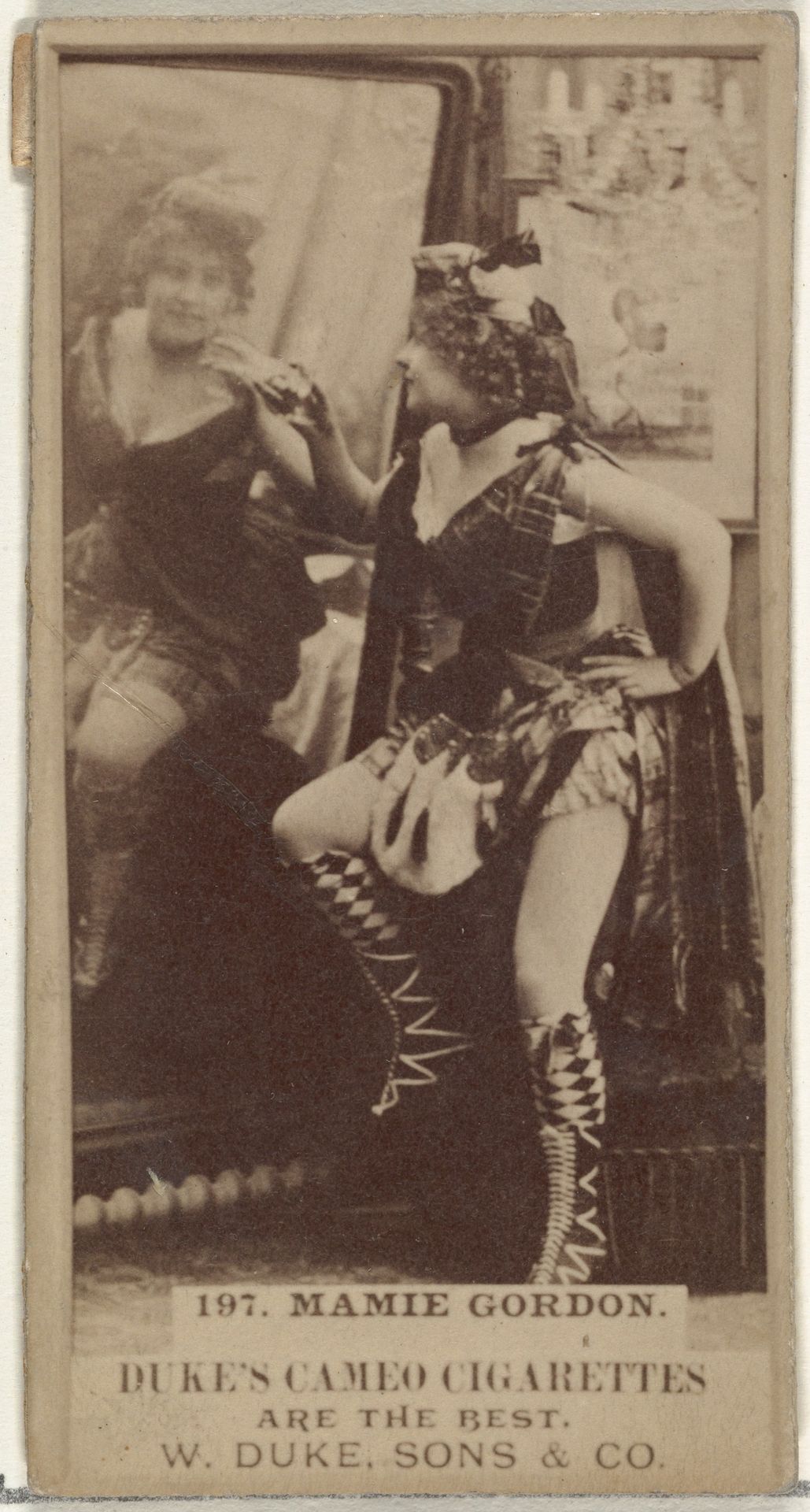
This card featuring Mamie Gordon, from the Actors and Actresses series, was produced by W. Duke, Sons & Co. in the late 19th century as a promotional item for Cameo Cigarettes. These cards offer a fascinating glimpse into the cultural landscape of the time. The image presents Mamie Gordon, a performer, in what appears to be a theatrical costume, possibly referencing a historical or exotic character. The presence of her reflection in the mirror adds another layer, as the image draws attention to the act of performance and self-presentation. Cigarette cards like these were among the earliest forms of mass advertising and were distributed widely, helping to shape public perceptions of glamour, celebrity, and consumer culture. To fully appreciate the cultural significance of these cards, we can explore archives of popular theatre, advertising history, and the rise of mass media to understand the ways in which images like this circulated and influenced society. The meaning of this art is always contingent on social and institutional context.
Card Number 197, Mamie Gordon, from the Actors and Actresses series (N145-5) issued by Duke Sons & Co. to promote Cameo Cigarettes
1880s

W. Duke, Sons & Co.
1870 - 1920
The Metropolitan Museum of Art
Metropolitan Museum of Art, New York, NYArtwork details
- Medium
- drawing, print, photography
- Dimensions
- Sheet: 2 11/16 × 1 3/8 in. (6.8 × 3.5 cm)
- Location
- Metropolitan Museum of Art, New York, NY
- Copyright
- Public Domain
Tags
Comments
Share your thoughts
About this artwork
This card featuring Mamie Gordon, from the Actors and Actresses series, was produced by W. Duke, Sons & Co. in the late 19th century as a promotional item for Cameo Cigarettes. These cards offer a fascinating glimpse into the cultural landscape of the time. The image presents Mamie Gordon, a performer, in what appears to be a theatrical costume, possibly referencing a historical or exotic character. The presence of her reflection in the mirror adds another layer, as the image draws attention to the act of performance and self-presentation. Cigarette cards like these were among the earliest forms of mass advertising and were distributed widely, helping to shape public perceptions of glamour, celebrity, and consumer culture. To fully appreciate the cultural significance of these cards, we can explore archives of popular theatre, advertising history, and the rise of mass media to understand the ways in which images like this circulated and influenced society. The meaning of this art is always contingent on social and institutional context.
Comments
Share your thoughts