About this artwork
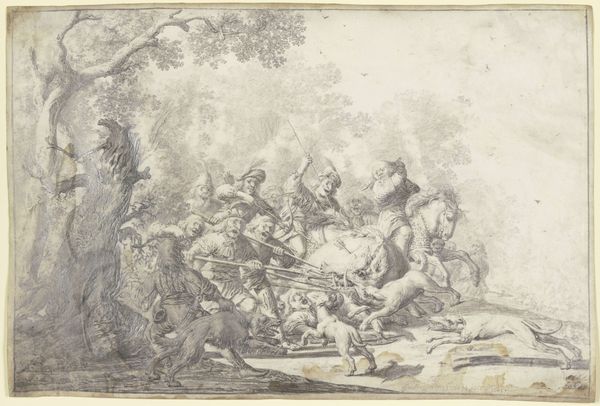
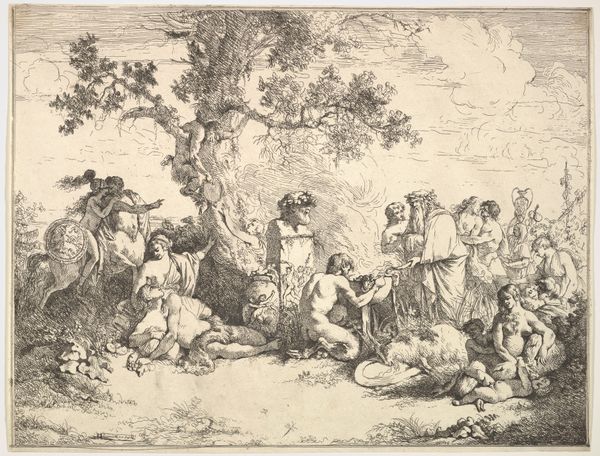
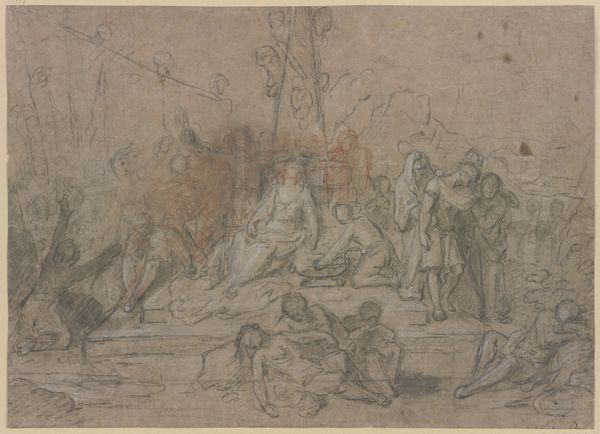
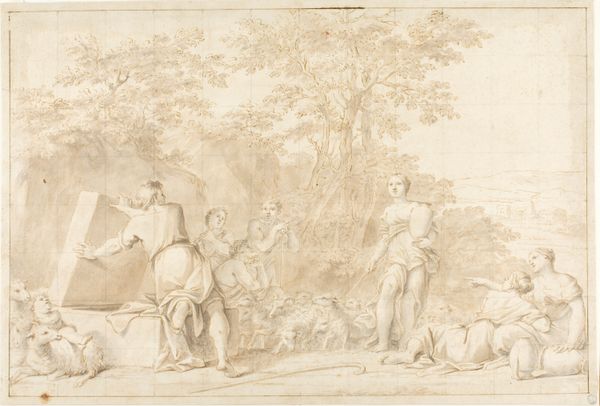
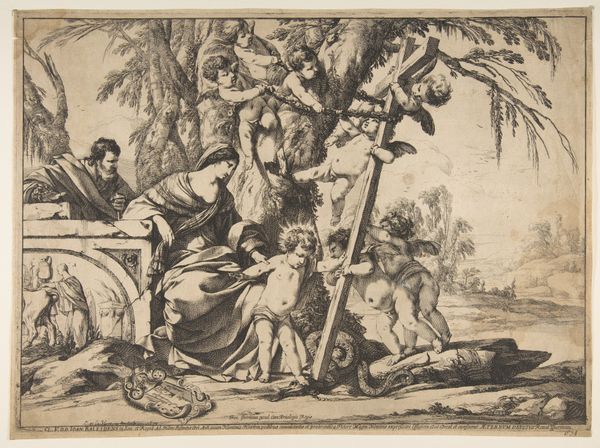
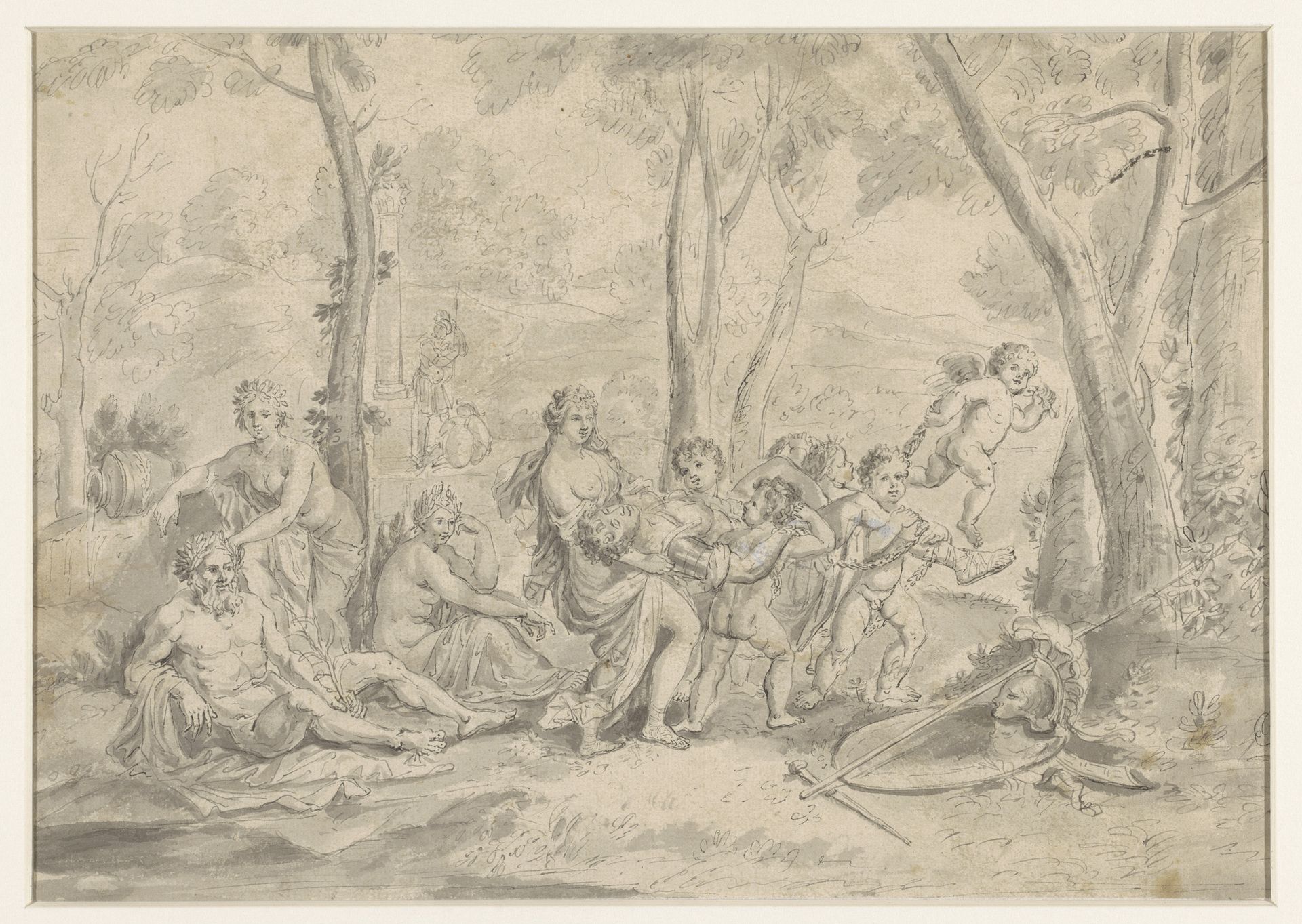
Jean Cotelle II created this drawing with pen in gray ink and brush in gray wash. It shows a scene teeming with figures in a wooded landscape. At first glance, the composition is quite classical, with a central grouping of figures flanked by more static elements. However, the energy of the cherubs pulling on the fallen knight introduces a dynamic tension. The use of grisaille lends a dreamlike quality, the figures emerging from and receding into the tonal gradations. It invites us to consider the semiotic interplay between the classical motifs and the more playful, almost subversive elements. Cotelle uses the formal structure of classical composition, yet undermines it through the implied narrative and the active, mischievous cherubs. In doing so, he challenges fixed notions of heroism, prompting a deeper engagement with the themes of power, vulnerability, and the transient nature of glory. It’s a reminder that art’s meaning is not static, but a field of continuous interpretation.
Dode ridder (Orlando?) wordt door vrouw en geniï weggedragen
1652 - 1708

Jean (II) Cotelle
1646 - 1708Location
RijksmuseumArtwork details
- Medium
- drawing, paper, ink
- Dimensions
- height 200 mm, width 287 mm
- Location
- Rijksmuseum
- Copyright
- Rijks Museum: Open Domain
Tags
Comments
Share your thoughts
About this artwork
Jean Cotelle II created this drawing with pen in gray ink and brush in gray wash. It shows a scene teeming with figures in a wooded landscape. At first glance, the composition is quite classical, with a central grouping of figures flanked by more static elements. However, the energy of the cherubs pulling on the fallen knight introduces a dynamic tension. The use of grisaille lends a dreamlike quality, the figures emerging from and receding into the tonal gradations. It invites us to consider the semiotic interplay between the classical motifs and the more playful, almost subversive elements. Cotelle uses the formal structure of classical composition, yet undermines it through the implied narrative and the active, mischievous cherubs. In doing so, he challenges fixed notions of heroism, prompting a deeper engagement with the themes of power, vulnerability, and the transient nature of glory. It’s a reminder that art’s meaning is not static, but a field of continuous interpretation.
Comments
Share your thoughts