About this artwork
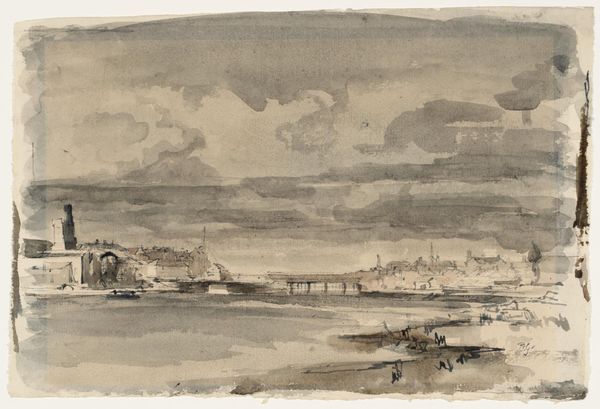
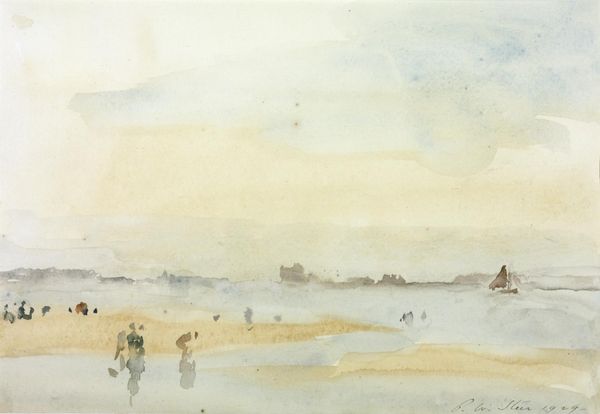
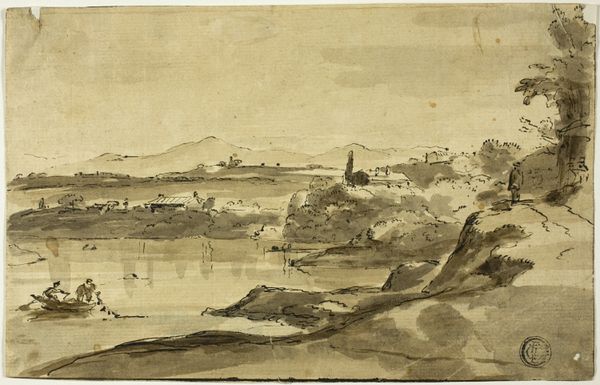
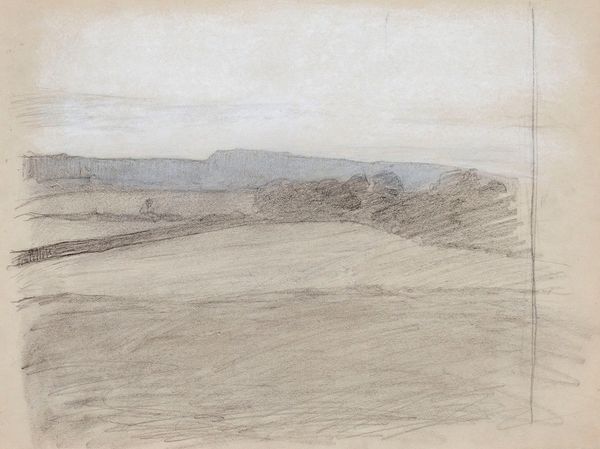
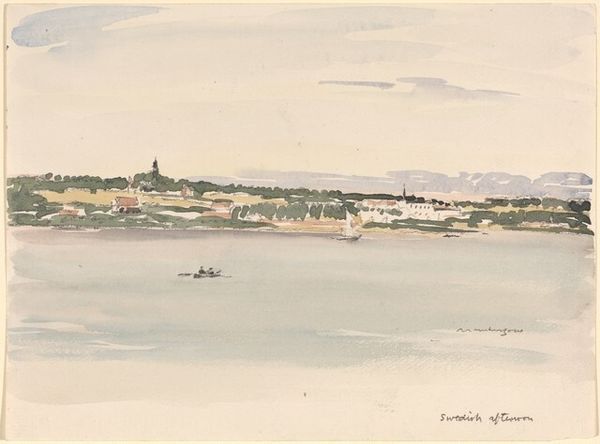
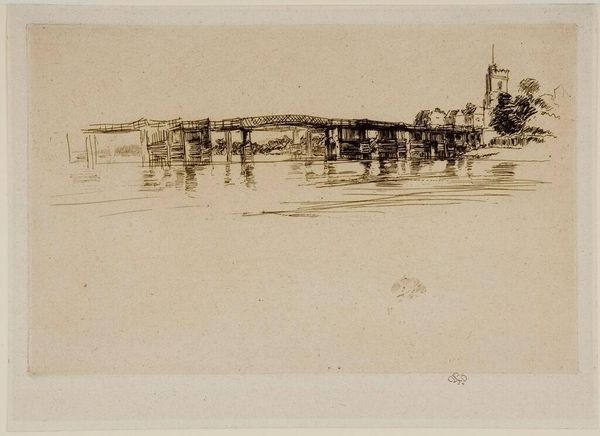
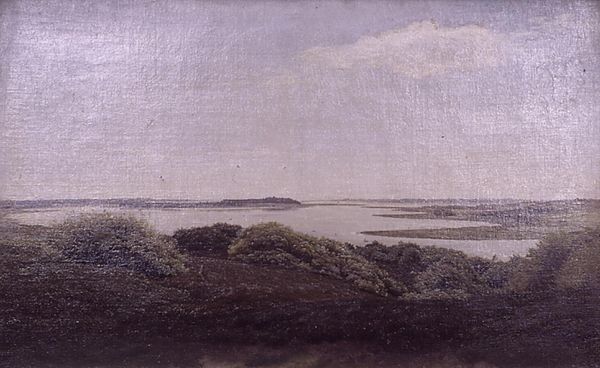
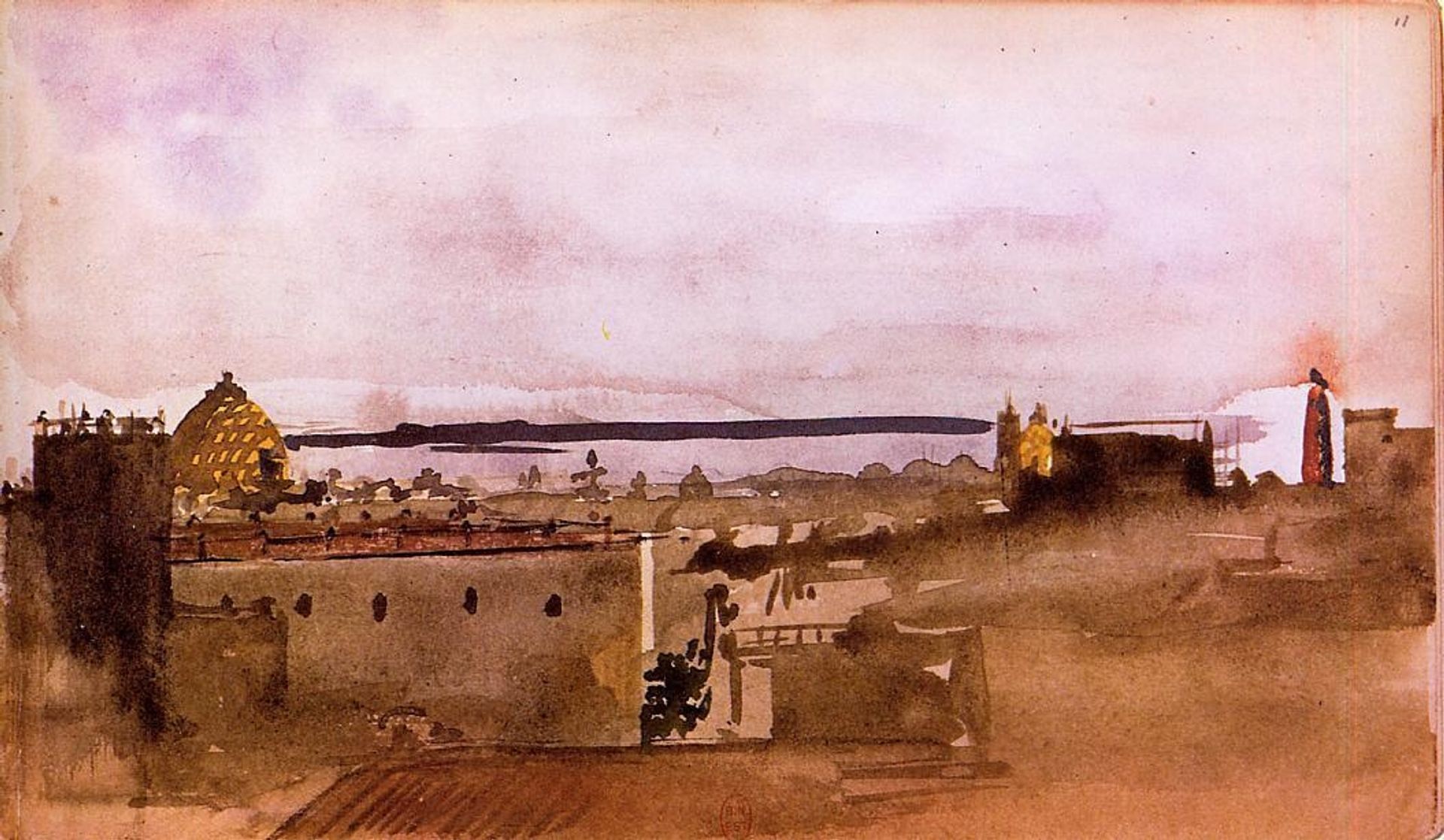
Edgar Degas created this watercolor painting, View of Naples, during a time of significant social change in Europe. Degas, known for his depictions of modern life, here turns his gaze to a landscape, but one punctuated by urban architecture. This choice reflects a tension in 19th-century art: the pull between romantic landscapes and the burgeoning industrial world. Naples, with its rich history and vibrant street life, presented a unique subject. The composition, with its elevated viewpoint, is a conscious play with the established conventions of landscape painting. To truly understand this work, we might delve into the travel culture of the 19th century, the rise of tourism, and the changing perceptions of the Italian landscape. Art historians often consult travel guides, letters, and other primary sources to reconstruct the cultural context in which artists like Degas operated. In doing so, we see the artwork as a product of – and a commentary on – its time.
View of Naples
1860

Edgar Degas
1834 - 1917Location
Bibliothèque nationale de France (BnF), Paris, FranceArtwork details
- Medium
- painting, plein-air, watercolor
- Location
- Bibliothèque nationale de France (BnF), Paris, France
- Copyright
- Public domain
Tags
Comments
Share your thoughts
About this artwork
Edgar Degas created this watercolor painting, View of Naples, during a time of significant social change in Europe. Degas, known for his depictions of modern life, here turns his gaze to a landscape, but one punctuated by urban architecture. This choice reflects a tension in 19th-century art: the pull between romantic landscapes and the burgeoning industrial world. Naples, with its rich history and vibrant street life, presented a unique subject. The composition, with its elevated viewpoint, is a conscious play with the established conventions of landscape painting. To truly understand this work, we might delve into the travel culture of the 19th century, the rise of tourism, and the changing perceptions of the Italian landscape. Art historians often consult travel guides, letters, and other primary sources to reconstruct the cultural context in which artists like Degas operated. In doing so, we see the artwork as a product of – and a commentary on – its time.
Comments
Share your thoughts