About this artwork
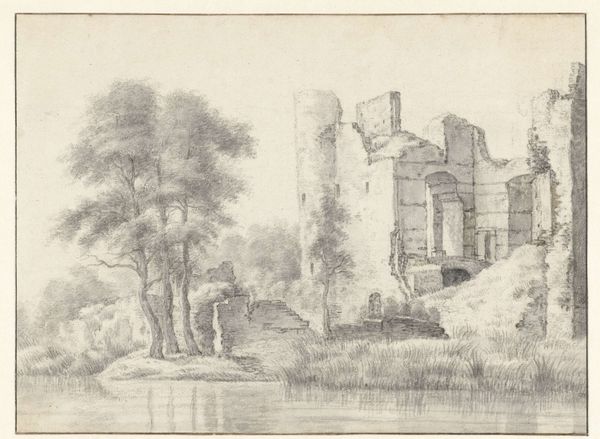
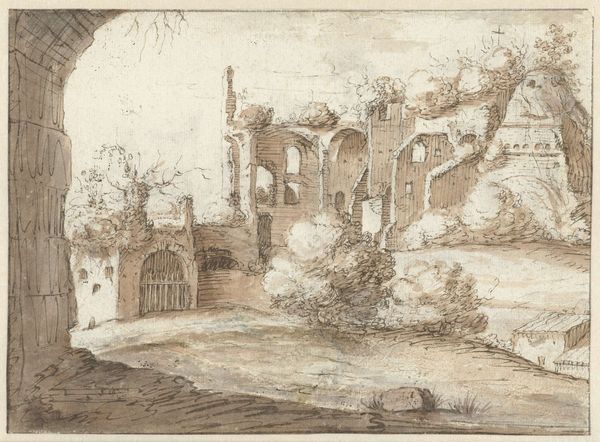
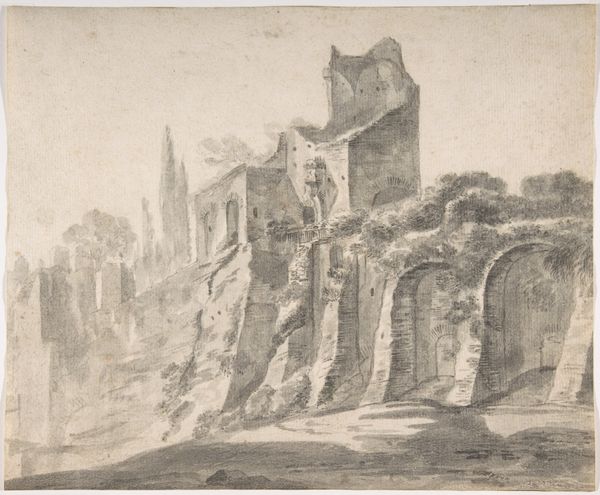
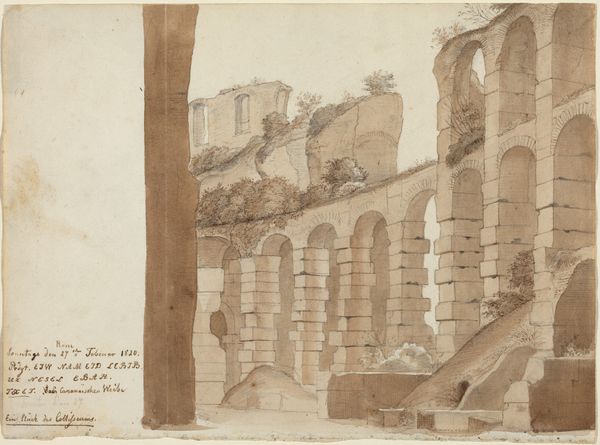
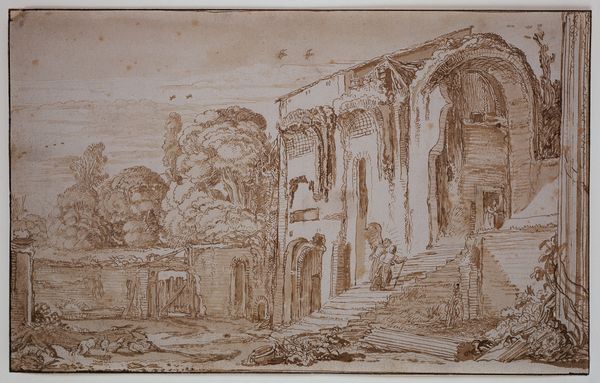
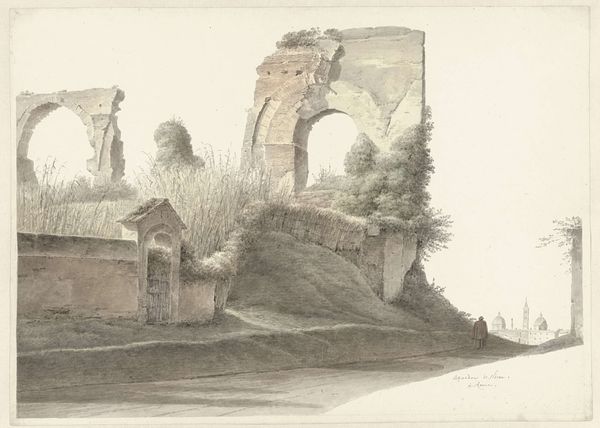
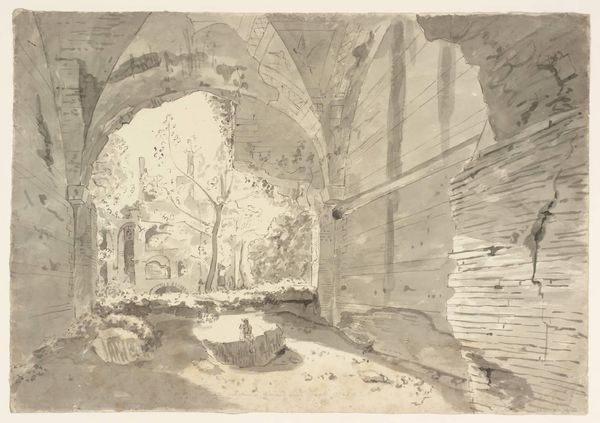
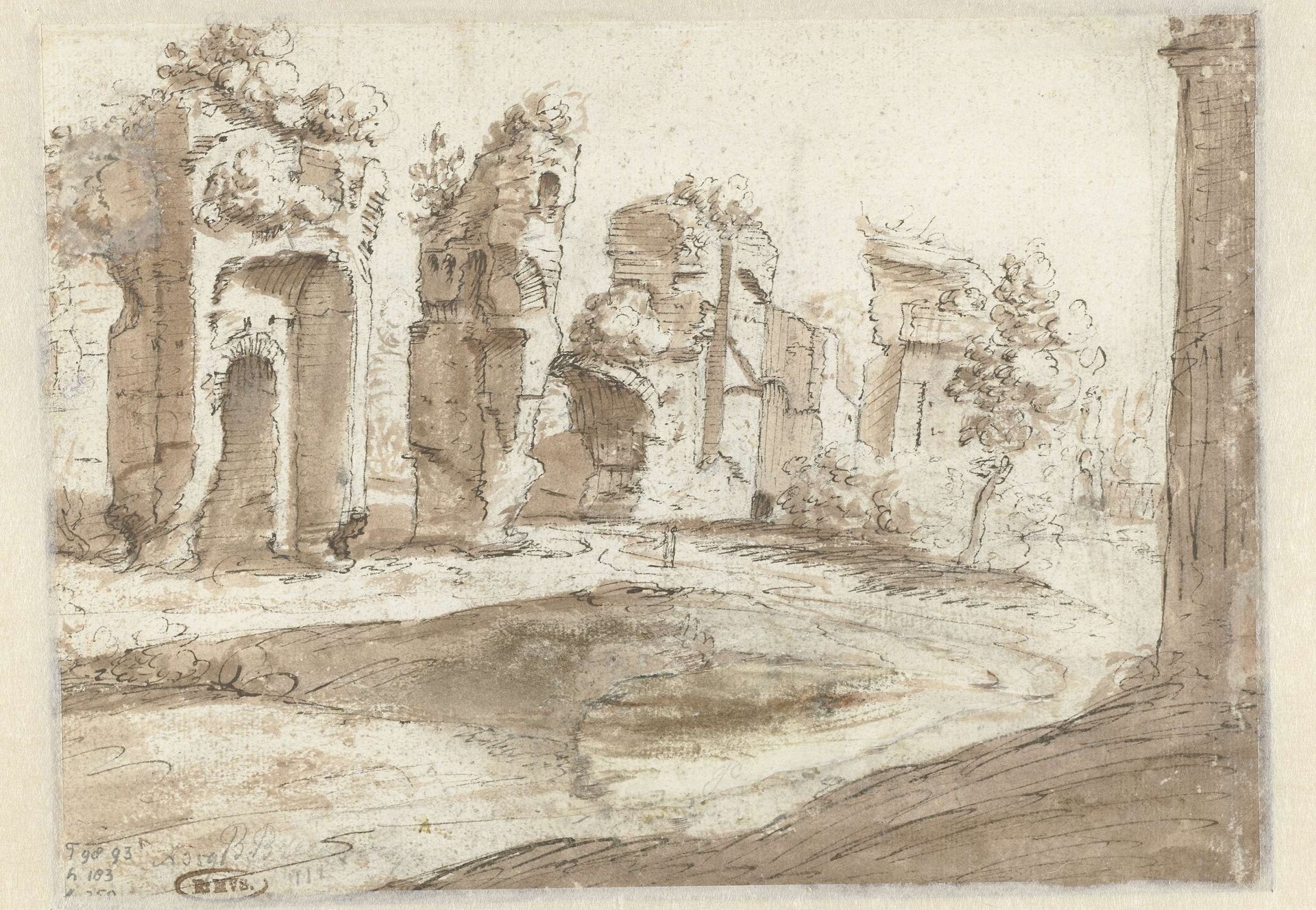
This drawing of antique ruins was made with pen and brown ink, and brown wash, by an anonymous artist. It’s a relatively quick technique, using lines and washes to create a sense of depth and decay. The character of the ink contributes significantly to the drawing’s effect. The artist would have worked with a quill, probably made from a bird’s feather. The controlled line work captures the ruined architecture, while the brown wash, diluted in water, softly models the forms and creates shadow. The absorbent paper allows the ink to bleed slightly, enhancing the sense of age and disintegration. We might think about drawing as a relatively immediate, personal medium. But the paper and ink also have histories. Paper manufacture depended on the availability of raw materials like linen rags, and the labor involved in pulping and processing them. Similarly, the formulation of ink would involve recipes passed down through generations. So even in this seemingly straightforward sketch, we can appreciate the complex relationship between artistic expression and the material world.

Artwork details
- Medium
- drawing, ink
- Dimensions
- height 182 mm, width 249 mm
- Copyright
- Rijks Museum: Open Domain
Tags
drawing
pencil sketch
landscape
charcoal drawing
romanesque
ink
ancient-mediterranean
cityscape
Comments
No comments
About this artwork
This drawing of antique ruins was made with pen and brown ink, and brown wash, by an anonymous artist. It’s a relatively quick technique, using lines and washes to create a sense of depth and decay. The character of the ink contributes significantly to the drawing’s effect. The artist would have worked with a quill, probably made from a bird’s feather. The controlled line work captures the ruined architecture, while the brown wash, diluted in water, softly models the forms and creates shadow. The absorbent paper allows the ink to bleed slightly, enhancing the sense of age and disintegration. We might think about drawing as a relatively immediate, personal medium. But the paper and ink also have histories. Paper manufacture depended on the availability of raw materials like linen rags, and the labor involved in pulping and processing them. Similarly, the formulation of ink would involve recipes passed down through generations. So even in this seemingly straightforward sketch, we can appreciate the complex relationship between artistic expression and the material world.
Comments
No comments