1817
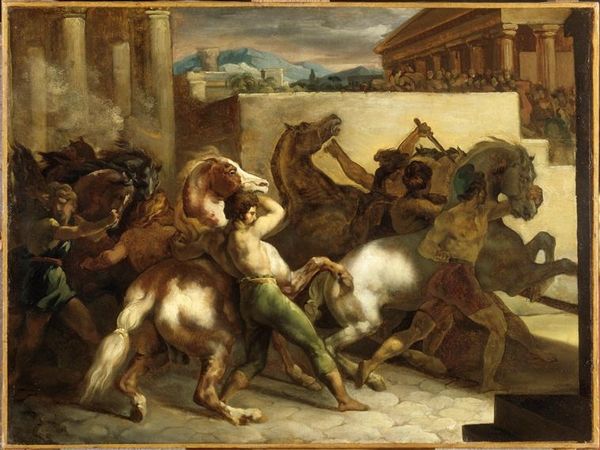
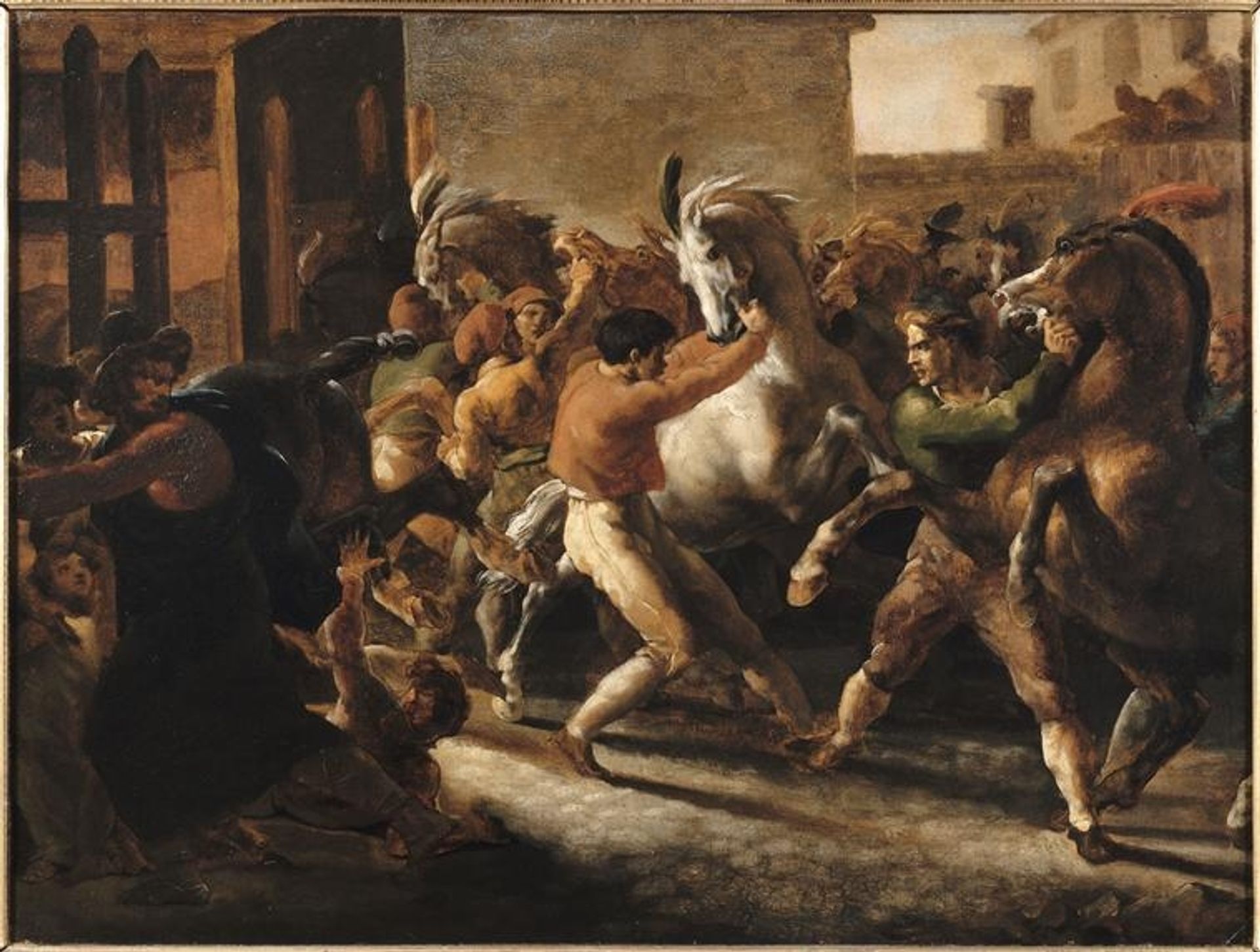
Study for the Race of the Barbarian Horses

Théodore Géricault
1791 - 1824Location
Palais des Beaux-Arts de Lille, Lille, FranceListen to curator's interpretation
Curatorial notes
Editor: Géricault’s "Study for the Race of the Barbarian Horses," created around 1817, bursts with dynamic energy. It's a charcoal and oil study, and I’m struck by how turbulent and almost violent the whole composition feels. What do you see in this piece beyond the obvious chaos? Curator: It’s interesting you use the word “violent.” Consider the context: post-Napoleonic France, a society grappling with upheaval, class divisions and deeply embedded colonial power dynamics. The “Barbarian Horses” themselves become symbolic, don’t you think? Representing unrestrained power, maybe even the repressed energies of a nation trying to redefine itself after years of conflict. What's your interpretation of the 'race' itself? Is it simply a sporting event? Editor: I hadn’t thought about it that way. I guess I saw it as just a race, a spectacle. But thinking about it through the lens of societal upheaval, the race could be a metaphor for the struggle for dominance. Curator: Precisely! And look at how Géricault renders the figures—their struggle, their barely controlled power over the animals. This speaks to the fraught relationship between humanity and nature, a relationship tinged with exploitation and control, mirroring France's colonial endeavors. How might ideas about the exotic "other" play into the composition? Editor: So, it's not just about the aesthetic appeal of the race but also about the deeper societal anxieties and power structures at play. That really shifts my perspective on it. Curator: Exactly. Seeing art as more than just aesthetics, but also as a cultural and political artifact, opens up so many possibilities. It forces us to confront uncomfortable truths about ourselves and the world we've inherited. Editor: This makes me look at historical paintings completely differently now. It’s not just capturing a moment, it's actively participating in a dialogue about power and identity. Curator: And isn't that what makes art so endlessly fascinating? It’s always in conversation with its context and with us.