About this artwork
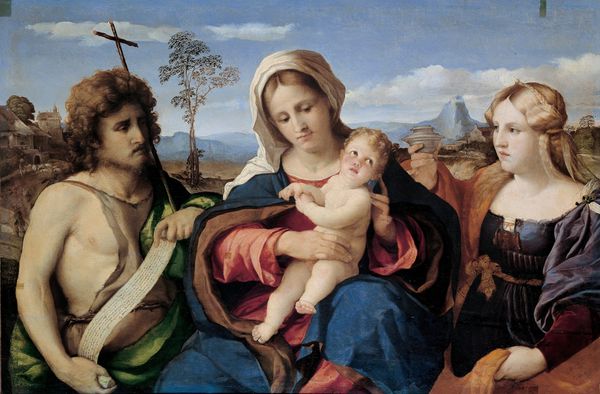
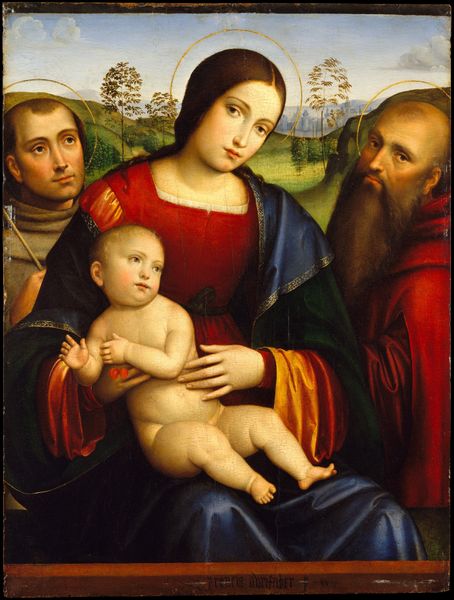
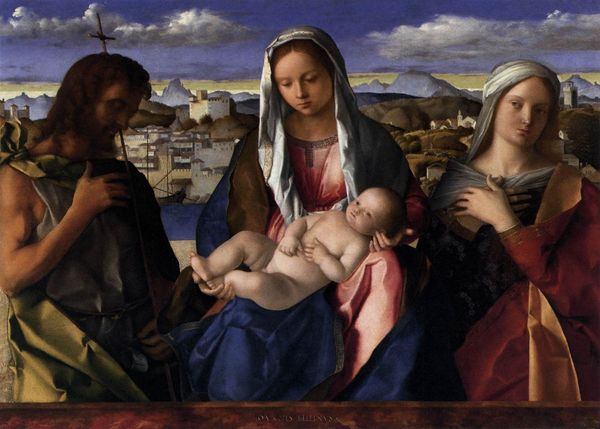
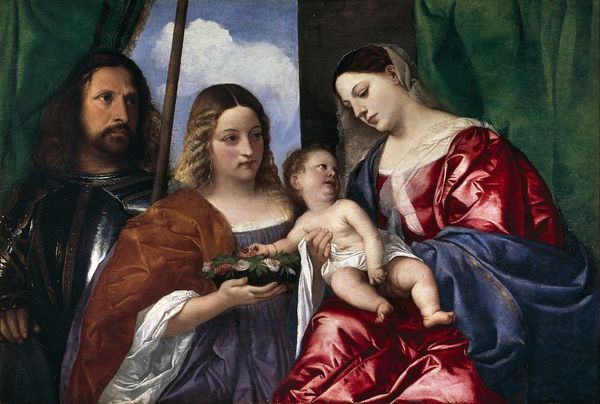
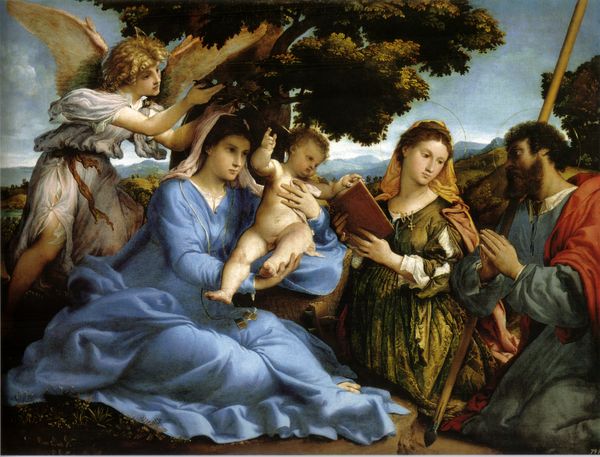
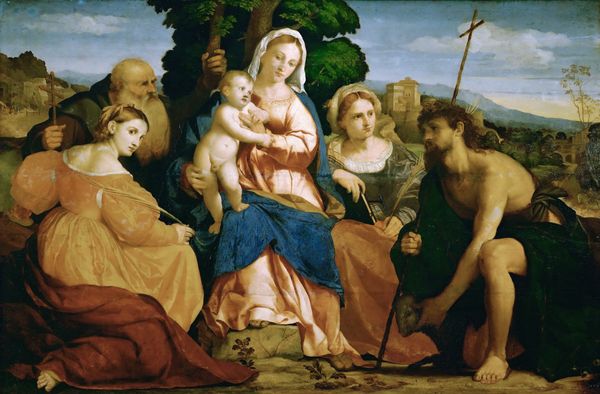
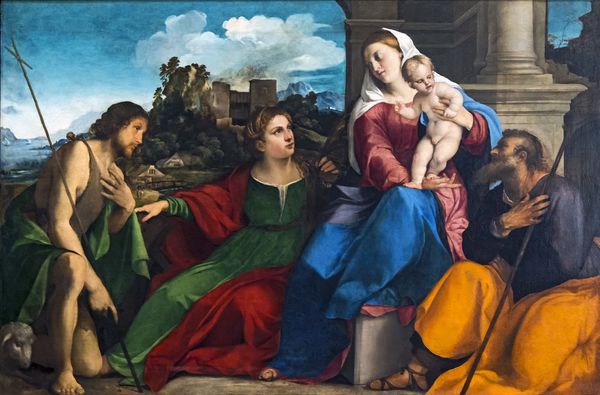
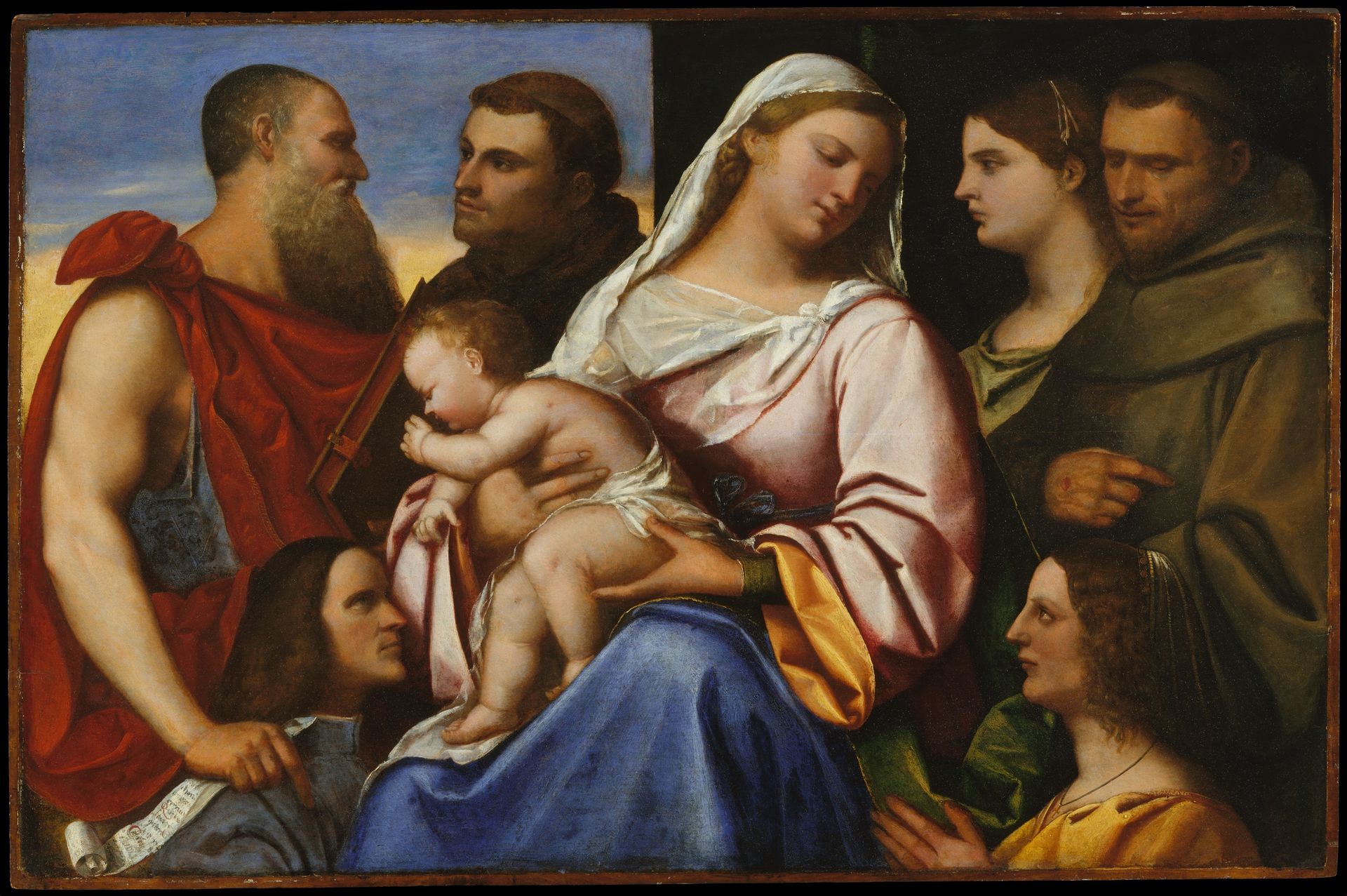
Sebastiano del Piombo painted this oil on wood panel depicting the Madonna and Child surrounded by saints and donors. The Christ Child’s gesture of benediction, a motif tracing back to ancient Roman oratory, appears here, transformed. Consider the juxtaposition of the sacred and the profane: a motif that has its roots in antiquity. The donors, kneeling humbly, represent earthly concerns, while the Madonna and Child embody divine grace. The positioning of the book, held by Saint Peter, suggests a narrative. The book and blessing gesture are ancient symbols of knowledge and divine approval. We can trace its evolution through Byzantine mosaics, where Christ Pantocrator raises his hand in a similar blessing, and into the Renaissance, where it signifies papal authority. The deep emotional resonance of the Madonna's gaze, heavy with foreboding, is a powerful force, engaging viewers on a subconscious level. Through centuries, we witness this symbol of the book and blessing resurface, evolve, and take on new meanings.
Madonna and Child with Saints and Donors
1505 - 1547

Sebastiano del Piombo
1485 - 1547
The Metropolitan Museum of Art
Metropolitan Museum of Art, New York, NYArtwork details
- Medium
- painting, oil-paint
- Dimensions
- Overall 26 1/2 x 40 1/2 in. (67.3 x 102.9 cm); painted surface 26 x 39 3/4 in. (66 x 101 cm)
- Location
- Metropolitan Museum of Art, New York, NY
- Copyright
- Public Domain
Tags
Comments
Share your thoughts
About this artwork
Sebastiano del Piombo painted this oil on wood panel depicting the Madonna and Child surrounded by saints and donors. The Christ Child’s gesture of benediction, a motif tracing back to ancient Roman oratory, appears here, transformed. Consider the juxtaposition of the sacred and the profane: a motif that has its roots in antiquity. The donors, kneeling humbly, represent earthly concerns, while the Madonna and Child embody divine grace. The positioning of the book, held by Saint Peter, suggests a narrative. The book and blessing gesture are ancient symbols of knowledge and divine approval. We can trace its evolution through Byzantine mosaics, where Christ Pantocrator raises his hand in a similar blessing, and into the Renaissance, where it signifies papal authority. The deep emotional resonance of the Madonna's gaze, heavy with foreboding, is a powerful force, engaging viewers on a subconscious level. Through centuries, we witness this symbol of the book and blessing resurface, evolve, and take on new meanings.
Comments
Share your thoughts