About this artwork
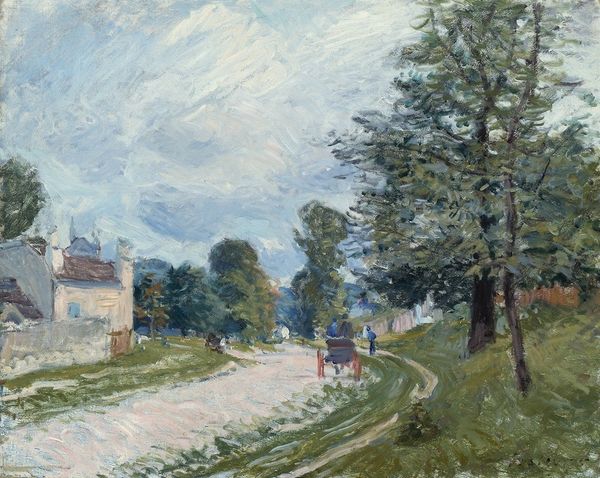
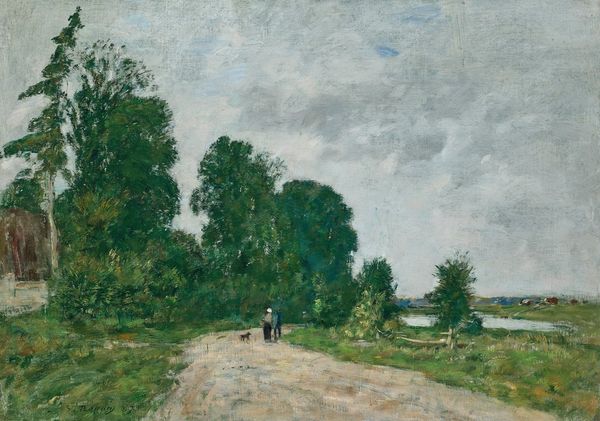
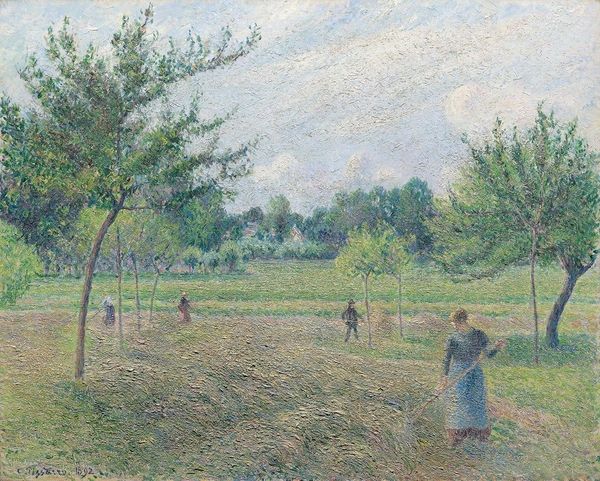
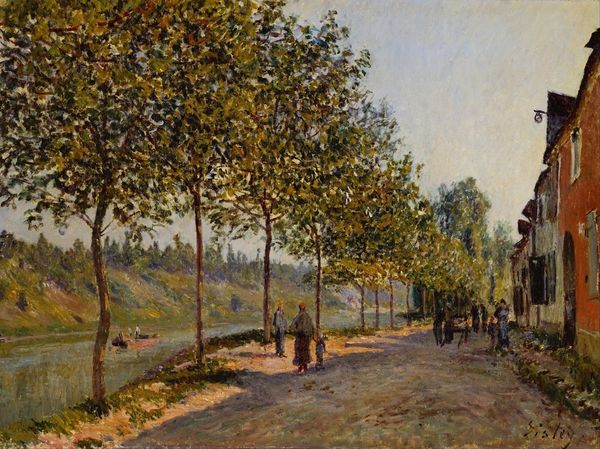
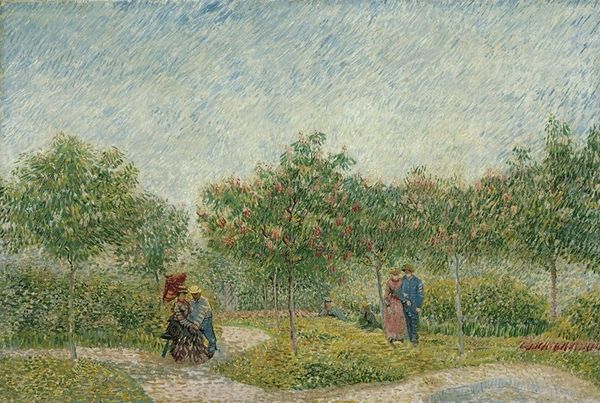
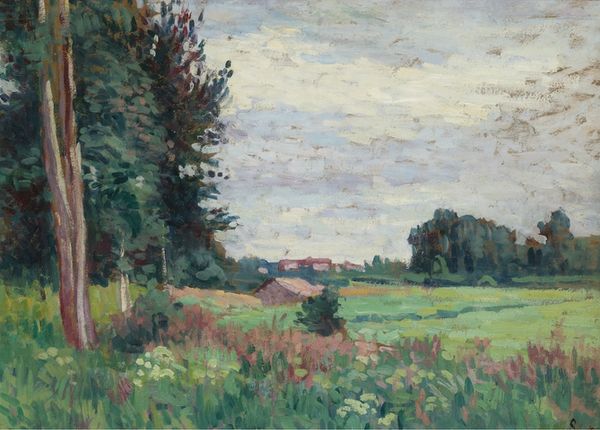
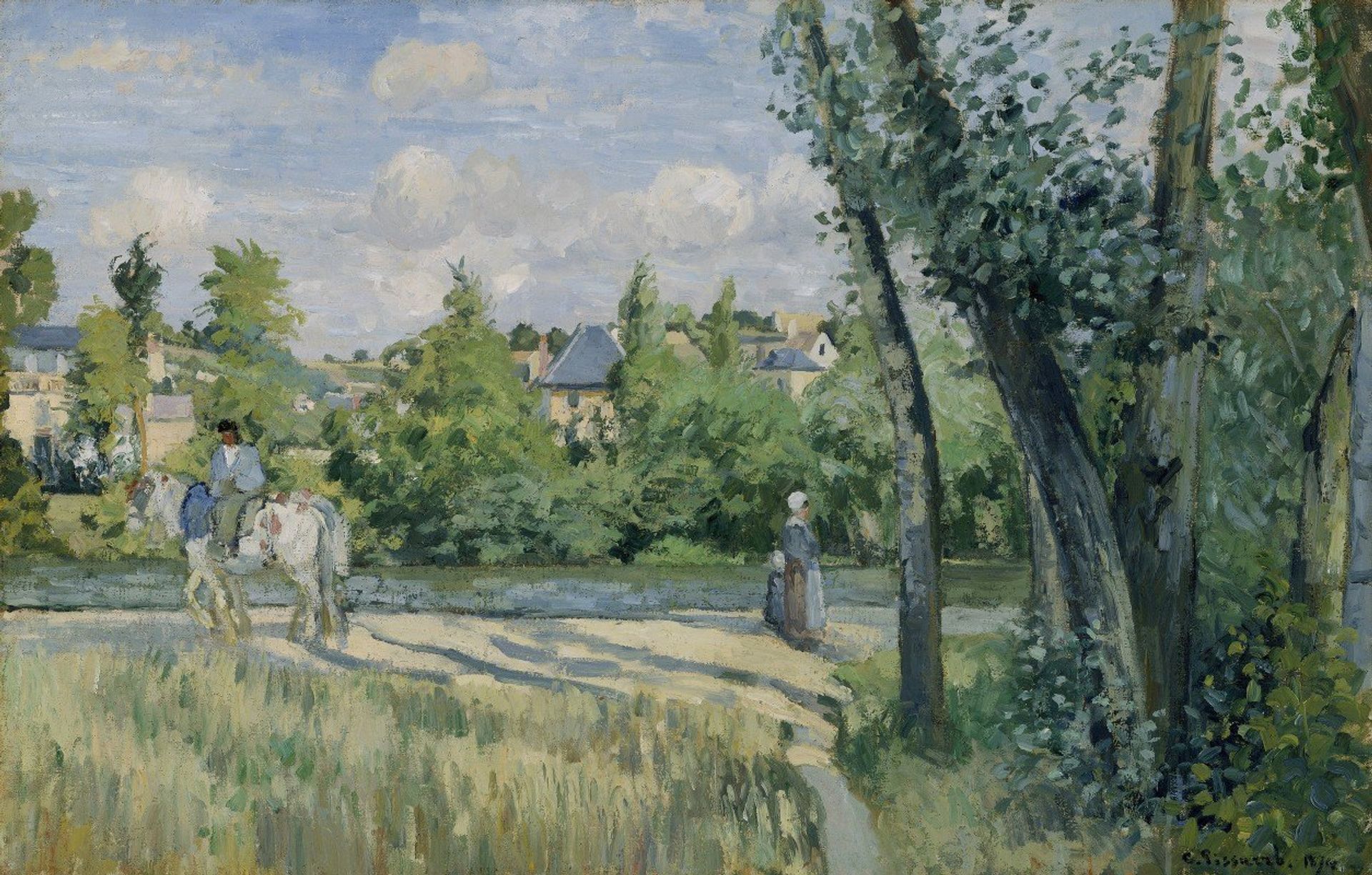
Editor: This is Camille Pissarro’s “Sunlight on the Road, Pontoise,” painted in 1874 using oil paints en plein-air. It has this breezy, ephemeral quality, very characteristic of impressionism. What stands out to you? Curator: Pissarro, here, meticulously renders the road as a site of both labor and leisure. The painting documents the very real process of rural life – a figure on horseback, another walking – set against the backdrop of the emerging modern town. But observe the texture; how the quick brushstrokes create a sense of movement, not just of light, but of material transformation. Editor: Transformation in what way? Curator: Well, consider the socio-economic shift. We are witnessing the decline of agrarian society and the rise of urbanization. Pissarro’s labor involved capturing that specific moment. His chosen materials – mass-produced oil paints readily available – and his method of painting directly from life made this possible. Plein-air isn't just a technique; it’s a response to industrial advancements affecting artistic production. Editor: So the very act of painting en plein-air becomes intertwined with larger social changes? Curator: Precisely! Think about how transporting materials, preparing the canvas, even the clothes he wore while painting, connect to the economic landscape. Every element, from pigment to the depicted figures, represents a point of contact between the artist, his environment, and the burgeoning capitalist world. Editor: I never considered the economic side of painting outside! I guess it shows how much our relationship with the landscape was changing due to new ways of living and new materials to make art. Curator: Yes, seeing art through this lens can reveal fascinating insights into the times in which it was made and its ongoing impact.

Artwork details
- Medium
- plein-air, oil-paint
- Copyright
- Public Domain: Artvee
Tags
impressionism
plein-air
oil-paint
landscape
impressionist landscape
oil painting
cityscape
natural environment
Comments
No comments
About this artwork
Editor: This is Camille Pissarro’s “Sunlight on the Road, Pontoise,” painted in 1874 using oil paints en plein-air. It has this breezy, ephemeral quality, very characteristic of impressionism. What stands out to you? Curator: Pissarro, here, meticulously renders the road as a site of both labor and leisure. The painting documents the very real process of rural life – a figure on horseback, another walking – set against the backdrop of the emerging modern town. But observe the texture; how the quick brushstrokes create a sense of movement, not just of light, but of material transformation. Editor: Transformation in what way? Curator: Well, consider the socio-economic shift. We are witnessing the decline of agrarian society and the rise of urbanization. Pissarro’s labor involved capturing that specific moment. His chosen materials – mass-produced oil paints readily available – and his method of painting directly from life made this possible. Plein-air isn't just a technique; it’s a response to industrial advancements affecting artistic production. Editor: So the very act of painting en plein-air becomes intertwined with larger social changes? Curator: Precisely! Think about how transporting materials, preparing the canvas, even the clothes he wore while painting, connect to the economic landscape. Every element, from pigment to the depicted figures, represents a point of contact between the artist, his environment, and the burgeoning capitalist world. Editor: I never considered the economic side of painting outside! I guess it shows how much our relationship with the landscape was changing due to new ways of living and new materials to make art. Curator: Yes, seeing art through this lens can reveal fascinating insights into the times in which it was made and its ongoing impact.
Comments
No comments