About this artwork
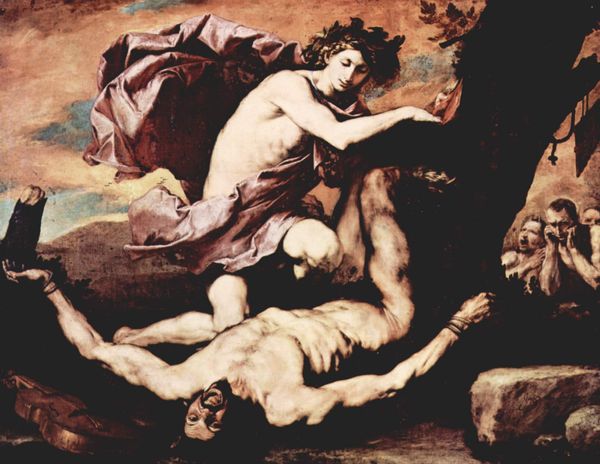
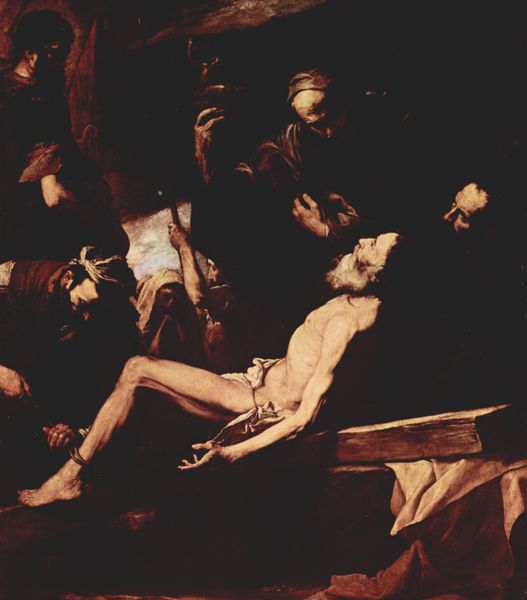
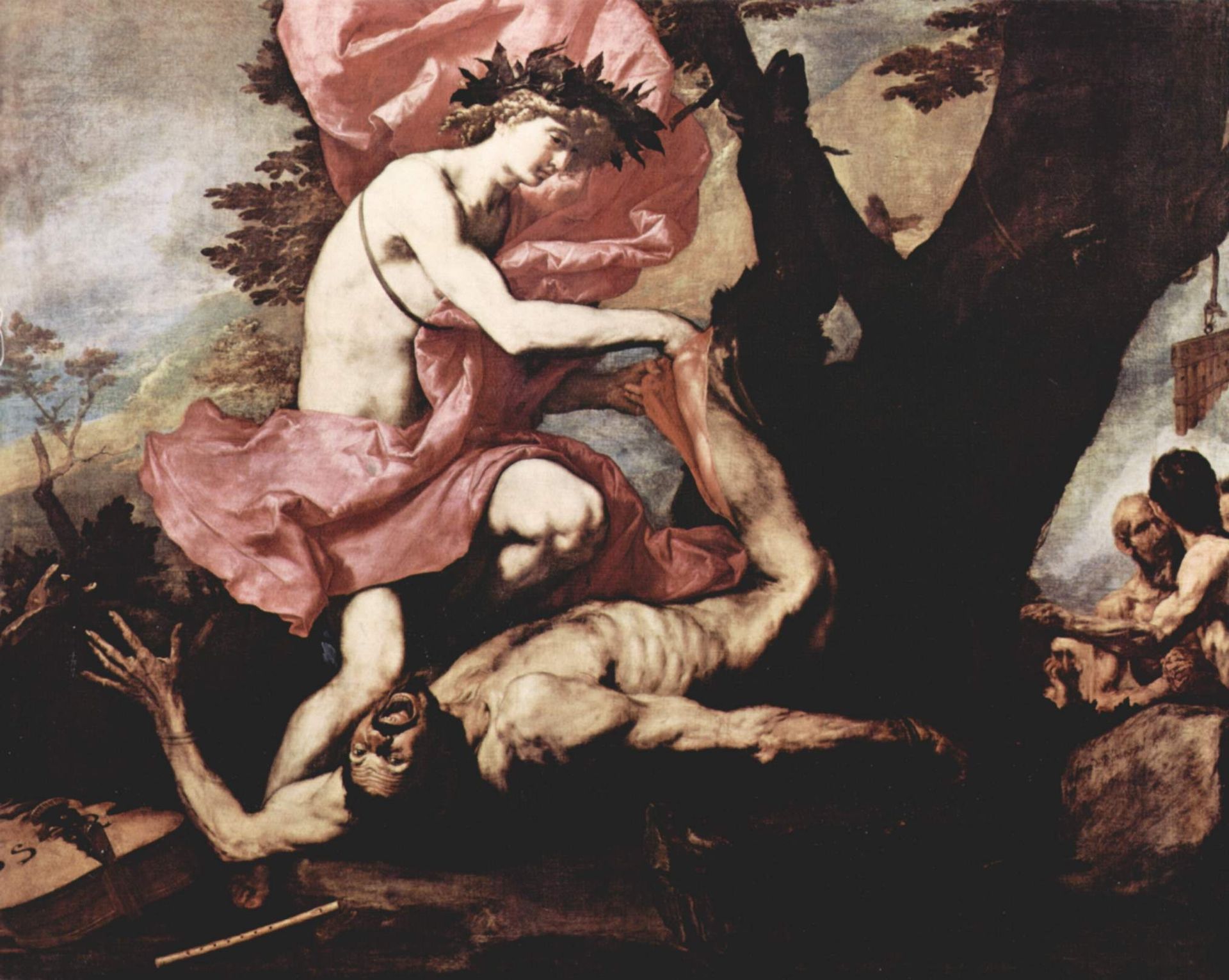
Jusepe de Ribera painted Apollo and Marsyas, sometime in the 17th century, an oil on canvas currently held in the Royal Museums of Fine Arts of Belgium. Ribera was a leading painter of the Spanish Baroque period, deeply influenced by Caravaggio, whose work often grappled with themes of violence, martyrdom, and the human condition. In this painting, Ribera depicts the brutal flaying of Marsyas by Apollo, a scene drawn from Greek mythology. Apollo, representing divine order and reason, punishes Marsyas for his hubris in challenging him to a musical contest. The act underscores the violent imposition of cultural dominance and the suppression of the other. Look closely at the figures surrounding the central scene, their expressions convey a mix of morbid fascination and complicity. Ribera doesn't shy away from showing the raw, corporeal reality of the event. The emotional intensity of the painting encourages us to reflect on the cost of ambition, the abuse of power, and the silencing of dissenting voices.
Apollo and Marsyas 1637

Jusepe de Ribera
1591 - 1652Location
Royal Museums of Fine Arts of Belgium, Brussels, BelgiumArtwork details
- Medium
- oil-paint
- Dimensions
- 202 x 255 cm
- Location
- Royal Museums of Fine Arts of Belgium, Brussels, Belgium
- Copyright
- Public domain
Tags
baroque
oil-paint
figuration
oil painting
roman-mythology
mythology
history-painting
Comments
No comments
About this artwork
Jusepe de Ribera painted Apollo and Marsyas, sometime in the 17th century, an oil on canvas currently held in the Royal Museums of Fine Arts of Belgium. Ribera was a leading painter of the Spanish Baroque period, deeply influenced by Caravaggio, whose work often grappled with themes of violence, martyrdom, and the human condition. In this painting, Ribera depicts the brutal flaying of Marsyas by Apollo, a scene drawn from Greek mythology. Apollo, representing divine order and reason, punishes Marsyas for his hubris in challenging him to a musical contest. The act underscores the violent imposition of cultural dominance and the suppression of the other. Look closely at the figures surrounding the central scene, their expressions convey a mix of morbid fascination and complicity. Ribera doesn't shy away from showing the raw, corporeal reality of the event. The emotional intensity of the painting encourages us to reflect on the cost of ambition, the abuse of power, and the silencing of dissenting voices.
Comments
No comments