About this artwork
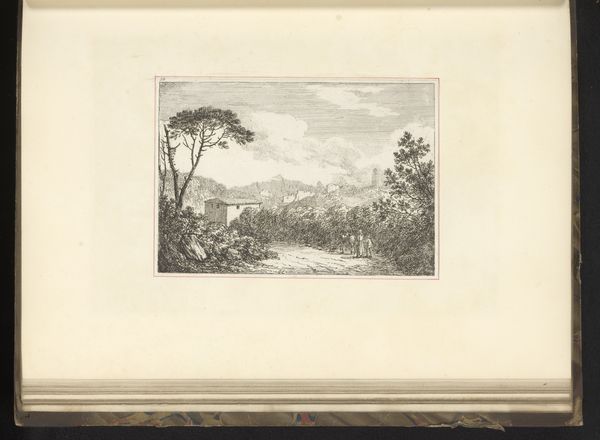
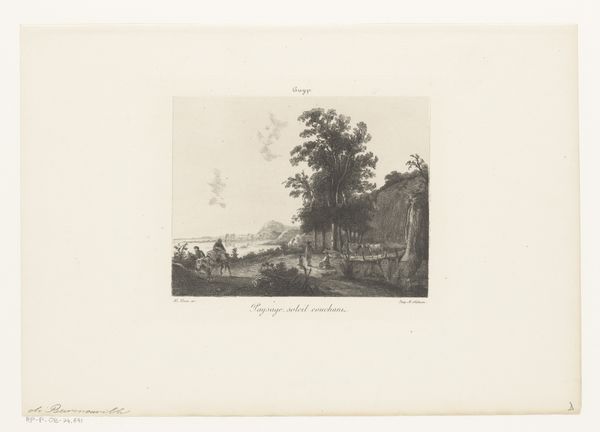
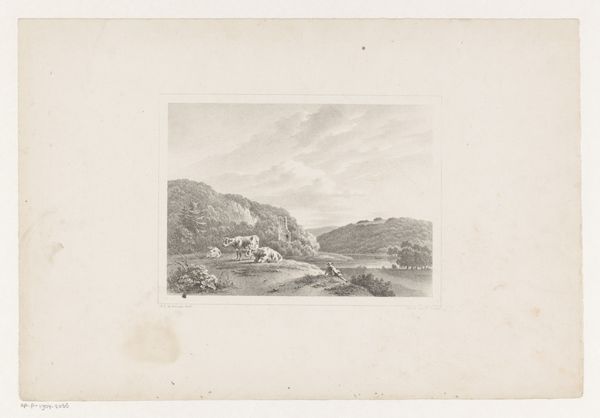
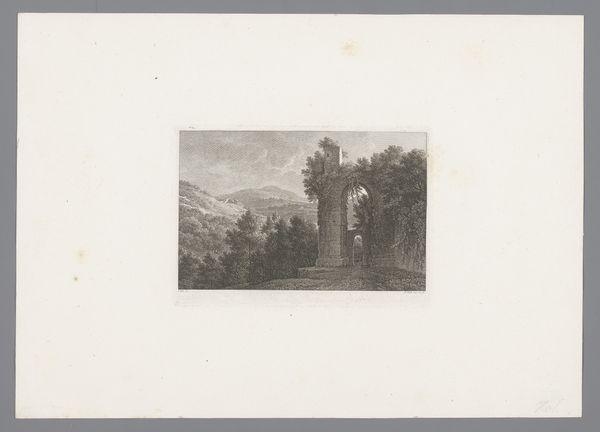
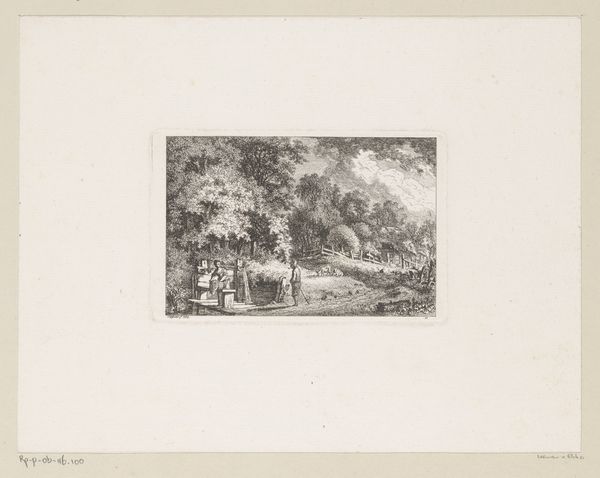
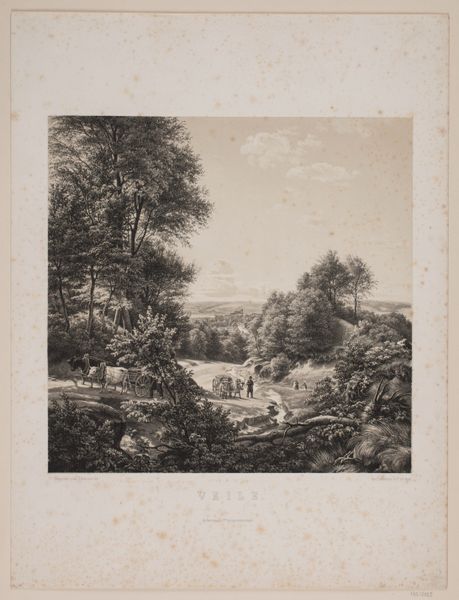
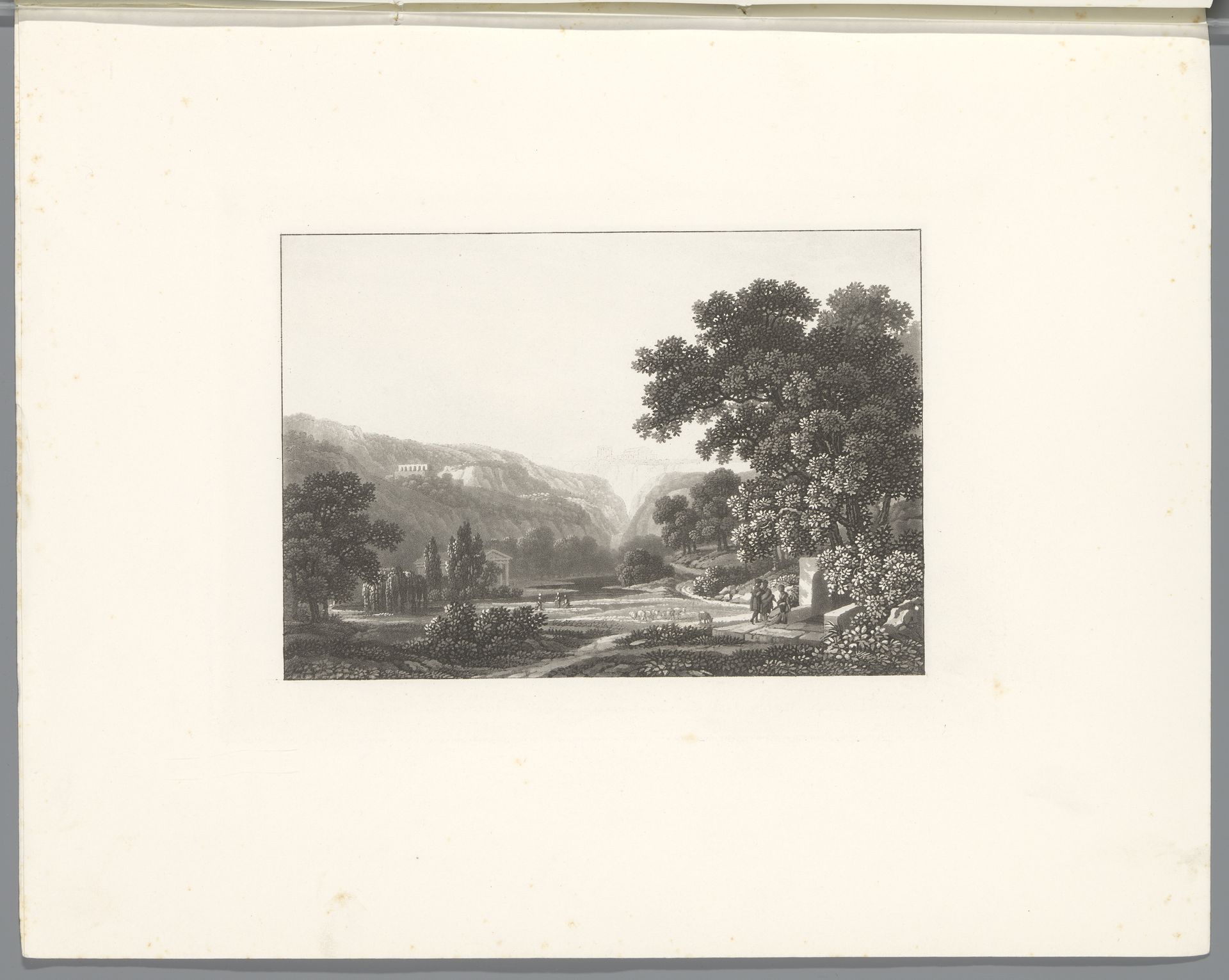
This landscape with antique buildings was made by Christian Haldenwang, probably in the early 1800s. It’s an etching, a printmaking technique that relies on the corrosive power of acid. Think about the artist carefully preparing a metal plate, coating it with a waxy, acid-resistant ground, and then drawing through that ground with a sharp needle to expose the metal beneath. The plate is then immersed in acid, which bites into the exposed lines, creating grooves. Ink is applied to the plate, filling these grooves, and then the surface is wiped clean, leaving ink only in the etched lines. Finally, the plate is pressed onto paper, transferring the image. The result is this finely detailed, reproducible image. The technique allowed artists to circulate their work widely, contributing to a growing visual culture and the democratization of art. The amount of labour involved in the process reflects the changing dynamics of art production and consumption in the 19th century. It reminds us that even seemingly straightforward images are the result of skilled work.
Heuvellandschap met antieke bouwwerken
1804

Christian Haldenwang
1770 - 1831Location
RijksmuseumArtwork details
- Medium
- drawing, paper, ink, pen
- Dimensions
- height 126 mm, width 174 mm
- Location
- Rijksmuseum
- Copyright
- Rijks Museum: Open Domain
Tags
Comments
Share your thoughts
About this artwork
This landscape with antique buildings was made by Christian Haldenwang, probably in the early 1800s. It’s an etching, a printmaking technique that relies on the corrosive power of acid. Think about the artist carefully preparing a metal plate, coating it with a waxy, acid-resistant ground, and then drawing through that ground with a sharp needle to expose the metal beneath. The plate is then immersed in acid, which bites into the exposed lines, creating grooves. Ink is applied to the plate, filling these grooves, and then the surface is wiped clean, leaving ink only in the etched lines. Finally, the plate is pressed onto paper, transferring the image. The result is this finely detailed, reproducible image. The technique allowed artists to circulate their work widely, contributing to a growing visual culture and the democratization of art. The amount of labour involved in the process reflects the changing dynamics of art production and consumption in the 19th century. It reminds us that even seemingly straightforward images are the result of skilled work.
Comments
Share your thoughts