About this artwork
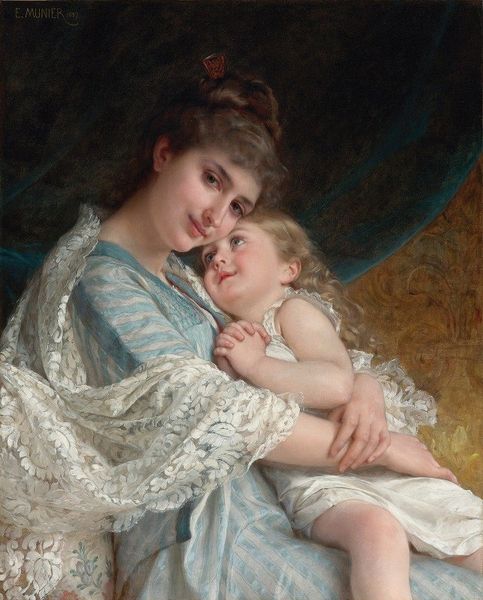
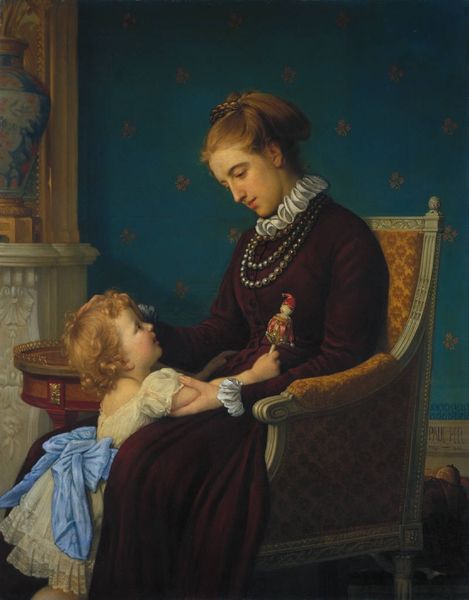
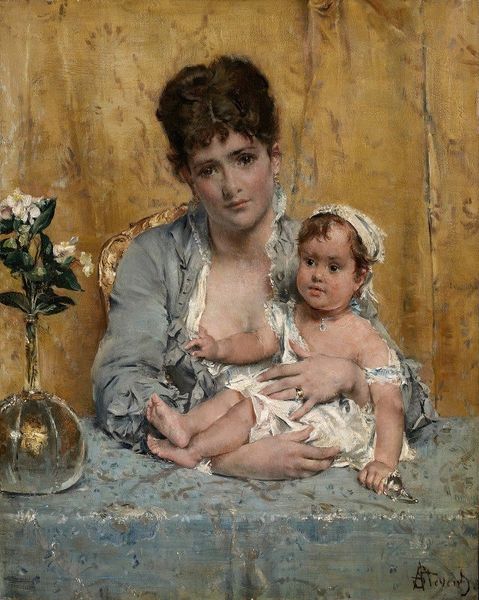
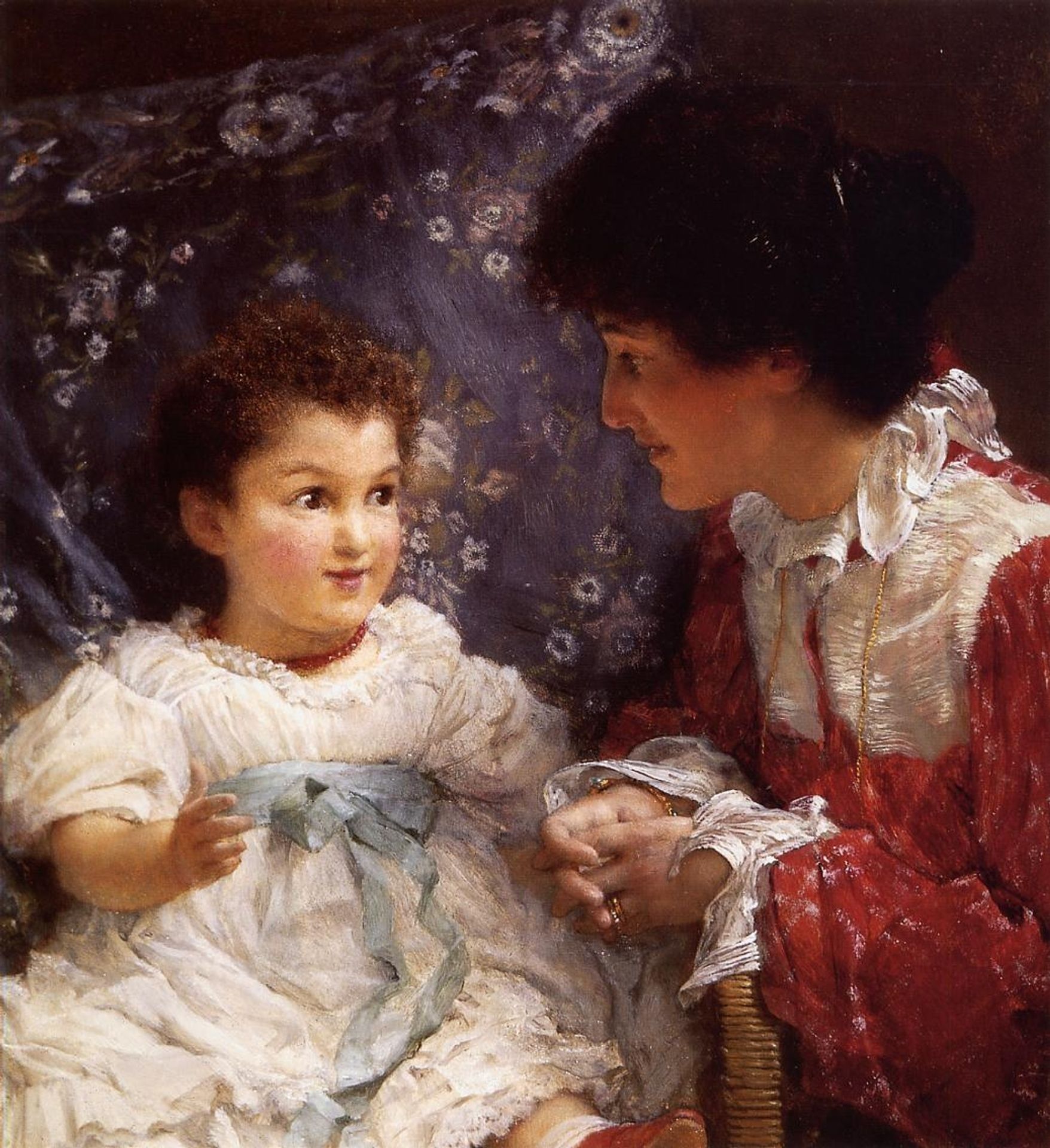
Lawrence Alma-Tadema painted "Mrs George Lewis and Her Daughter Elizabeth" using oils, capturing a tender moment between mother and child. The composition uses a close, intimate framing, with the figures filling much of the canvas. This creates a sense of immediacy and connection. Note the tactile rendering of fabrics, from the floral pattern behind the figures to the soft textures of their garments. This attention to detail draws us into their world, while the color palette, dominated by soft whites, blues, and reds, evokes warmth and intimacy. What’s especially compelling is the interplay between realism and idealism. Alma-Tadema was known for his historical depictions and attention to detail. Here, he captures a contemporary scene with a classical sensibility. The painting presents an idealized vision of domestic life and motherhood. This representation can be understood through a semiotic lens. It uses visual symbols to reinforce cultural values around family and femininity. The painting invites us to consider how artists use form and composition to convey meaning and emotion. It also prompts us to reflect on the ways art shapes and reflects cultural ideals.
Mrs George Lewis and Her Daughter Elizabeth 1899

Lawrence Alma-Tadema
1836 - 1912Location
Private CollectionArtwork details
- Location
- Private Collection
- Copyright
- Public domain
Comments
No comments
About this artwork
Lawrence Alma-Tadema painted "Mrs George Lewis and Her Daughter Elizabeth" using oils, capturing a tender moment between mother and child. The composition uses a close, intimate framing, with the figures filling much of the canvas. This creates a sense of immediacy and connection. Note the tactile rendering of fabrics, from the floral pattern behind the figures to the soft textures of their garments. This attention to detail draws us into their world, while the color palette, dominated by soft whites, blues, and reds, evokes warmth and intimacy. What’s especially compelling is the interplay between realism and idealism. Alma-Tadema was known for his historical depictions and attention to detail. Here, he captures a contemporary scene with a classical sensibility. The painting presents an idealized vision of domestic life and motherhood. This representation can be understood through a semiotic lens. It uses visual symbols to reinforce cultural values around family and femininity. The painting invites us to consider how artists use form and composition to convey meaning and emotion. It also prompts us to reflect on the ways art shapes and reflects cultural ideals.
Comments
No comments