About this artwork
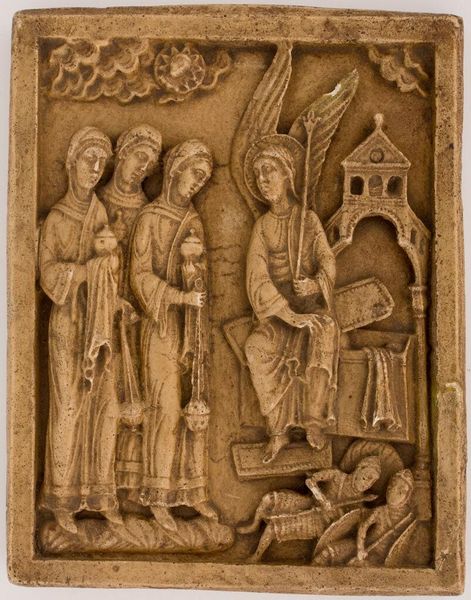
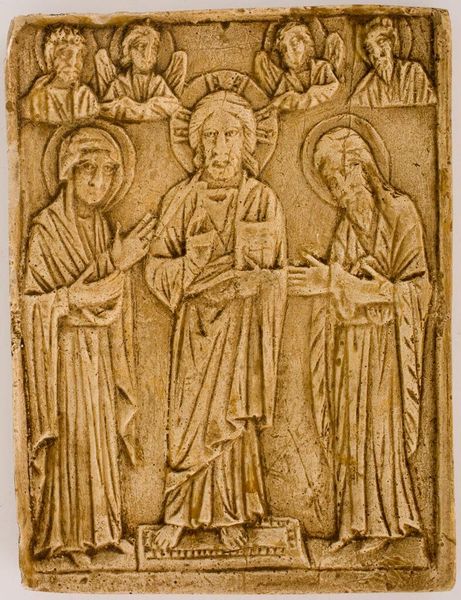
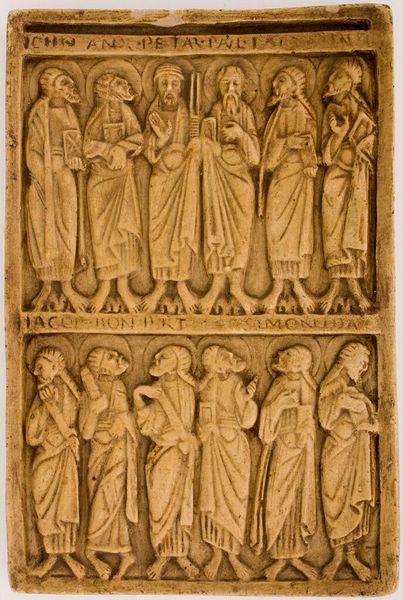
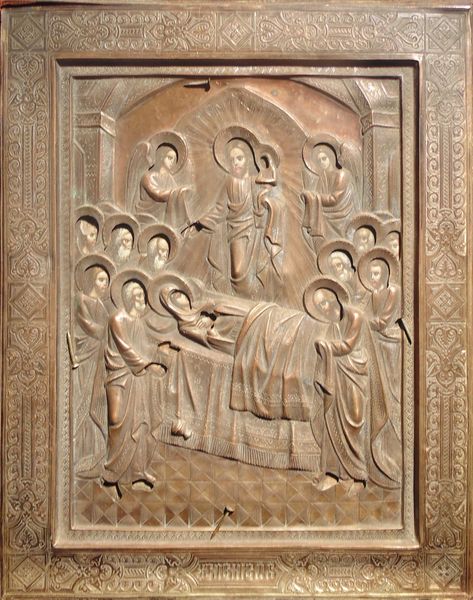
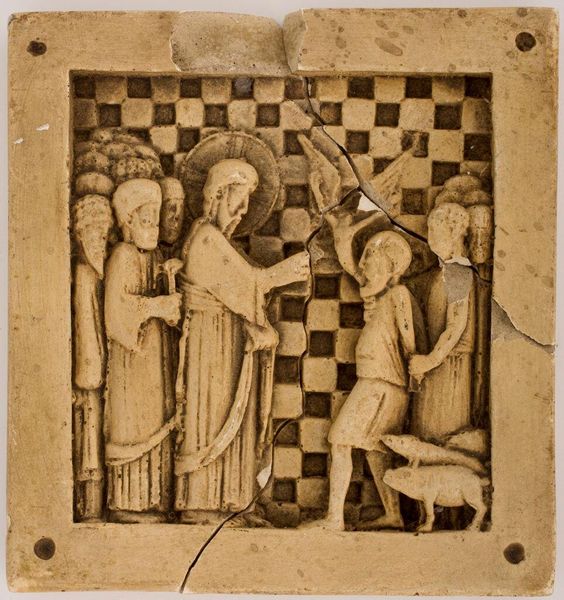
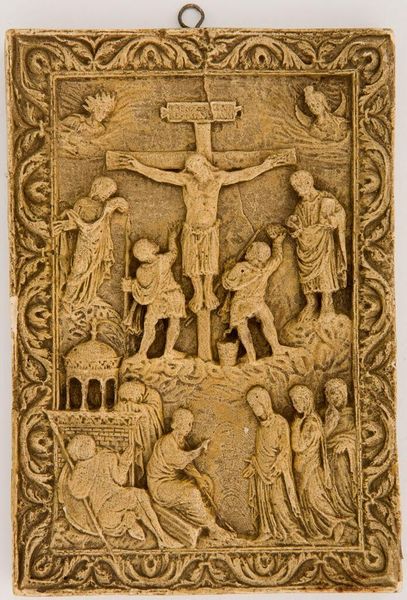
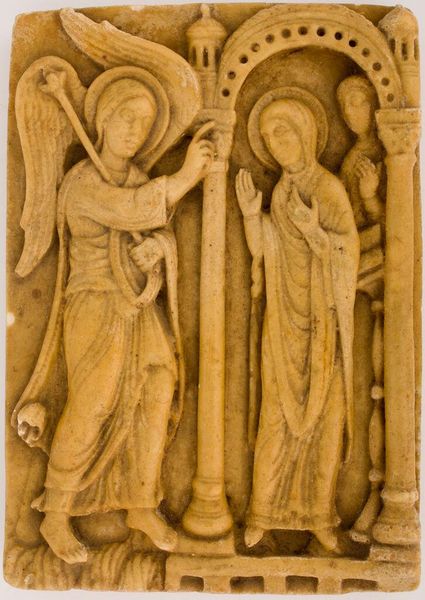
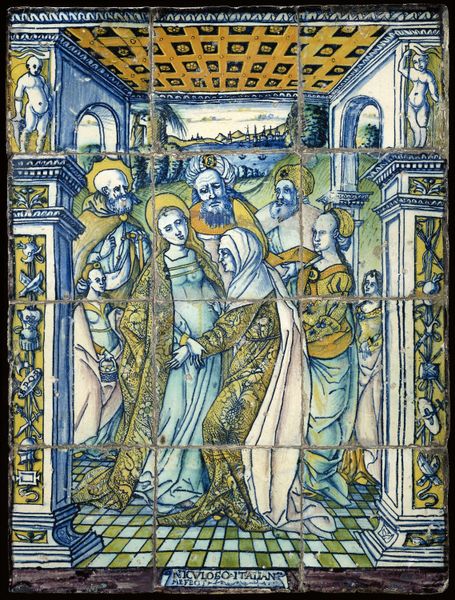
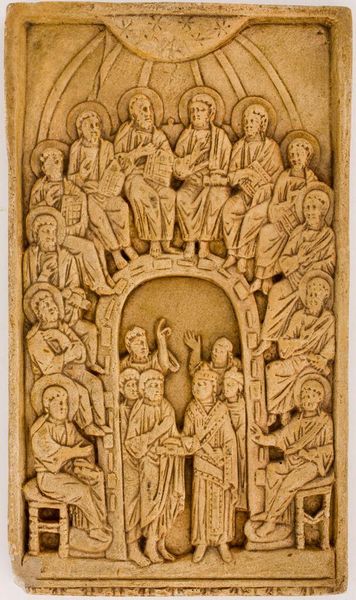
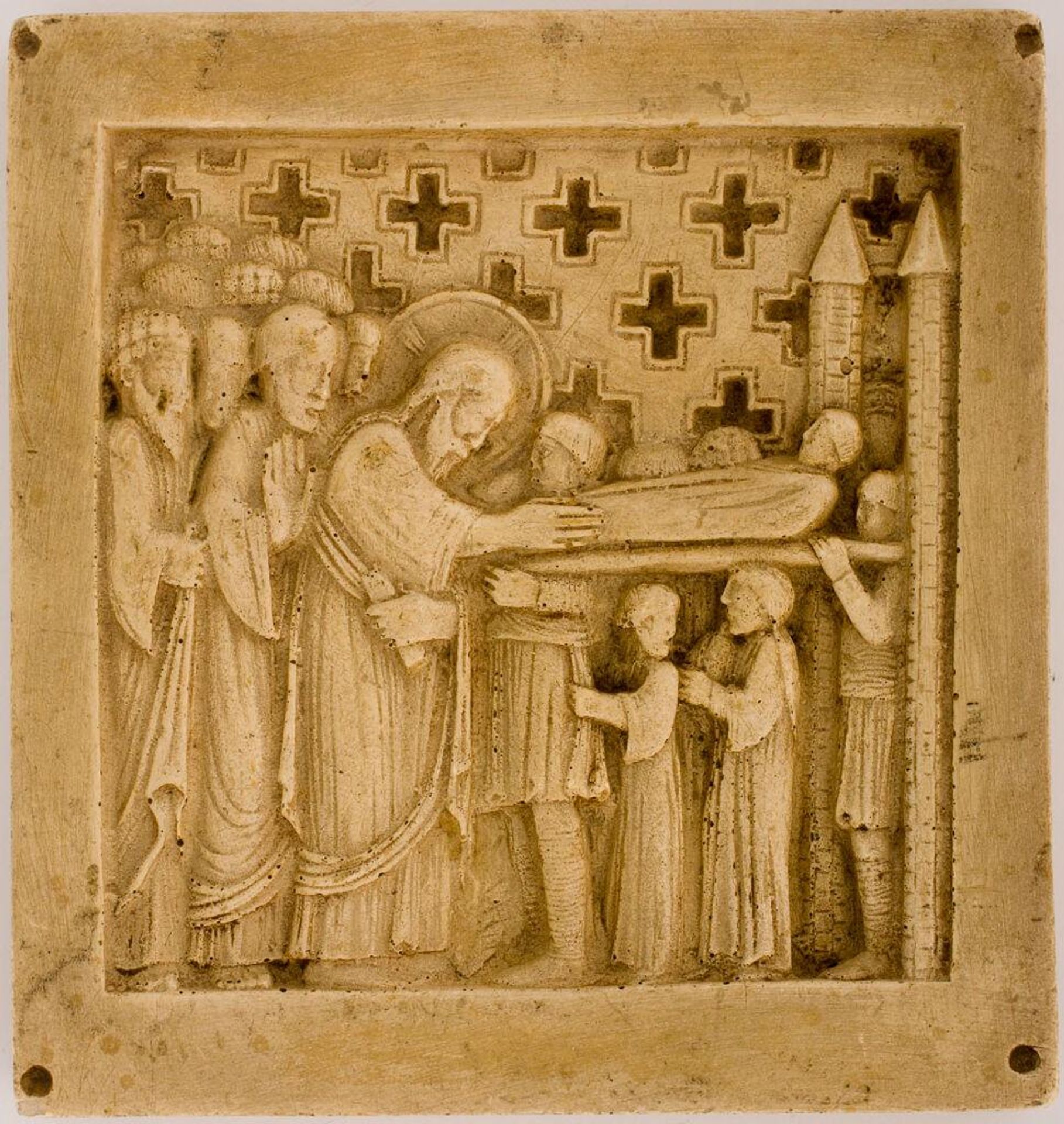
Editor: Here we have an ivory relief carving, “Christ Raising the Widows of Mite,” by an unknown artist. It’s small, but the level of detail is incredible. How would you interpret the process and materials used? Curator: I'm struck by the socio-economic implications of ivory as the raw material. Its sourcing and the labor involved in carving this relief likely speak to power dynamics and access to luxury goods within a specific historical context. Editor: That makes me think about the skill and time needed to create something like this. Curator: Precisely. The material itself and its transformation into this image are central to understanding its cultural value and the message it conveys. The process defines the piece. Editor: I never thought about ivory in that way before! Curator: It's crucial to consider materials and processes, they shape our understanding.
Christ Raising the Widows of Mite
c. 10th century

Artwork details
- Dimensions
- sight: 12.7 x 11.4 cm (5 x 4 1/2 in.)
- Location
- Harvard Art Museums
- Copyright
- CC0 1.0
Comments
Share your thoughts
About this artwork
Editor: Here we have an ivory relief carving, “Christ Raising the Widows of Mite,” by an unknown artist. It’s small, but the level of detail is incredible. How would you interpret the process and materials used? Curator: I'm struck by the socio-economic implications of ivory as the raw material. Its sourcing and the labor involved in carving this relief likely speak to power dynamics and access to luxury goods within a specific historical context. Editor: That makes me think about the skill and time needed to create something like this. Curator: Precisely. The material itself and its transformation into this image are central to understanding its cultural value and the message it conveys. The process defines the piece. Editor: I never thought about ivory in that way before! Curator: It's crucial to consider materials and processes, they shape our understanding.
Comments
Share your thoughts