About this artwork
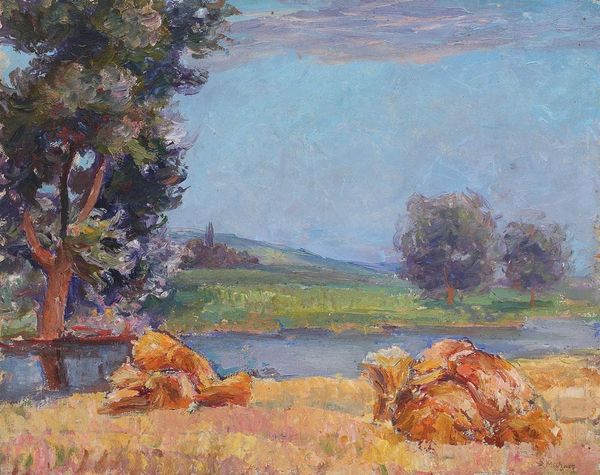
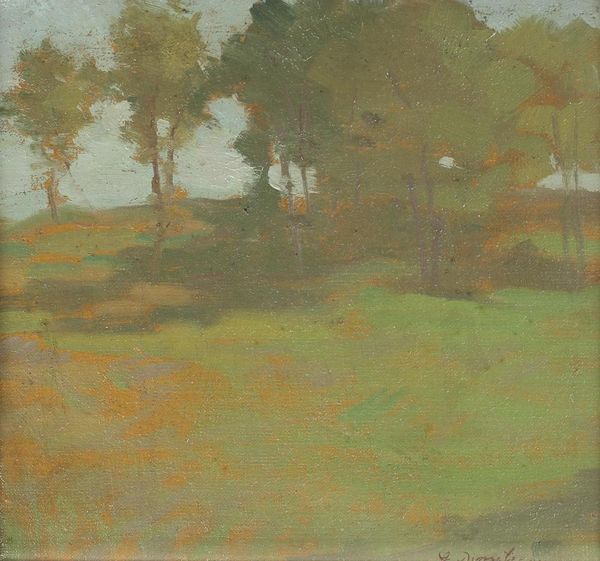
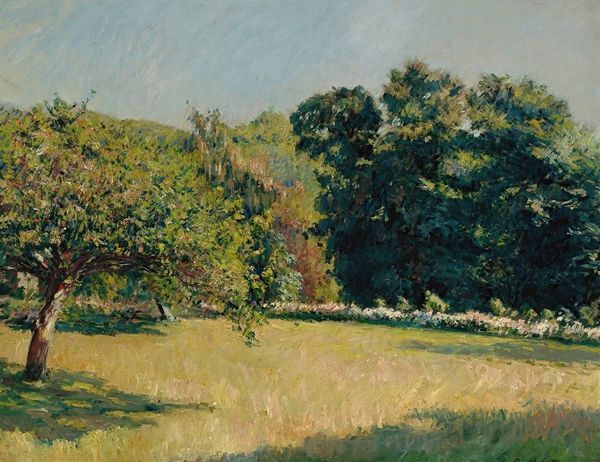
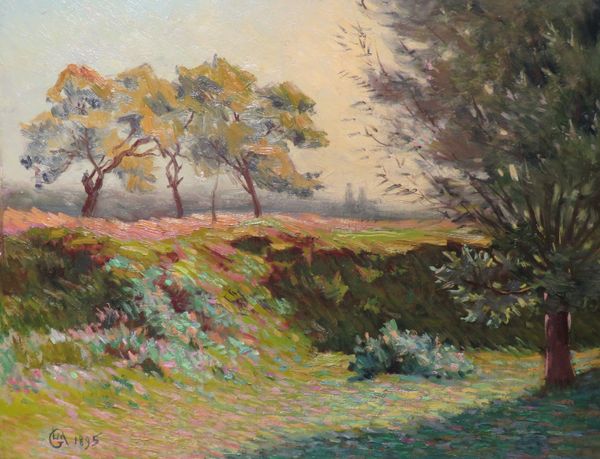
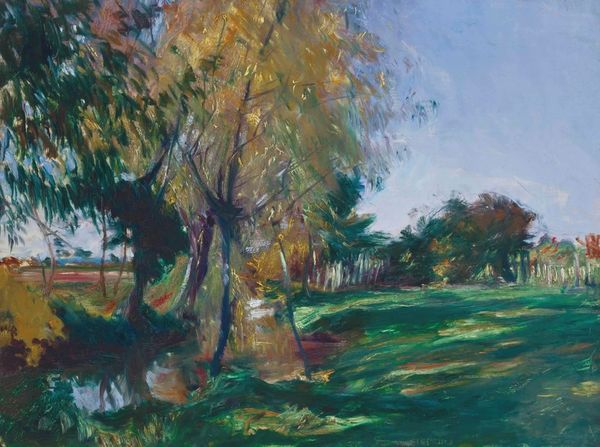
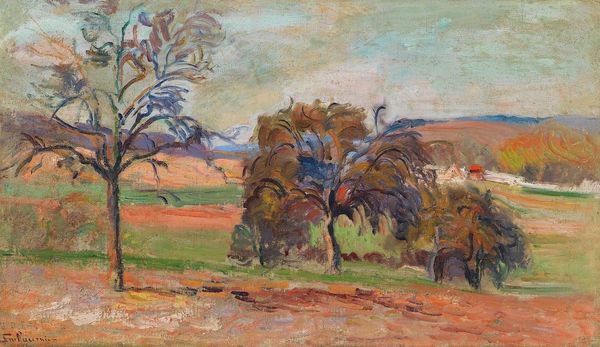
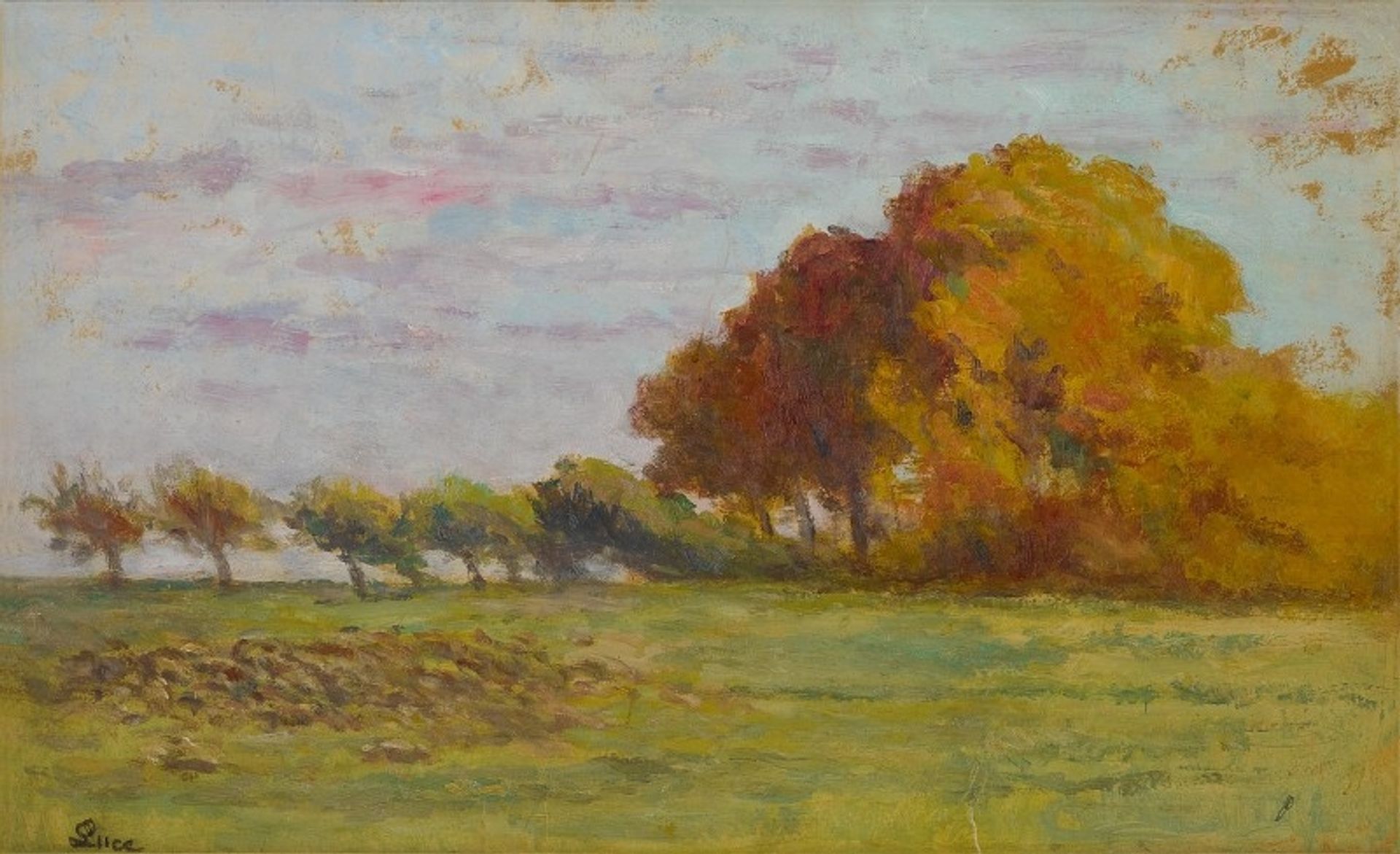
"La Plaine Aux Environs De Rolleboise" was painted by Maximilien Luce, who was born in 1858 and died in 1941. Dominating the foreground is a field of green, and the trees create a diagonal division, their forms bending as if pushed by wind. The palette emphasizes earth tones, yet with a subtly iridescent sky, creating a landscape that feels both solid and ephemeral. Luce's brushstrokes, while appearing casual, structure the painting in a deliberate manner. The bend of the trees, for example, is not just mimetic but contributes to a dynamic tension within the composition. This tension can be seen as an exploration of the structural forces acting on the landscape, reflecting a broader interest in the forces that shape our perceptions. Observe how the formal elements - color, line, and composition - collectively invite us to see the world not as a fixed tableau, but as an active interplay of forces, captured in paint. By engaging with these elements, Luce prompts a reevaluation of our visual and cultural understanding of nature.

Artwork details
- Medium
- plein-air, oil-paint
- Copyright
- Public domain
Tags
Comments
Share your thoughts
About this artwork
"La Plaine Aux Environs De Rolleboise" was painted by Maximilien Luce, who was born in 1858 and died in 1941. Dominating the foreground is a field of green, and the trees create a diagonal division, their forms bending as if pushed by wind. The palette emphasizes earth tones, yet with a subtly iridescent sky, creating a landscape that feels both solid and ephemeral. Luce's brushstrokes, while appearing casual, structure the painting in a deliberate manner. The bend of the trees, for example, is not just mimetic but contributes to a dynamic tension within the composition. This tension can be seen as an exploration of the structural forces acting on the landscape, reflecting a broader interest in the forces that shape our perceptions. Observe how the formal elements - color, line, and composition - collectively invite us to see the world not as a fixed tableau, but as an active interplay of forces, captured in paint. By engaging with these elements, Luce prompts a reevaluation of our visual and cultural understanding of nature.
Comments
Share your thoughts