About this artwork
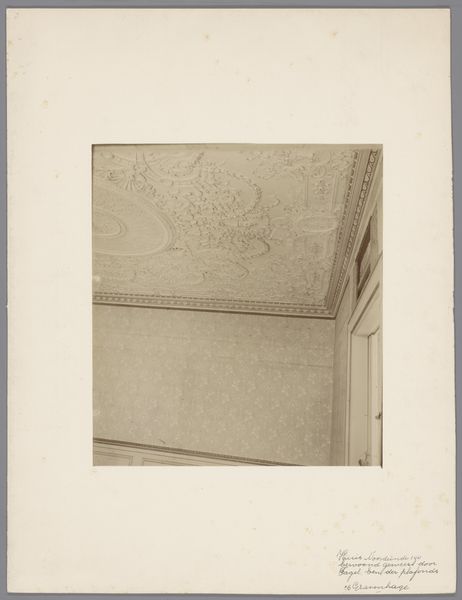
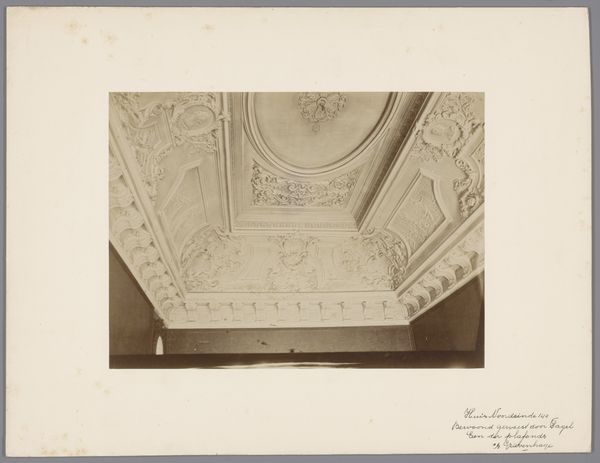
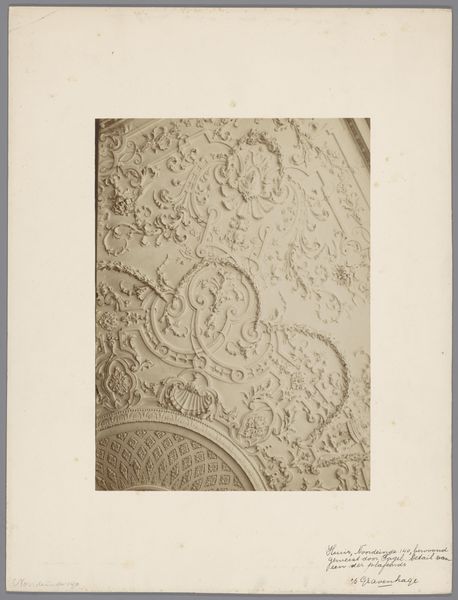
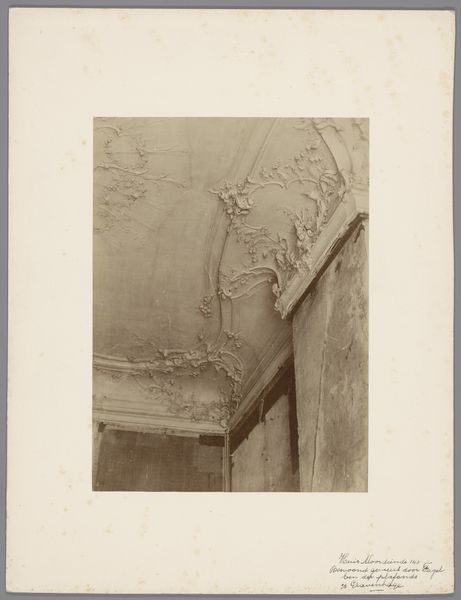
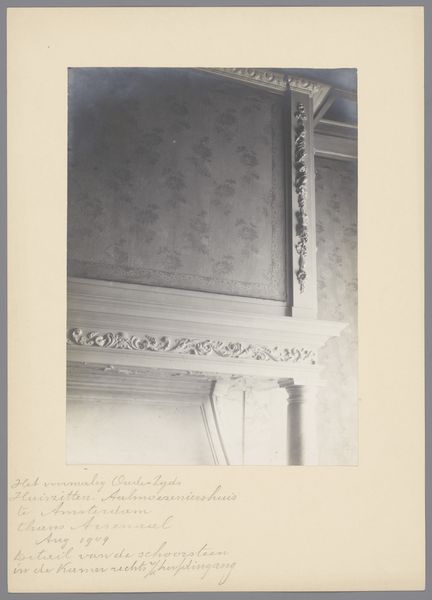
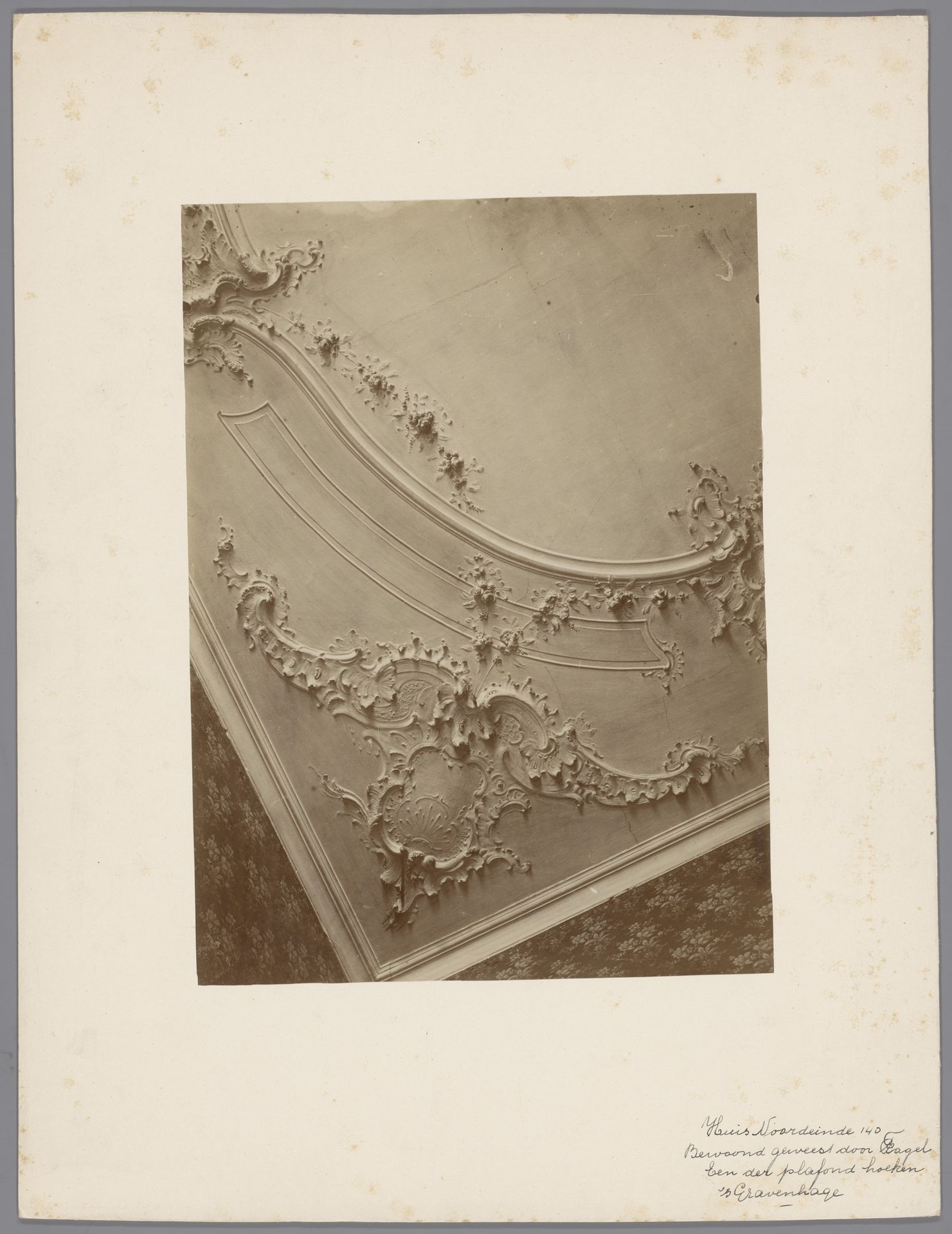
This photograph captures a decorated ceiling inside a house on Noordeinde 140 in The Hague. The anonymous artist responsible for this decoration embraces process. You can see this in the way the sculptural ornamentation sprouts across the ceiling like vines, suggesting a sensibility rooted in organic growth and transformation. The ceiling itself feels almost tactile, the monochromatic palette heightens the interplay of light and shadow across the relief. Your eye dances along the curving lines, catching details in the delicate swirls. Look at the way the light catches the edges, creating a soft halo around the forms, it is as if the ceiling is breathing. This piece reminds me of the work of Lee Bontecou, especially her sculptural wall hangings. Both artists create works that blur the lines between sculpture and painting. Ultimately, this photograph invites us to appreciate the beauty of impermanence and the ongoing dialogue between art forms.
Versierd plafond in het huis op Noordeinde 140 te Den Haag
1900 - 1915

Artwork details
- Dimensions
- height 230 mm, width 170 mm
- Copyright
- Rijks Museum: Open Domain
Comments
Share your thoughts
About this artwork
This photograph captures a decorated ceiling inside a house on Noordeinde 140 in The Hague. The anonymous artist responsible for this decoration embraces process. You can see this in the way the sculptural ornamentation sprouts across the ceiling like vines, suggesting a sensibility rooted in organic growth and transformation. The ceiling itself feels almost tactile, the monochromatic palette heightens the interplay of light and shadow across the relief. Your eye dances along the curving lines, catching details in the delicate swirls. Look at the way the light catches the edges, creating a soft halo around the forms, it is as if the ceiling is breathing. This piece reminds me of the work of Lee Bontecou, especially her sculptural wall hangings. Both artists create works that blur the lines between sculpture and painting. Ultimately, this photograph invites us to appreciate the beauty of impermanence and the ongoing dialogue between art forms.
Comments
Share your thoughts